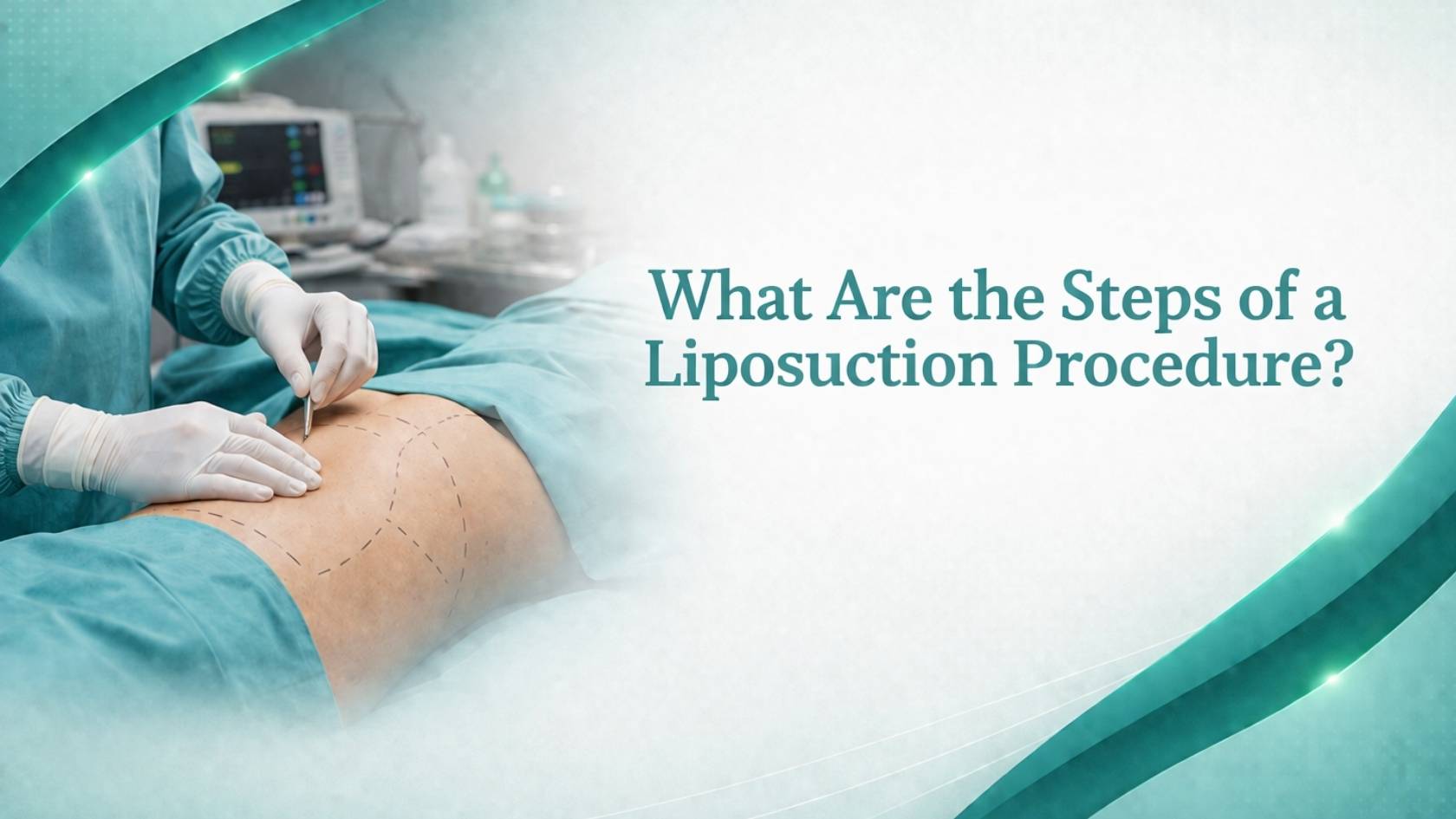
Steps of a liposuction procedure are carefully planned to ensure safe fat removal, precise body contouring, and smooth recovery. Understanding what happens during liposuction can help patients feel more confident and prepared before undergoing body contouring surgery.
This detailed guide explains each stage of the liposuction procedure — from preparation in the operating room to post-surgical care — so you know exactly what to expect.
Pre-Operative Preparation
Before the actual procedure begins, several steps are completed to ensure safety and precision.
Patient Marking
While standing, the surgeon marks the treatment areas on the body. These markings guide fat removal and help achieve balanced contouring. Marking while upright is important because fat distribution changes when lying down.
Final Health Check
Immediately before surgery:
- Vital signs are recorded
- Medical history is reviewed
- Consent is confirmed
- Surgical plan is verified
- Treatment areas are rechecked
Anesthesia Administration
Anesthesia ensures comfort throughout the procedure.
Types of Anesthesia Used
Depending on the extent of liposuction:
- Local anesthesia — For small areas
- Tumescent anesthesia — Most common method
- IV sedation — For moderate procedures
- General anesthesia — For large or multiple areas
Tumescent Solution Injection
A special fluid mixture is injected into the fat layer. It contains:
- Saline solution
- Local anesthetic
- Vasoconstrictor medication
This solution:
- Numbs the area
- Reduces bleeding
- Loosens fat cells
- Minimizes pain
- Improves safety
Making Small Incisions
Tiny incisions are created near the treatment area.
Characteristics of Incisions
- Usually a few millimeters long
- Placed in discreet locations
- Designed to minimize visible scarring
- Serve as entry points for surgical instruments
These incisions allow access to the fat layer beneath the skin.
Fat Loosening and Breakdown
Before removal, fat deposits are gently disrupted to make suction easier.
Techniques Used
Modern liposuction may use one or more of the following:
- Mechanical movement of the cannula
- Power-assisted vibration
- Ultrasound energy
- Laser energy
- Water-assisted techniques
These methods help separate fat cells from surrounding tissues while preserving nerves and blood vessels as much as possible.
Insertion of the Cannula
A thin, hollow tube called a cannula is inserted through the incisions.
Role of the Cannula
The cannula is carefully moved back and forth to:
- Dislodge fat cells
- Create smooth contours
- Maintain symmetry
- Avoid irregularities
Precision at this stage determines the final body shape.
Fat Suction and Removal
Once loosened, fat is suctioned out of the body.
How Suction Works
The cannula is connected to a suction device that removes fat through controlled vacuum pressure.
Key Considerations
- Fat removal is gradual
- Continuous monitoring ensures safety
- Over-removal is avoided
- Symmetry is constantly assessed
The amount removed depends on the treatment plan and patient safety guidelines.
Contouring and Sculpting
Liposuction is not simply fat removal — it is sculpting.
Shaping the Body
The surgeon carefully adjusts fat removal patterns to create:
- Natural curves
- Smooth transitions
- Balanced proportions
- Improved body silhouette
This artistic aspect is what distinguishes high-quality results from uneven outcomes.
Fluid Drainage
Some tumescent fluid may remain after suction.
Drainage Methods
Small drainage tubes may be placed temporarily, or incisions may be left partially open to allow fluid to escape naturally.
This step helps:
- Reduce swelling
- Prevent fluid accumulation
- Lower infection risk
- Improve comfort
Closing the Incisions
Incisions are closed or dressed depending on the technique.
Closure Options
- Small stitches
- Surgical tape
- Absorbable sutures
- Sterile dressings
Because the incisions are tiny, scars are usually minimal.
Application of Compression Garments
Compression garments are applied immediately after surgery.
Why Compression Is Important
They help:
- Reduce swelling
- Support tissues
- Improve contour
- Minimize fluid buildup
- Enhance healing
- Provide comfort
Proper compression significantly influences the final result.
Recovery Room Monitoring
After the procedure, patients are monitored closely.
Immediate Post-Operative Care
Medical staff check:
- Heart rate
- Blood pressure
- Oxygen levels
- Pain levels
- Bleeding
- Consciousness
Once stable, patients may be discharged or transferred for overnight observation depending on the procedure extent.
Early Recovery Phase
The first few days after liposuction involve healing and adjustment.
Common Symptoms
Patients may experience:
- Swelling
- Bruising
- Mild to moderate discomfort
- Temporary numbness
- Fluid leakage from incision sites
These are normal and gradually improve.
Gradual Healing and Results Development
Liposuction results evolve over time.
What Happens During Healing
- Swelling slowly decreases
- Skin begins to retract
- Contours become visible
- Tissue settles into new shape
Final results typically appear after several months.
Safety Measures During the Procedure
Modern liposuction includes multiple safeguards.
Continuous Monitoring
Throughout surgery:
- Fluid balance is maintained
- Blood loss is controlled
- Body temperature is monitored
- Oxygen levels are tracked
These precautions minimize complications.
Factors That Influence Procedure Steps
Not all liposuction procedures are identical.
Variables Include
- Treatment area size
- Number of areas treated
- Patient health
- Fat volume
- Skin elasticity
- Chosen liposuction technique
The process may be adjusted accordingly.
Advantages of Modern Liposuction Techniques
Advancements have made the procedure safer and more precise.
Benefits
- Smaller incisions
- Reduced trauma
- Less bleeding
- Faster recovery
- More natural results
- Improved skin tightening (in some techniques)
These improvements contribute to high patient satisfaction.
Who Typically Benefits from Liposuction?
Ideal candidates are individuals who:
- Have localized fat deposits
- Maintain stable body weight
- Have good skin elasticity
- Are in good overall health
- Have realistic expectations
Liposuction is designed for contour refinement rather than significant weight reduction.
Preparing for the Recovery Period
Understanding post-procedure care is part of the process.
Recovery Tips
- Follow medical instructions carefully
- Wear compression garments as advised
- Avoid strenuous activity initially
- Maintain hydration
- Attend follow-up appointments
Proper aftercare ensures the best possible outcome.
Conclusion
Liposuction is a structured, step-by-step surgical procedure designed to safely remove unwanted fat while sculpting natural body contours. From anesthesia and fluid injection to precise fat removal and compression support, each stage plays a crucial role in achieving smooth, balanced results. Modern techniques prioritize safety, minimal scarring, and efficient recovery, making liposuction one of the most popular body-contouring procedures today. Individuals considering liposuction in Kerala can benefit from understanding these procedural steps, helping them feel informed, reassured, and fully prepared for the journey toward improved body confidence.
Frequently Asked Questions
1. How long does a liposuction procedure usually take?
The duration depends on the number and size of areas treated. It typically ranges from 1 to 4 hours, though larger procedures may take longer.
2. Is liposuction performed under general anesthesia?
Not always. Small areas may be treated under local or tumescent anesthesia, while larger or multiple areas may require IV sedation or general anesthesia.
3. Are the incisions large during liposuction?
No. Liposuction uses very small incisions, usually only a few millimeters long, which are placed in discreet locations to minimize visible scarring.
4. How much fat can be removed in one session?
The amount depends on safety guidelines, body type, and treatment plan. Moderate removal is preferred to maintain natural contours and reduce risks.
5. Will liposuction tighten loose skin?
Liposuction primarily removes fat. Some skin tightening may occur if skin elasticity is good, but it is not a skin-tightening procedure.
6. Is the procedure painful?
You will not feel pain during the surgery due to anesthesia. Mild to moderate discomfort may occur afterward but is manageable with medication.
7. Can multiple body areas be treated at once?
Yes, several areas can often be treated in one session, provided it is safe and appropriate for the individual.
8. What happens to the removed fat?
The fat is suctioned out of the body and discarded. In some cases, it may be purified and used for fat transfer procedures.
9. When can I see the results of liposuction?
Initial changes are visible after swelling reduces, but final results usually appear over several months as tissues heal completely.
10. Is liposuction a permanent solution for fat removal?
Yes, the removed fat cells do not return. However, remaining fat cells can enlarge with weight gain, so maintaining a stable lifestyle is important.

Dr Prince
Consultant Plastic & Cosmetic Surgeon
Dr Prince is a Consultant Plastic and Reconstructive Surgeon at the Sushrutha Institute of Plastic Surgery, Elite Mission Hospital, Thrissur. He specializes in aesthetic and reconstructive procedures performed in a fully equipped hospital environment with strict safety protocols.
His expertise includes liposuction, rhinoplasty, gynecomastia correction, tummy tuck, breast surgery, and advanced facial aesthetic procedures, with a focus on safe techniques and natural-looking results.
Sushrutha Institute of Plastic Surgery, Elite Mission Hospital, Thrissur, Kerala