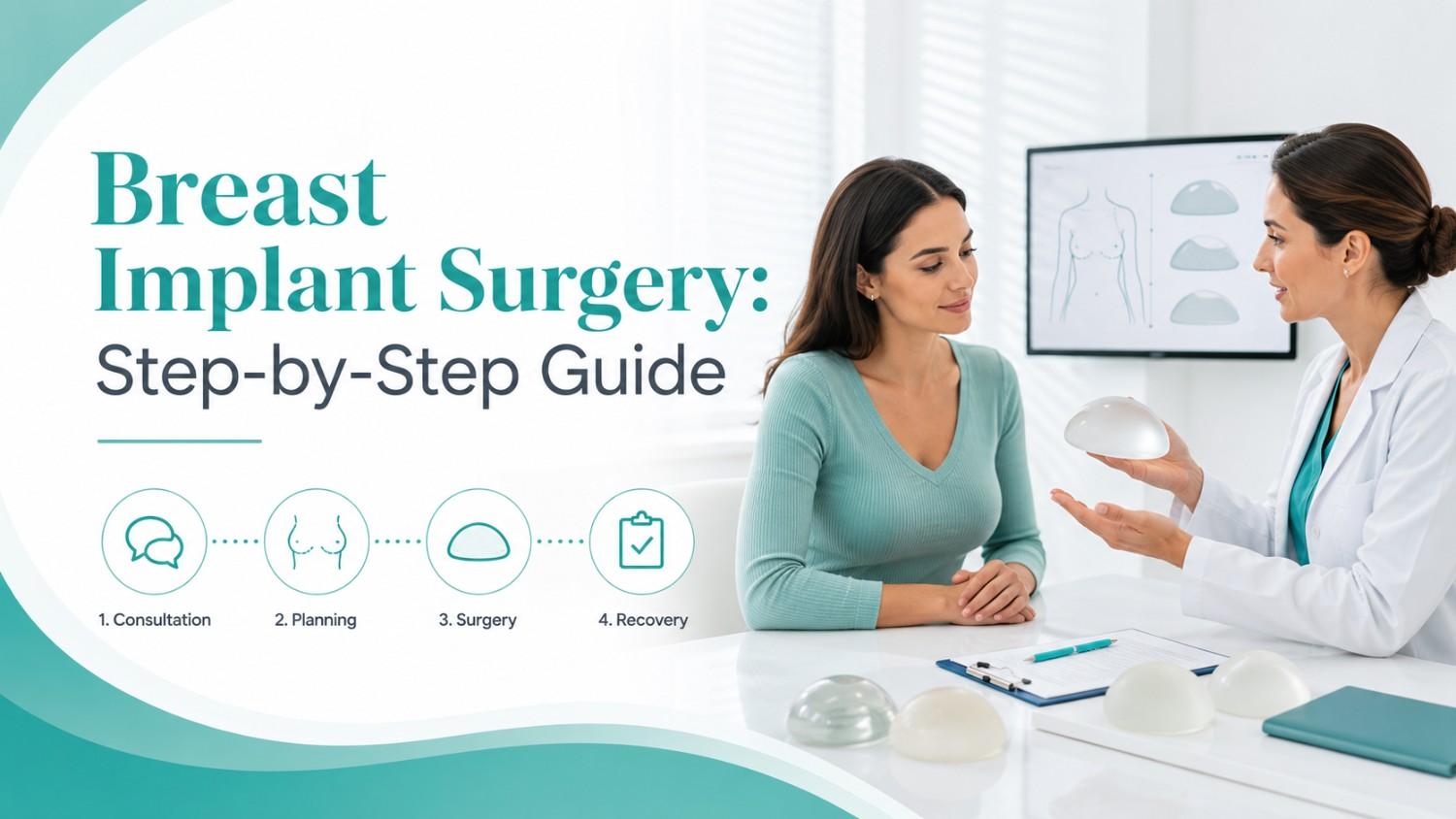
Breast implant surgery is a personal procedure that requires careful planning, realistic expectations, and guidance from a qualified plastic surgeon. This Breast Implant Surgery: Step-by-Step Guide explains what normally happens before, during, and after the operation. For patients considering the procedure in Kerala, understanding each stage can make consultations more productive and help them prepare confidently.
The procedure may be performed to increase breast volume, restore volume lost after pregnancy or weight changes, improve symmetry, or support breast reconstruction. However, breast implants are medical devices, and the decision should be based on personal goals rather than pressure from another person.
What Is Breast Implant Surgery?
Breast implant surgery is an operation in which a medical implant is positioned beneath the breast tissue or chest muscle. The purpose may be cosmetic enhancement, correction of noticeable asymmetry, restoration of lost volume, or breast reconstruction.
Breast augmentation can also be performed using fat transfer. However, this Breast Implant Surgery: Step-by-Step Guide focuses primarily on procedures involving implants.
An implant generally consists of an outer silicone shell containing either silicone gel or sterile saline. Implant size, shape, surface, profile, and placement are selected according to the patient’s anatomy and treatment goals.
The procedure does not follow one identical plan for every patient. A suitable surgical approach depends on factors such as:
- Natural breast size and shape
- Chest width
- Skin elasticity
- Existing tissue volume
- Differences between the two sides
- Previous surgery
- Lifestyle and activity level
- Desired level of enhancement
- Surgeon’s clinical assessment
The FDA identifies breast implants as medical devices used for augmentation or reconstruction and advises patients to understand both their benefits and long-term risks before surgery.
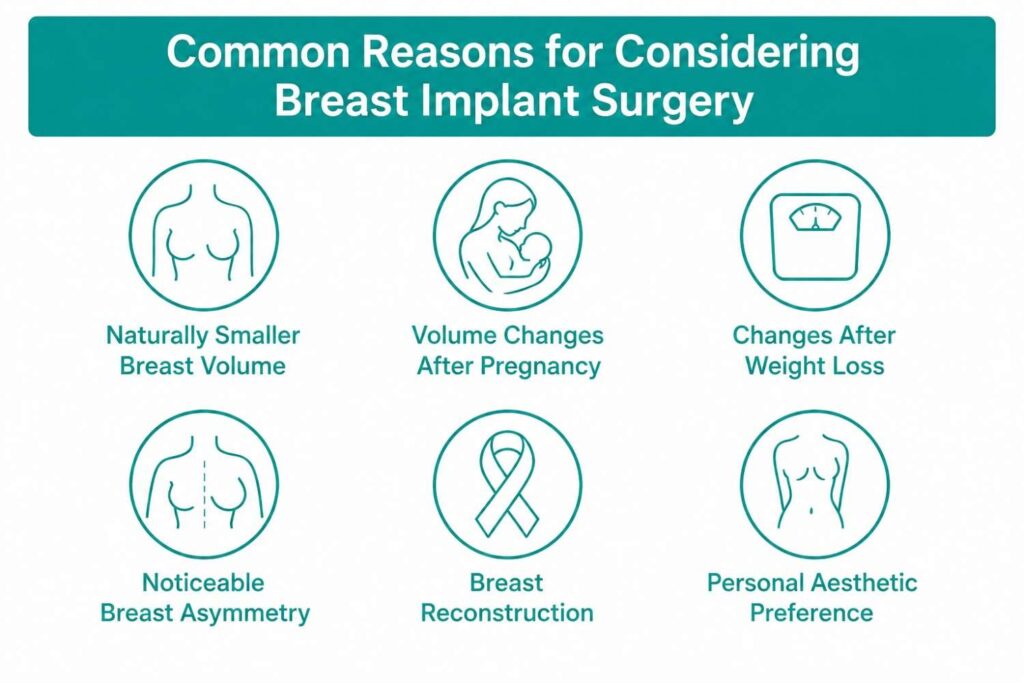
Common Reasons for Considering Breast Implant Surgery
There is no single “cause” that makes breast implant surgery necessary. People consider the procedure for different personal, physical, reconstructive, and aesthetic reasons.
Naturally Smaller Breast Volume
Some people have naturally smaller breasts and may feel that increased volume would create better balance with their body proportions.
Volume Changes After Pregnancy
Pregnancy and breastfeeding can change breast volume, skin elasticity, and shape. An implant may restore fullness, although an implant alone may not correct significant sagging.
Changes After Weight Loss
Major weight reduction can reduce fatty tissue and leave the breasts looking less full. Implant surgery may restore volume in carefully selected patients.
Noticeable Breast Asymmetry
Minor asymmetry is common. However, when one side is visibly different in size or shape, implants of different sizes or additional corrective techniques may be considered.
Breast Reconstruction
Implants may be used to reconstruct breast shape following cancer treatment, trauma, developmental differences, or previous surgery.
Personal Aesthetic Preference
Some adults choose breast implant surgery because they prefer a fuller shape or want their upper-body proportions to look more balanced.
The decision should remain voluntary, informed, and based on the patient’s own preferences.
Who May Be a Suitable Candidate?
A suitable candidate is generally an adult who is physically healthy, understands the procedure, and has realistic expectations.
A surgeon may consider whether the patient:
- Has completed breast development
- Is medically fit for elective surgery
- Has stable body weight
- Does not have an untreated infection
- Understands the limits of the procedure
- Can follow post-operative instructions
- Is choosing surgery voluntarily
- Has realistic expectations about scars and results
- Accepts that future implant-related surgery may be required
- Is willing to attend long-term follow-up appointments
People who are pregnant, breastfeeding, medically unstable, or experiencing untreated health problems may be advised to postpone surgery.
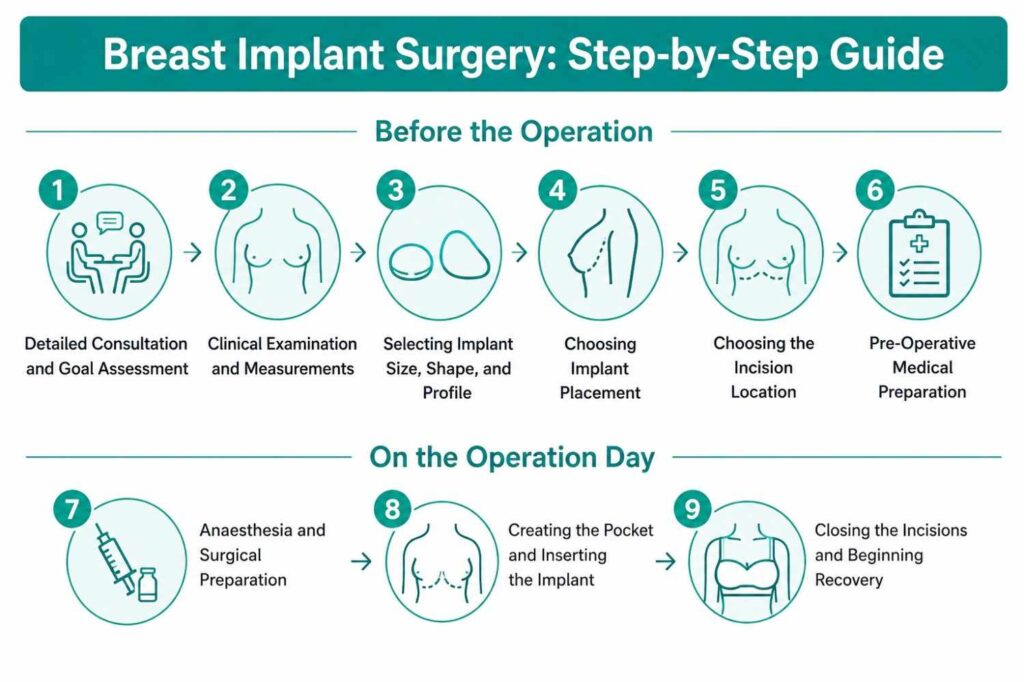
Breast Implant Surgery: Step-by-Step Guide Before the Operation
Preparation begins well before the day of surgery. The consultation and planning stages are as important as the operation itself.
Step 1: Detailed Consultation and Goal Assessment
The first step is a detailed consultation with a qualified plastic surgeon.
During this appointment, the surgeon asks why the patient is considering surgery and what type of result they expect. It is helpful to describe the desired change in terms of shape, balance, and proportion rather than requesting a specific cup size.
The surgeon may discuss:
- Current concerns
- Desired breast shape and volume
- Pregnancy and breastfeeding history
- Previous breast surgery
- Weight changes
- Medical conditions
- Current medications
- Allergies
- Smoking or nicotine use
- Family history
- Previous test results
The patient should also explain whether future pregnancy, significant weight loss, or other surgery is being considered.
Step 2: Clinical Examination and Measurements
The surgeon examines the breasts, chest wall, skin, and surrounding tissues.
Measurements may include:
- Breast base width
- Existing tissue thickness
- Nipple position
- Distance between the breasts
- Position of the breast fold
- Chest-wall differences
- Skin elasticity
- Degree of asymmetry
These measurements help identify an implant width and placement method that suit the body.
Photographs may be taken for treatment planning and medical documentation after consent is obtained.
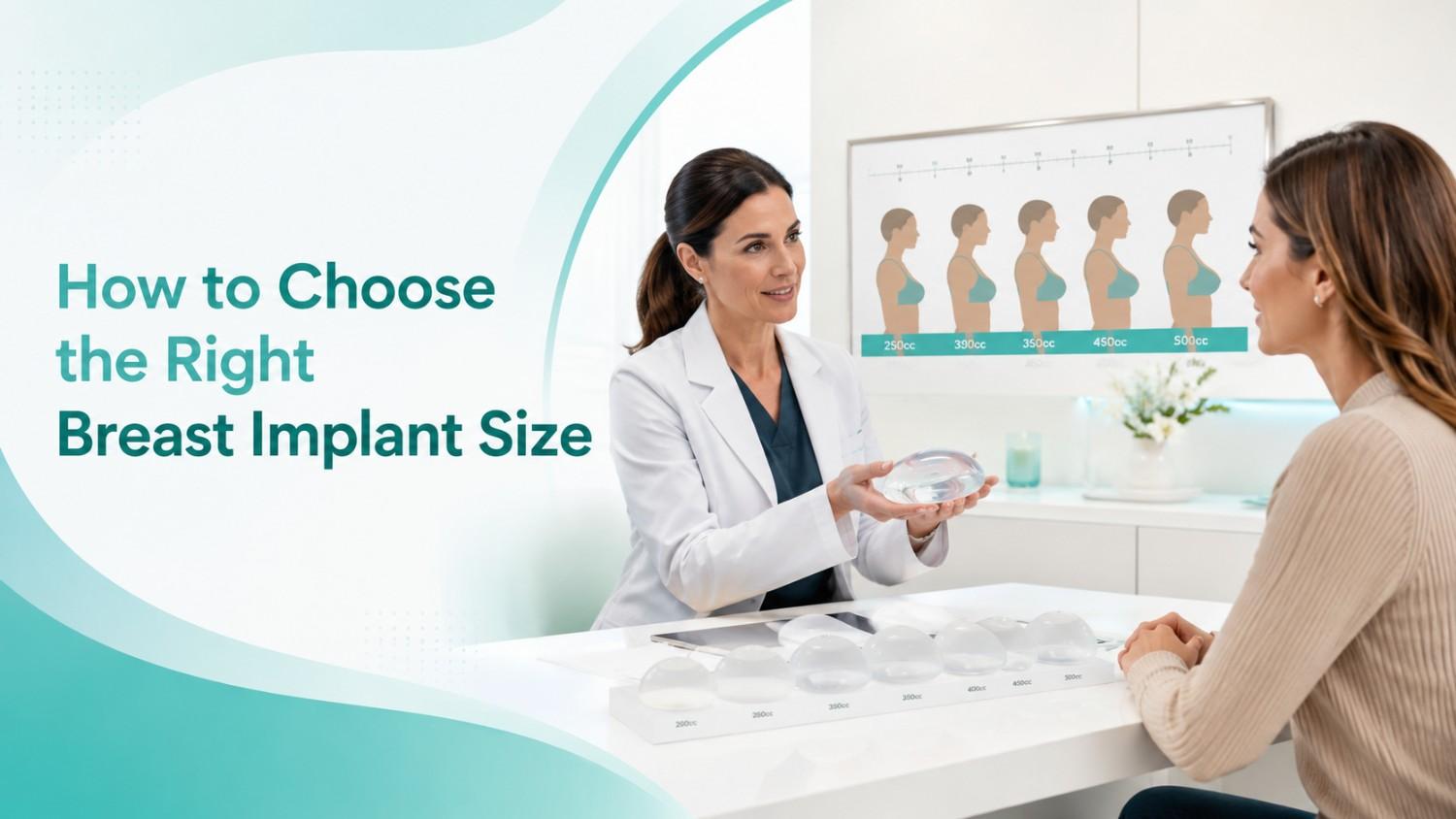
Step 3: Selecting Implant Size, Shape, and Profile
Implant selection is not based only on volume. Two implants with the same volume can appear different because they have different widths and projections.
The surgeon may use implant samples, sizing garments, measurements, or digital simulation to support the discussion. These tools can help with communication, but they cannot guarantee an exact result.
Implant selection usually considers:
- Chest width
- Natural breast volume
- Skin quality
- Available soft-tissue coverage
- Desired projection
- Lifestyle
- Exercise habits
- Overall body proportions
Choosing an excessively large implant may increase pressure on the skin and tissues. A balanced choice is generally more important than selecting the highest possible volume.
Step 4: Choosing Implant Placement
The implant may be positioned in different tissue planes.
Subglandular Placement
The implant is placed behind the breast tissue and in front of the chest muscle.
This may be suitable for selected patients who have enough natural tissue to cover the implant.
Submuscular Placement
The implant is positioned partially or substantially beneath the chest muscle.
This approach may provide additional tissue coverage, especially in patients with limited natural breast tissue. Early tightness or discomfort may be more noticeable because the muscle has been affected.
Dual-Plane Placement
Dual-plane placement combines elements of subglandular and submuscular positioning. The upper part of the implant receives muscle coverage while the lower area interacts differently with the breast tissue.
The best placement depends on anatomy, implant type, tissue thickness, activity level, and the surgeon’s technique.
Step 5: Choosing the Incision Location
The surgeon selects an incision based on implant type, anatomy, placement plan, and scar considerations.
Common incision locations include:
Inframammary Incision
This incision is made within or close to the natural fold beneath the breast. It provides direct access to the surgical pocket and is commonly used for implant placement.
Periareolar Incision
This incision is positioned around part of the border of the areola. It may be appropriate in selected patients but is not suitable for every implant or anatomy.
Transaxillary Incision
This incision is placed in the armpit. It avoids a scar directly on the breast but may offer different levels of surgical control depending on the procedure.
All surgical incisions create scars. Scars generally mature and fade over time, but they do not disappear completely.
Step 6: Pre-Operative Medical Preparation
Before proceeding, the patient may undergo a health assessment and appropriate investigations.
Preparation may include:
- Blood tests
- Pregnancy testing when relevant
- Breast imaging when clinically indicated
- Medical clearance
- Review of current medication
- Anaesthesia assessment
- Discussion of allergies
- Baseline photographs
- Written consent
- Review of implant information
- Planning transport and home support
The surgeon may advise stopping certain medicines or supplements that increase bleeding risk. Patients should never stop prescribed medication without instructions from the treating doctor.
Smoking and nicotine can interfere with wound healing. Patients may be advised to stop well before surgery and remain nicotine-free during recovery.
The FDA requires approved implants to include patient information explaining benefits and risks. Patients should have enough time to read the supplied material, discuss questions, and make an informed decision.
Breast Implant Surgery: Step-by-Step Guide on the Operation Day
The surgical team confirms the treatment plan, implant details, consent, and safety information before the procedure begins.
Step 7: Anaesthesia and Surgical Preparation
Breast implant surgery is often performed under general anaesthesia, although anaesthesia choices can differ according to the procedure and medical setting.
Before surgery:
- The patient’s identity is confirmed.
- The planned procedure is reviewed.
- Surgical markings are made.
- Implant details are checked.
- Vital signs are recorded.
- The anaesthesia team completes its assessment.
- Infection-control procedures are followed.
The operation should be performed in an appropriately equipped and accredited surgical facility or hospital.
Step 8: Creating the Pocket and Inserting the Implant
After the incision is made, the surgeon carefully creates a pocket in the planned tissue layer.
Accurate pocket creation is important because it influences:
- Implant position
- Breast shape
- Symmetry
- Cleavage
- Lower breast contour
- Tissue support
The surgical area is inspected, bleeding is controlled, and the implant is inserted using the selected technique.
The surgeon checks both sides to assess position, volume, and symmetry. Natural differences between the two sides may remain even after carefully planned surgery.
Step 9: Closing the Incisions and Beginning Recovery
Once the implants are positioned, the surgeon closes the incisions.
Closure may involve:
- Internal layered sutures
- Skin sutures
- Surgical adhesive
- Medical tape
- Sterile dressings
The patient is then moved to a monitored recovery area. The surgical team observes breathing, circulation, comfort, and general recovery from anaesthesia.
The American Society of Plastic Surgeons describes breast augmentation as involving anaesthesia, incision creation, implant placement, and layered wound closure.
Symptoms and Changes Expected After Surgery
Early post-operative changes do not necessarily indicate a complication. Temporary symptoms may include:
- Swelling
- Bruising
- Tightness
- Mild to moderate discomfort
- Temporary changes in sensation
- Tiredness
- Limited upper-body movement
- A firm or high implant position
- Uneven early swelling
The breasts may initially look higher or firmer than expected. They generally soften and settle gradually as swelling decreases and the tissues adapt.
The uploaded pillar page explains the recovery journey in detail, including early rest, activity restrictions, incision care, supportive garments, follow-up visits, and longer-term implant settling.
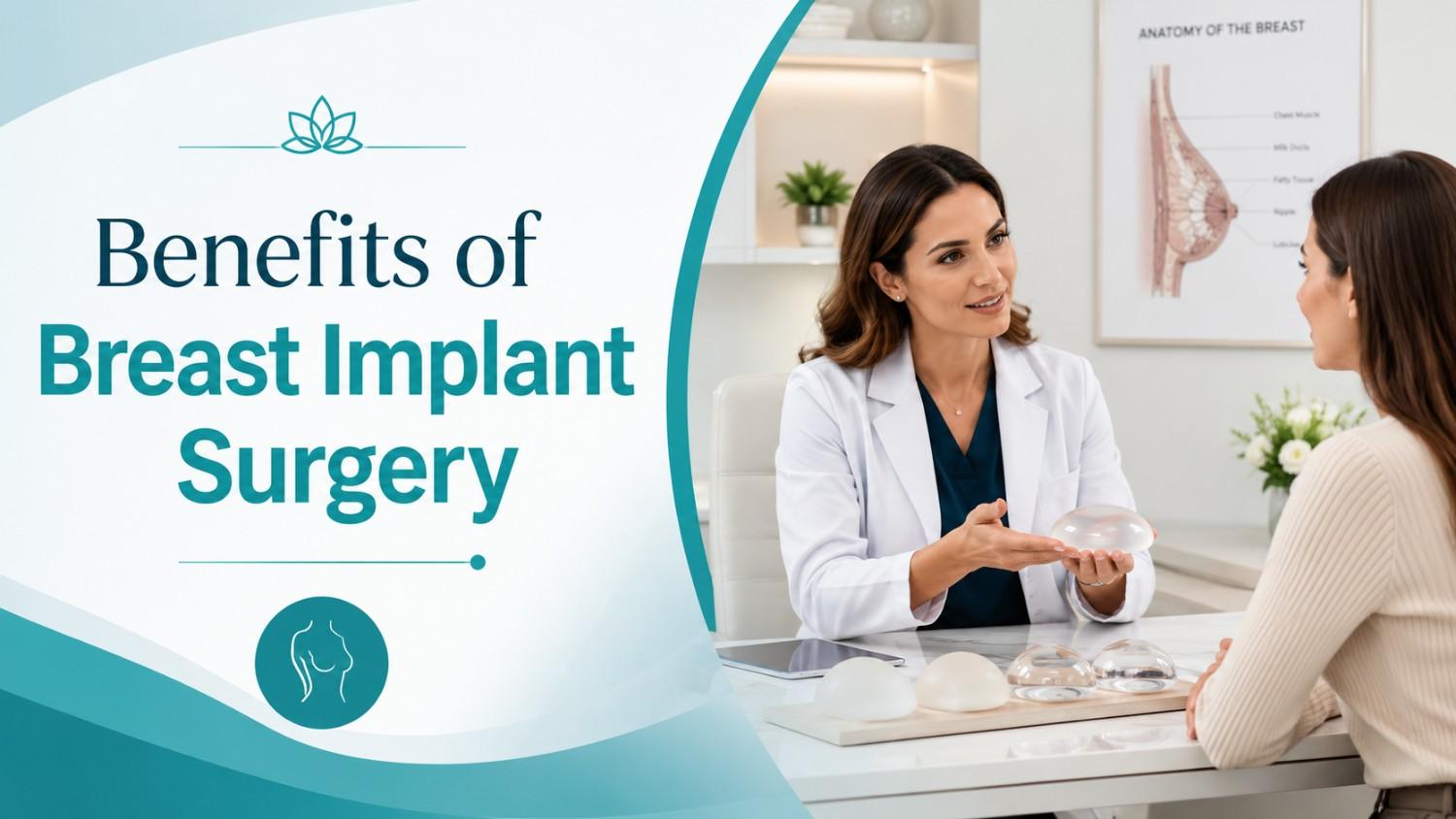
Benefits of Breast Implant Surgery
Possible benefits depend on the patient’s anatomy, goals, and surgical outcome.
They may include:
Restored Volume
The operation may restore fullness reduced after pregnancy, breastfeeding, ageing, or weight loss.
Improved Symmetry
Different implant sizes or surgical adjustments may reduce noticeable differences between the breasts.
Balanced Proportions
Carefully selected implants may create greater balance between the chest, waist, shoulders, and hips.
Personalised Shape
Patients can discuss implant width, profile, volume, position, and overall contour with their surgeon.
Reconstructive Support
Implants may play an important role in restoring breast shape after mastectomy, trauma, or developmental conditions.
Clothing Options
Some patients find that certain clothes fit more closely to their preferred proportions after recovery.
These benefits are not guaranteed. Results vary according to anatomy, implant choice, healing, surgical technique, and long-term tissue changes.
Conclusion
This Breast Implant Surgery: Step-by-Step Guide shows that successful treatment involves much more than selecting an implant. Consultation, physical assessment, implant planning, medical preparation, safe surgery, structured recovery, and long-term monitoring are all important parts of the process.
Patients should understand that implants are medical devices, results vary, scars are unavoidable, and future surgery may be required. A qualified plastic surgeon should explain implant options, expected outcomes, limitations, costs, possible complications, recovery instructions, and follow-up requirements before consent.
Anyone considering breast implant surgery in Kerala should choose an appropriately equipped surgical facility, ask detailed questions, review the implant information carefully, and make the decision without pressure. A personalised consultation is essential because only an in-person medical assessment can determine whether the procedure is appropriate.
For additional information about breast implants and recovery, visit the American Society of Plastic Surgeons (ASPS).
FREQUENTLY AKSED QUESTIONS

Dr Prince
Consultant Plastic & Cosmetic Surgeon
Dr Prince is a Consultant Plastic and Reconstructive Surgeon at the Sushrutha Institute of Plastic Surgery, Elite Mission Hospital, Thrissur. He specializes in aesthetic and reconstructive procedures performed in a fully equipped hospital environment with strict safety protocols.
His expertise includes liposuction, rhinoplasty, gynecomastia correction, tummy tuck, breast surgery, and advanced facial aesthetic procedures, with a focus on safe techniques and natural-looking results.
Sushrutha Institute of Plastic Surgery, Elite Mission Hospital, Thrissur, Kerala