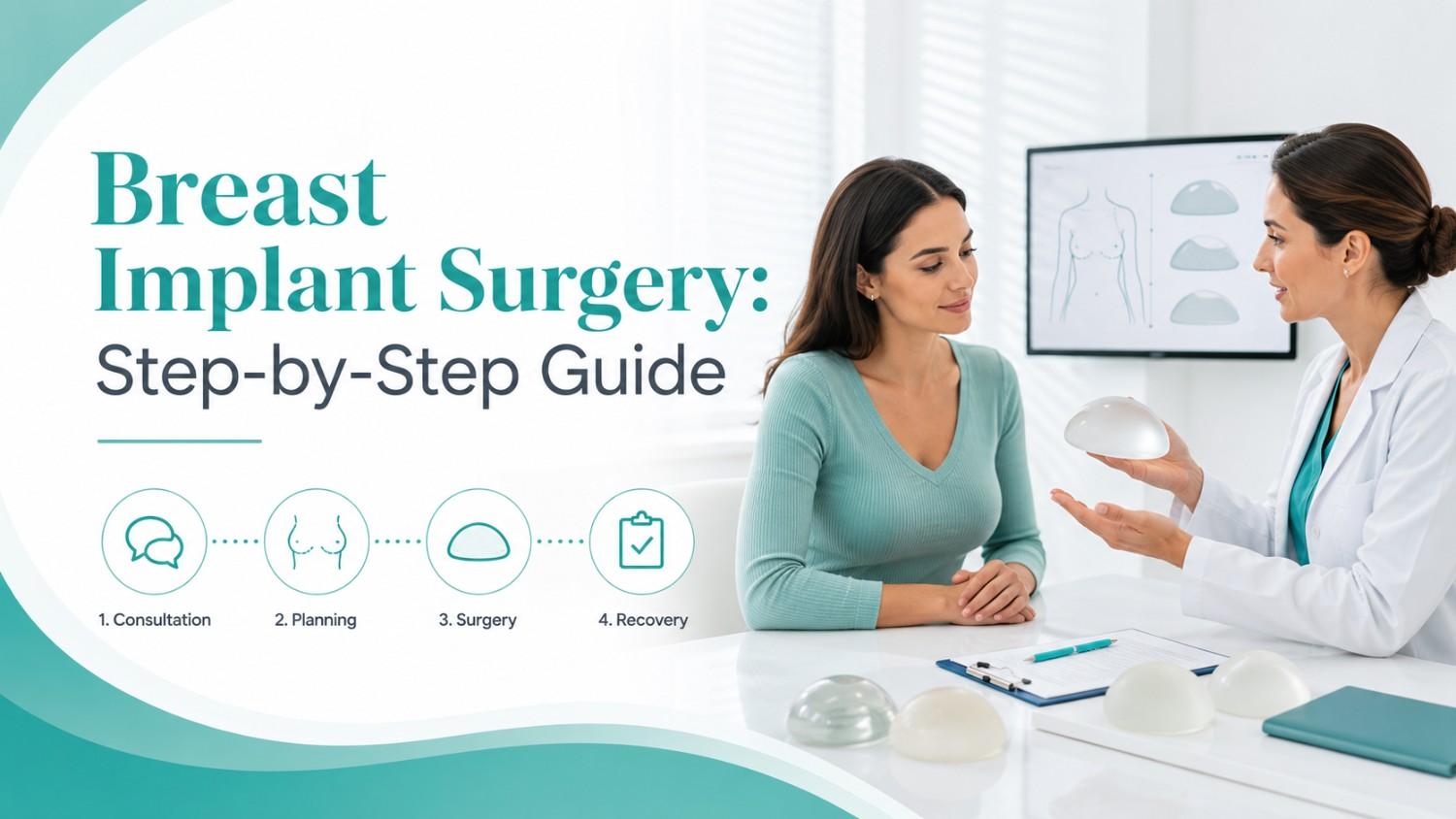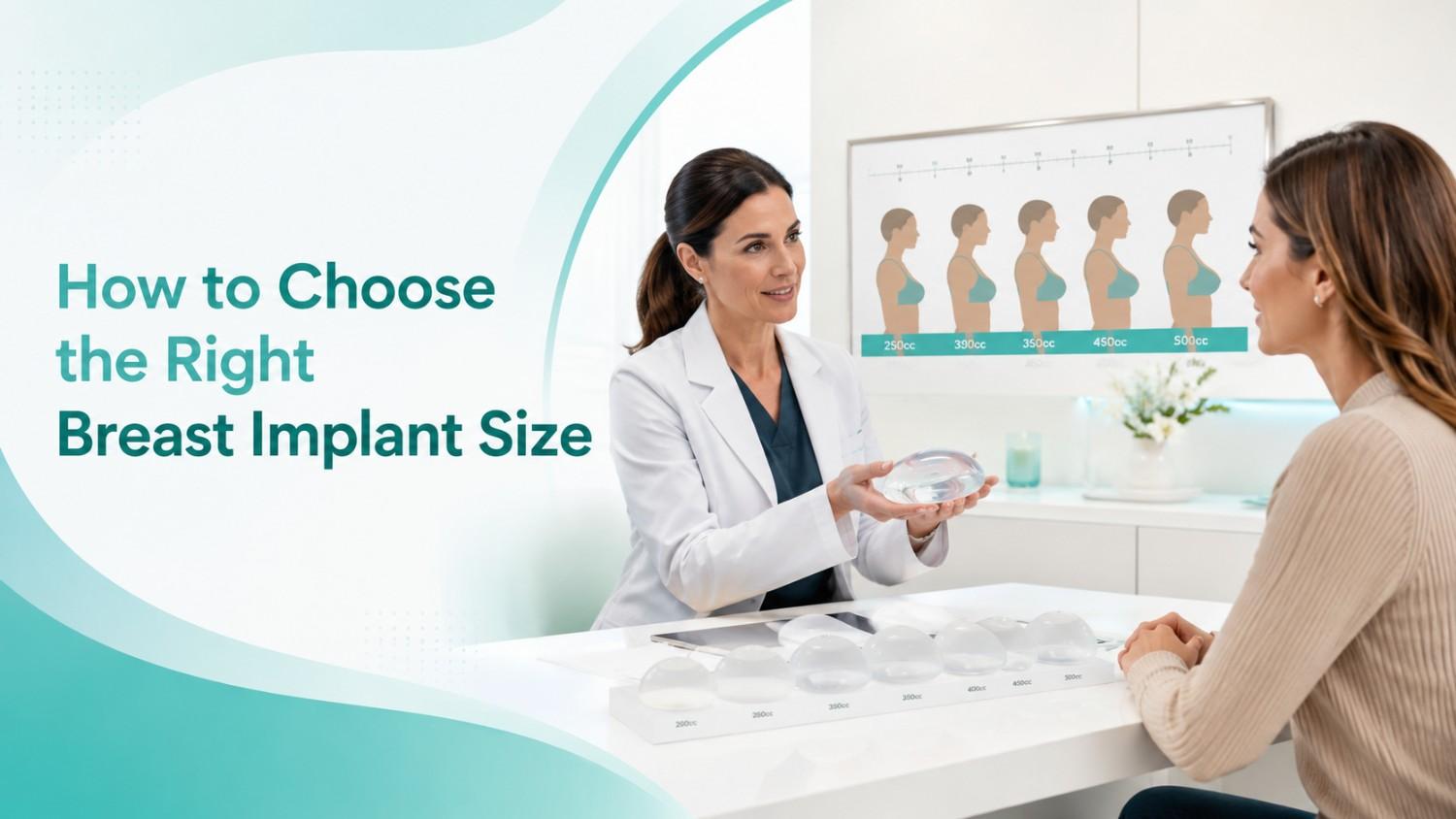
Understanding How to Choose the Right Breast Implant Size is one of the most important parts of preparing for breast augmentation. Many patients initially believe that implant selection is simply about choosing a cup size. However, the right choice depends on body proportions, chest width, existing breast tissue, skin quality, lifestyle, personal expectations, and professional surgical assessment. Patients considering breast implant surgery in Kerala should approach implant sizing as a personalised medical decision rather than following photographs, trends, or another person’s results.
The most suitable implant should complement your natural frame, provide the desired level of enhancement, and remain appropriate for your tissues. This detailed guide explains How to Choose the Right Breast Implant Size, the available implant types, factors that affect sizing, common mistakes, possible signs of an unsuitable choice, consultation methods, practical tips, and frequently asked questions.
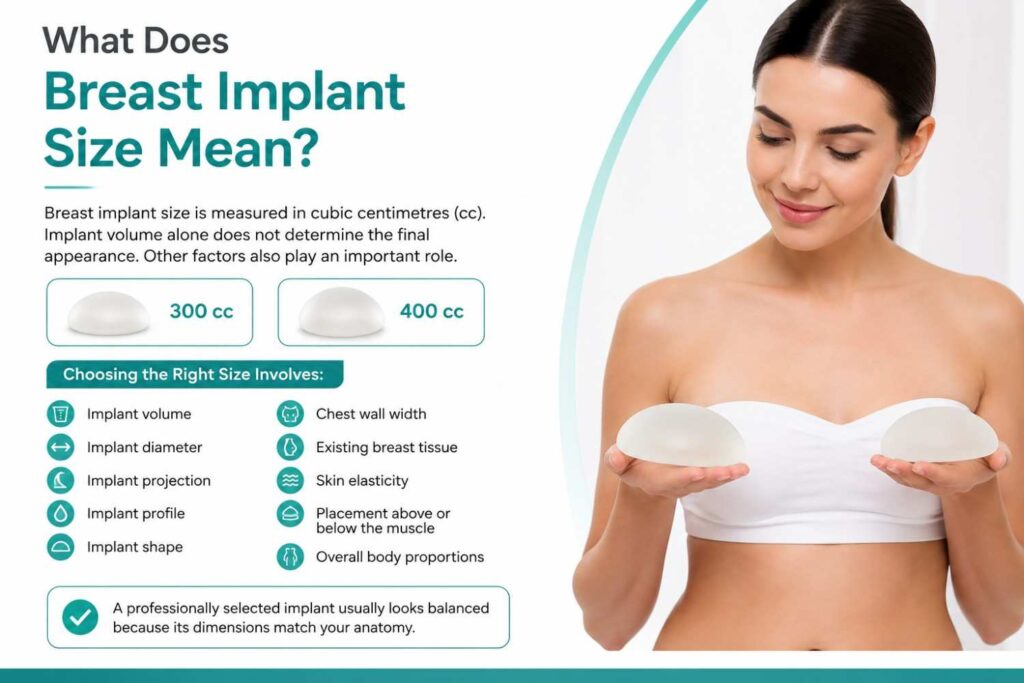
What Does Breast Implant Size Mean?
Breast implant size is normally measured in cubic centimetres, commonly written as cc. Unlike bra cup sizes, implant volume provides a standard measurement of how much filling material is present inside the implant.
For example, a 300-cc implant and a 400-cc implant have different volumes. However, implant volume alone does not determine the final appearance. Two implants with the same volume may produce different results because they can have different widths, projections, shapes, and profiles.
Learning How to Choose the Right Breast Implant Size therefore involves evaluating more than a single number. Implant selection must consider:
- Implant volume
- Implant diameter
- Implant projection
- Implant profile
- Implant shape
- Chest wall width
- Existing breast tissue
- Skin elasticity
- Placement above or below the muscle
- Overall body proportions
A professionally selected implant usually looks balanced because its dimensions match the patient’s anatomy.
Why Choosing the Correct Implant Size Matters
The aim of implant sizing is not simply to select the largest or smallest available implant. The aim is to create an appropriate relationship between the implant and the patient’s body.
Understanding How to Choose the Right Breast Implant Size may help patients achieve:
- Better body proportion
- A balanced breast outline
- Natural-looking projection
- Improved upper-body symmetry
- Results that match personal expectations
- Greater comfort during daily activities
- Better compatibility with available breast tissue
- A more sustainable long-term outcome
An implant that is too large for the available tissues may place unnecessary pressure on the skin and supporting structures. An implant that is smaller than expected may not provide the desired volume or shape.
The correct choice sits between these two extremes and supports both appearance and tissue health.
Common Reasons for Considering Different Implant Sizes
Patients explore How to Choose the Right Breast Implant Size for many different personal reasons. The desired implant volume may depend on the changes a patient wants to address.
Common reasons include:
Naturally Small Breast Volume
Some patients have naturally limited breast development and wish to achieve greater fullness while maintaining proportion with the rest of the body.
Volume Changes After Pregnancy
Pregnancy and breastfeeding may change breast fullness, skin elasticity, and upper-pole volume. Implant selection may help restore lost volume, although some patients may require a breast lift as well.
Changes After Weight Loss
Significant weight loss can reduce fatty tissue and alter the breast envelope. The amount of remaining tissue affects How to Choose the Right Breast Implant Size safely.
Breast Asymmetry
One breast may naturally be smaller, narrower, or positioned differently from the other. Different implant volumes may sometimes be considered to improve balance.
Desire for Improved Body Proportion
Some patients want the chest area to appear more proportionate to the shoulders, waist, or hips.
Reconstruction or Correction
Implants may be considered as part of reconstructive treatment or to address the effects of previous surgery. These cases require particularly careful planning
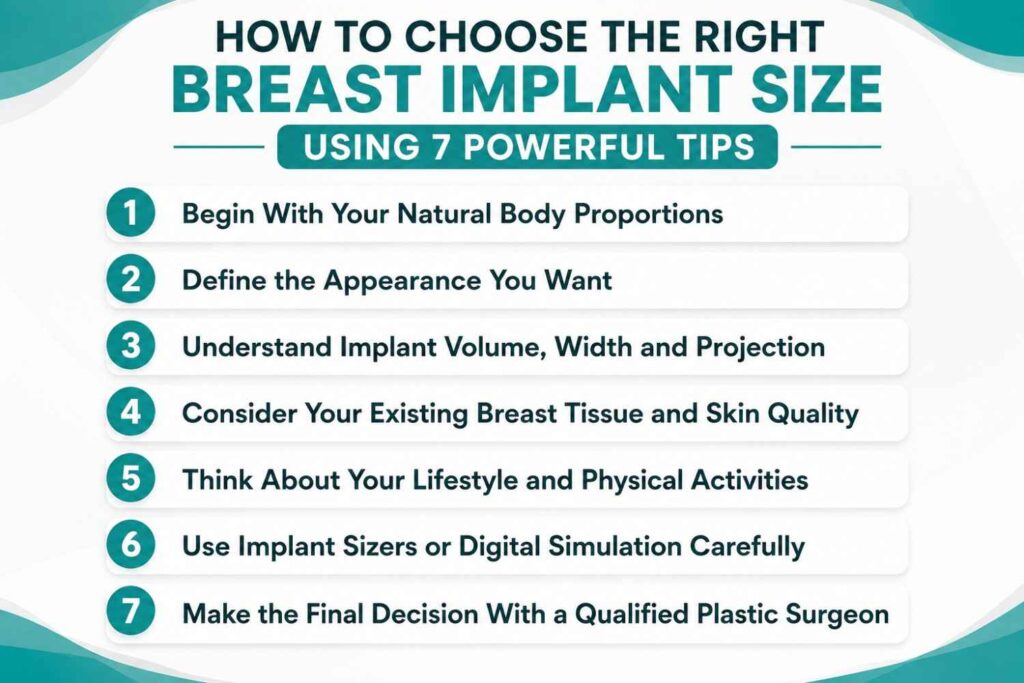
How to Choose the Right Breast Implant Size Using 7 Powerful Tips
The following seven factors provide a practical framework for understanding How to Choose the Right Breast Implant Size.
1. Begin With Your Natural Body Proportions
Your natural body structure is one of the most important elements in implant selection. Height, shoulder width, chest width, rib-cage shape, waist size, and hip proportions all influence how a particular implant will appear.
A volume that looks subtle on a broad chest may appear more noticeable on a narrow frame. Similarly, a smaller implant may create meaningful enhancement in a petite patient.
When learning How to Choose the Right Breast Implant Size, ask whether the selected volume creates balance with your entire body rather than focusing only on the breasts.
The surgeon may assess:
- Chest width
- Breast base diameter
- Distance between the breasts
- Position of the natural breast fold
- Shoulder-to-waist proportions
- Existing breast volume
- Nipple position
- Differences between the two sides
These measurements help identify an appropriate implant width and volume range.
2. Define the Appearance You Want
Clear communication is essential when deciding How to Choose the Right Breast Implant Size. Patients may use words such as natural, full, subtle, rounded, lifted, prominent, or proportionate. However, these descriptions can mean different things to different people.
Instead of mentioning only a preferred cup size, explain:
- How much visible fullness you want
- Whether you prefer subtle or noticeable enhancement
- How important upper-pole fullness is
- Whether you want a rounded or gently sloping outline
- How you would like clothing to fit
- Whether you want to preserve an athletic appearance
- Whether maintaining a natural transition from the chest is important
Reference photographs can help communicate preferences, but they should be treated as examples rather than guaranteed outcomes. Another person’s result depends on their anatomy, implant dimensions, tissue thickness, and surgical technique.
3. Understand Implant Volume, Width and Projection
A major part of How to Choose the Right Breast Implant Size is understanding the relationship between volume, width, and projection.
Implant Volume
Volume refers to the total amount of filling material inside the implant and is measured in cc.
Implant Width
Width indicates how much of the chest wall the implant covers. An implant should generally fit the natural width of the breast base.
Implant Projection
Projection describes how far the implant extends forward from the chest.
Two implants may contain the same volume but have different appearances. A wider implant with lower projection may create broader fullness, while a narrower implant with greater projection may produce a more forward-projecting result.
This is why How to Choose the Right Breast Implant Size cannot be answered by volume alone.
4. Consider Your Existing Breast Tissue and Skin Quality
The amount of natural breast tissue available to cover an implant affects both sizing and the final appearance.
Patients with limited tissue may need a carefully selected implant to reduce visible edges or an excessively stretched appearance. Patients with more tissue may have a wider range of suitable implant options.
The surgeon will also evaluate:
- Skin thickness
- Skin elasticity
- Existing sagging
- Stretch marks
- Breast tissue distribution
- Previous pregnancy-related changes
- Position of the nipple and areola
- Strength of supporting tissues
Loose skin does not always mean that a larger implant should be used to fill the envelope. In some cases, combining augmentation with a breast lift may provide a more suitable result.
Understanding tissue limitations is central to How to Choose the Right Breast Implant Size safely.
5. Think About Your Lifestyle and Physical Activities
Lifestyle is often overlooked during implant selection. However, it should play an important role in How to Choose the Right Breast Implant Size.
Patients who regularly run, swim, practise yoga, perform strength training, or participate in competitive sports may prefer a size that feels comfortable during movement.
Consider:
- Your occupation
- Exercise habits
- Sports participation
- Clothing preferences
- Sleep position
- Family responsibilities
- Frequency of travel
- Long-term comfort expectations
A highly active patient may prefer a moderate implant that supports body proportion without feeling unnecessarily heavy. Another patient may prioritise a fuller appearance and accept the practical changes associated with a larger size.
There is no single correct choice for everyone. The selected size should match how you live.
6. Use Implant Sizers or Digital Simulation Carefully
Implant sizers may be placed inside a supportive bra during consultation to provide a general idea of how different volumes affect body proportion.
Digital imaging may also help patients visualise possible changes. However, simulations are planning tools, not exact predictions.
When using sizers to understand How to Choose the Right Breast Implant Size:
- Try more than one volume
- View the result from the front and side
- Wear different types of clothing
- Compare moderate variations rather than extreme sizes
- Consider how the size feels during movement
- Ask how the selected sizer relates to the actual implant dimensions
- Avoid making a decision based on one photograph
Sizers can improve communication, but the surgeon must still confirm whether the chosen implant is anatomically suitable.
7. Make the Final Decision With a Qualified Plastic Surgeon
Online photographs, cup-size calculators, social media posts, and personal recommendations can provide ideas. They cannot replace clinical examination.
A qualified plastic surgeon evaluates the relationship between the desired appearance and what the body can safely support.
During consultation, the surgeon may:
- Measure breast base width
- Assess tissue thickness
- Evaluate skin elasticity
- Examine breast symmetry
- Review nipple position
- Discuss implant placement
- Compare available profiles
- Explain realistic limitations
- Recommend a suitable size range
- Discuss possible risks and recovery
The final answer to How to Choose the Right Breast Implant Size should come from shared decision-making between the informed patient and the surgeon.
Types of Breast Implants to Consider
Size is only one part of implant selection. Implant filling, shape, profile, and surface also influence the outcome.
Silicone Implants
Silicone implants contain cohesive silicone gel. Different gel consistencies and implant dimensions are available.
They are commonly considered because they may provide a soft feel, although suitability depends on individual anatomy and medical assessment.
Saline Implants
Saline implants contain sterile salt water. They are inserted and filled according to the planned volume and product design.
Availability and suitability may vary according to clinical circumstances and regulatory guidance.
Round Implants
Round implants distribute volume around the implant and may provide greater upper-breast fullness depending on profile, placement, and existing tissue.
Anatomically Shaped Implants
Anatomically shaped implants have a contoured form designed to create a gradual slope. Their suitability depends on the patient’s anatomy and the surgeon’s recommendation.
Implant Profiles
Common profiles may include:
- Low profile
- Moderate profile
- Moderate-plus profile
- High profile
- Extra-high profile
Profile affects projection and width. A higher profile does not automatically mean a better or larger result. It must match the breast base and the patient’s objectives.
Understanding these options improves the process of How to Choose the Right Breast Implant Size.
Signs That an Implant Size May Not Suit Your Goals
Patients may become dissatisfied when the chosen size does not match their body, tissues, or expectations.
Possible signs of an unsuitable selection may include:
- The result feels out of proportion with the body
- The breasts appear wider than the natural chest frame
- Implant edges become visible or noticeable
- The skin appears excessively stretched
- Physical activity feels uncomfortable
- Clothing becomes difficult to fit
- The result appears smaller than expected
- Upper fullness does not match the planned appearance
- The breasts feel heavier than anticipated
- The patient’s expectations were not clearly discussed
These signs do not automatically mean that a medical complication is present. Any concern should be discussed with the operating surgeon for proper assessment.
Problems Associated With Choosing an Implant That Feels Too Small
A conservative implant can be appropriate for many patients. However, a patient may feel dissatisfied if the selected volume does not create the expected change.
Possible concerns include:
- Limited improvement in upper fullness
- Minimal change in clothing fit
- Continued dissatisfaction with body proportion
- A result that feels less noticeable than expected
- Regret about not selecting a slightly larger option
This is why careful visualisation, measurement, discussion, and realistic expectation-setting are essential when deciding How to Choose the Right Breast Implant Size.
How Breast Implant Placement Affects Size Selection
Implants may be positioned above the chest muscle, partially below it, or using another plane selected according to the patient’s tissues and surgical plan.
Placement can influence:
- Tissue coverage
- Visible projection
- Upper-breast contour
- Implant movement
- Recovery experience
- Suitability for active patients
- Appearance in patients with limited natural tissue
The same implant may appear different depending on where it is placed. Implant placement must therefore be considered when planning How to Choose the Right Breast Implant Size.
Benefits of Choosing a Proportionate Implant Size
A carefully selected implant may provide several practical and aesthetic benefits.
These may include:
- Improved harmony between the chest and body
- A more natural breast outline
- Better tissue coverage
- Balanced upper-body proportions
- Greater comfort during movement
- Results that align more closely with expectations
- Reduced pressure on the skin and supporting tissues
- Easier adjustment to the postoperative appearance
- Better compatibility with clothing preferences
- Increased confidence in the treatment decision
The benefits depend on proper surgical evaluation and realistic planning.
Common Mistakes to Avoid
Patients researching How to Choose the Right Breast Implant Size should avoid making decisions based on incomplete information.
Common mistakes include:
- Copying another person’s implant size
- Choosing only according to cup size
- Assuming more volume always creates a better result
- Ignoring chest width
- Overlooking skin and tissue limitations
- Following temporary social media trends
- Hiding lifestyle concerns from the surgeon
- Expecting digital simulations to guarantee an exact result
- Selecting an implant without understanding profile
- Rushing the consultation process
- Ignoring possible future weight or pregnancy changes
- Choosing price over surgical qualifications and safety
Conclusion
Learning How to Choose the Right Breast Implant Size requires more than choosing a cup size or copying a photograph. The decision should consider your chest width, existing breast tissue, skin quality, implant profile, desired projection, lifestyle, body proportions, and long-term expectations.
Implant sizing is most successful when patients communicate clearly, use sizers responsibly, understand anatomical limitations, and make the final decision with a qualified plastic surgeon. Patients planning surgery in Kerala should also consider the quality of the hospital environment, preoperative assessment, postoperative monitoring, and access to structured follow-up care.
By understanding How to Choose the Right Breast Implant Size, you can approach your consultation with realistic expectations and make a decision that supports proportion, comfort, safety, and a result suited to your individual body.
For additional information about breast implants and recovery, visit the American Society of Plastic Surgeons (ASPS).
FREQUENTLY ASKED QUESTIONS

Dr Prince
Consultant Plastic & Cosmetic Surgeon
Dr Prince is a Consultant Plastic and Reconstructive Surgeon at the Sushrutha Institute of Plastic Surgery, Elite Mission Hospital, Thrissur. He specializes in aesthetic and reconstructive procedures performed in a fully equipped hospital environment with strict safety protocols.
His expertise includes liposuction, rhinoplasty, gynecomastia correction, tummy tuck, breast surgery, and advanced facial aesthetic procedures, with a focus on safe techniques and natural-looking results.
Sushrutha Institute of Plastic Surgery, Elite Mission Hospital, Thrissur, Kerala