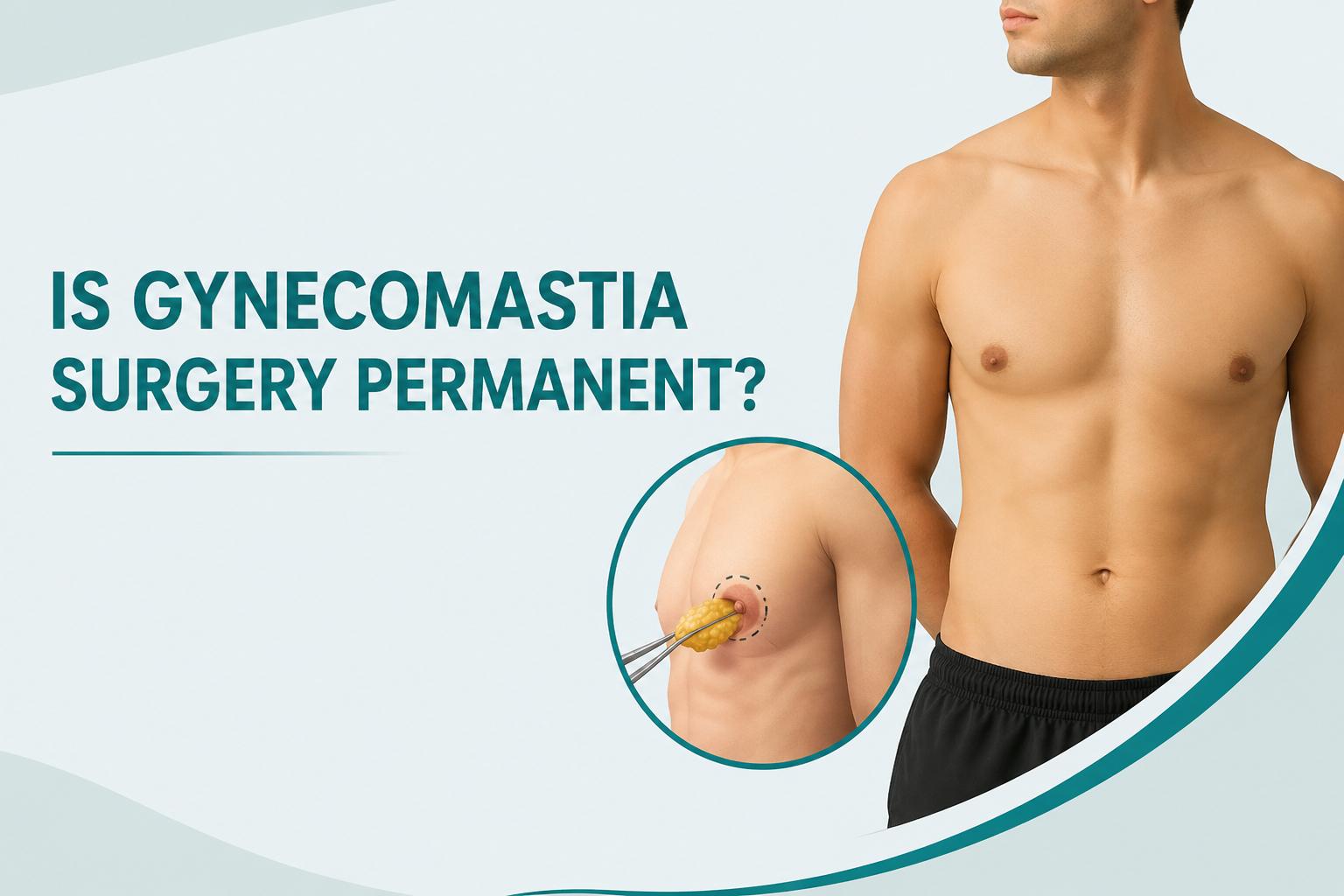
7 Powerful Facts: What Is Gynecomastia and How Is It Treated
If you are wondering what is gynecomastia and how is it treated, you are not alone. Gynecomastia is a common condition in which male breast tissue becomes enlarged. It can occur at different ages and may affect one or both sides of the chest. For people in Thrissur, Kerala, understanding the condition, its possible causes, and available treatment options can make it easier to decide when professional evaluation may be appropriate.
Gynecomastia is usually related to an imbalance between the hormones estrogen and testosterone. It is different from simply having extra fat around the chest. Because the underlying cause can vary from person to person, treatment depends on factors such as age, symptoms, duration, hormone levels, medications, and the amount and type of breast tissue present.
What Is Gynecomastia
Gynecomastia is the enlargement of male breast glandular tissue. It can develop when the balance between estrogen and testosterone changes.
Although estrogen is generally associated with female physical characteristics, men naturally have small amounts of estrogen. Testosterone normally has a stronger influence on male characteristics. When the balance between these hormones changes, breast glandular tissue can grow.
Gynecomastia may appear as:
- Enlargement directly beneath the nipple
- A firm or rubbery area behind the nipple
- Swelling or fullness of the chest
- Enlargement on one side or both sides
- Tenderness or sensitivity in some cases
Understanding what is gynecomastia and how is it treated starts with recognizing that it is a medical condition involving breast tissue rather than simply excess body fat.
What Causes Gynecomastia
Several factors can contribute to gynecomastia. Sometimes the exact cause cannot be identified, but common causes include hormonal changes, medications, certain health conditions, and lifestyle-related factors.
Hormonal Changes
Hormonal fluctuations are one of the most common reasons male breast enlargement develops.
Gynecomastia can occur during:
- Infancy
- Puberty
- Adulthood
- Older age
During puberty, temporary hormonal changes can cause breast tissue to enlarge. In many teenagers, this improves naturally as hormone levels stabilize.
Medications
Some medications may contribute to breast enlargement by changing hormone activity or affecting how hormones are processed.
Examples may include certain medicines used for:
- Prostate conditions
- High blood pressure
- Heart conditions
- Stomach problems
- Psychiatric conditions
- Hormonal disorders
If you notice breast enlargement after starting a medication, do not stop the medicine on your own. A healthcare professional can determine whether the medication could be contributing to the problem.
Health Conditions
Certain medical conditions can affect hormone balance and increase the possibility of gynecomastia.
These may include:
- Liver disease
- Kidney disease
- Thyroid disorders
- Conditions affecting hormone-producing glands
- Certain tumors
- Hormonal disorders
This is why understanding what is gynecomastia and how is it treated involves more than simply identifying breast enlargement. Finding an underlying cause can be an important part of evaluation.
Weight Gain
Weight gain can increase fat around the chest. This is sometimes called pseudogynecomastia because the enlargement is mainly caused by fatty tissue rather than glandular breast tissue.
However, excess body fat can also influence hormone activity and may occur alongside true gynecomastia.
Types of Gynecomastia
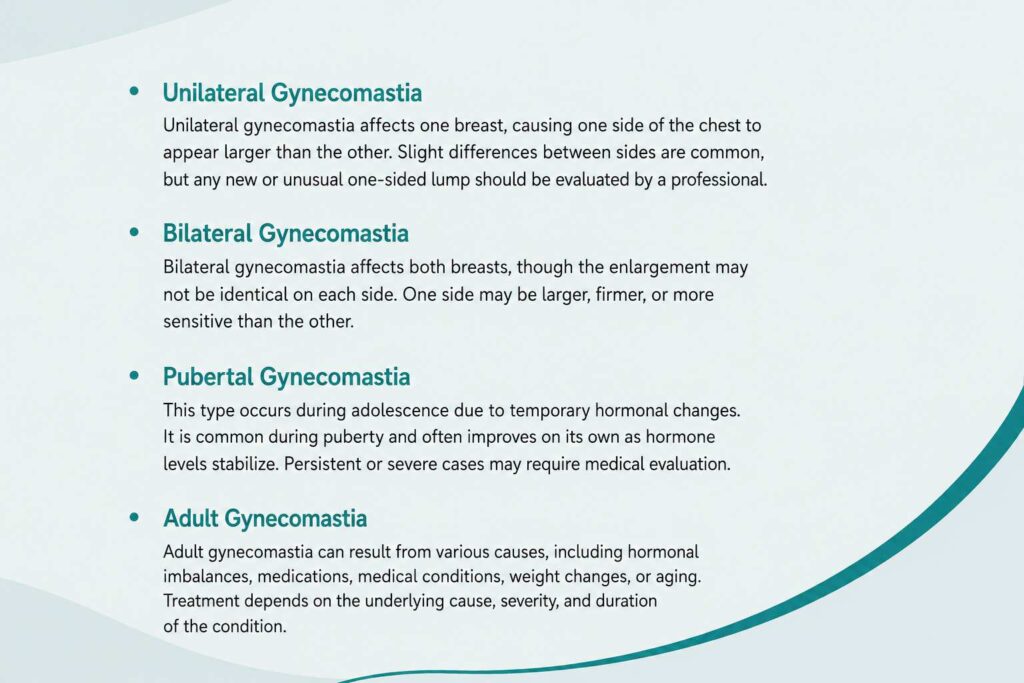
Gynecomastia can be classified in several ways depending on how and where the enlargement occurs.
Unilateral Gynecomastia
Unilateral gynecomastia affects one breast. The two sides of the chest may therefore look different.
Mild differences between the sides are common, but a new or unusual one-sided lump should be professionally evaluated.
Bilateral Gynecomastia
Bilateral gynecomastia affects both breasts. The enlargement does not necessarily have to be identical on each side.
One side may be larger, firmer, or more sensitive than the other.
Pubertal Gynecomastia
Pubertal gynecomastia develops during adolescence because of temporary hormonal fluctuations. It often improves naturally over time.
Persistent or severe enlargement may require evaluation, particularly if it causes significant discomfort or emotional distress.
Adult Gynecomastia
Adult gynecomastia can have multiple causes, including hormonal changes, medications, medical conditions, weight changes, or aging-related changes in hormone levels.
Treatment depends on the underlying cause and how long the condition has been present.
Symptoms of Gynecomastia
The main symptom is enlargement of male breast tissue. Other symptoms can vary.
Common signs include:
- Increased breast size
- Firm tissue beneath the nipple
- Nipple sensitivity
- Breast tenderness
- Swelling
- Uneven chest appearance
- Emotional discomfort related to chest appearance
Pain is not present in every case. Some people notice only a change in appearance.
If breast enlargement is accompanied by unusual discharge, significant skin changes, a hard fixed lump, or other concerning changes, prompt medical assessment is important.
How Is Gynecomastia Diagnosed
When considering what is gynecomastia and how is it treated, diagnosis is an important first step.
A healthcare professional may review:
- Medical history
- Medication and supplement use
- Changes in body weight
- Hormonal symptoms
- Duration of breast enlargement
- Physical characteristics of the breast tissue
Depending on the findings, additional tests may be recommended.
These can include:
- Blood tests
- Hormone testing
- Liver or kidney function tests
- Thyroid testing
- Imaging studies when appropriate
The purpose of evaluation is to distinguish glandular gynecomastia from fatty chest enlargement and to identify any underlying condition that may need attention.
How Is Gynecomastia Treated
Treatment depends on the cause, severity, duration, and individual circumstances. Not every person with gynecomastia requires surgery.
Observation and Monitoring
Mild gynecomastia, particularly when related to temporary hormonal changes, may improve without specific treatment.
Monitoring may be appropriate when:
- The enlargement is mild
- There is little or no discomfort
- The condition has developed recently
- An underlying temporary cause is suspected
Regular follow-up can help determine whether the tissue is shrinking, remaining stable, or becoming more pronounced.
Treating the Underlying Cause
If gynecomastia is linked to a medication or medical condition, addressing that cause may help.
A healthcare professional may review medications, investigate hormone abnormalities, or manage an underlying condition.
The appropriate approach depends on the individual situation.
Medication-Based Treatment
In selected cases, medications that influence hormone activity may be considered, particularly when gynecomastia is relatively recent.
Medication treatment is not suitable for everyone. The decision depends on factors such as the cause, duration, symptoms, and overall health.
Self-medication should be avoided because hormone-related medicines can have side effects and may not address the actual cause.
Surgical Treatment
Surgery may be considered when gynecomastia is persistent, significant, or does not improve with other approaches.
Surgical treatment may involve removing excess glandular tissue, fatty tissue, or a combination of both.
Common techniques can include:
- Liposuction for excess fatty tissue
- Excision for glandular tissue
- A combination of liposuction and excision
The appropriate technique depends on the composition and extent of the chest enlargement.
Benefits of Gynecomastia Treatment
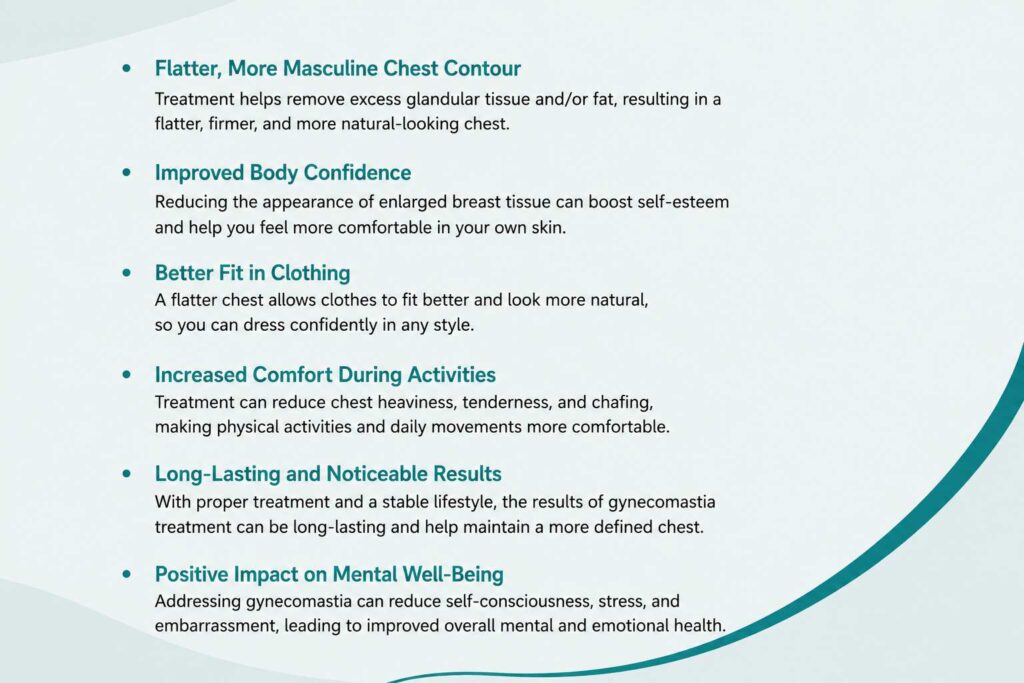
Understanding the potential benefits is an important part of deciding what is gynecomastia and how is it treated.
Depending on the chosen treatment, possible benefits may include:
- A flatter chest contour
- Improved chest symmetry
- Reduced breast fullness
- Less tenderness in some cases
- Greater confidence in clothing
- Improved comfort during physical activity
- Reduced emotional distress related to appearance
Results vary between individuals. Treatment should be selected according to the cause and characteristics of the condition rather than appearance alone.
What Factors Affect Treatment Choice
Several factors can influence which treatment is most appropriate.
Duration of the Condition
Recent gynecomastia may respond differently from long-standing enlargement. Older tissue can become more fibrous and may be less likely to disappear naturally.
Amount of Glandular Tissue
A firm glandular component may require a different approach from chest enlargement caused mainly by fat.
Body Weight
If excess body fat contributes significantly to chest fullness, weight management may be recommended. However, losing weight does not necessarily remove established glandular breast tissue.
Hormonal Balance
If an underlying hormonal issue is present, addressing that issue may be an important part of treatment.
Age
The cause and natural course of gynecomastia can differ according to age. Pubertal gynecomastia, for example, often behaves differently from persistent adult gynecomastia.
Tips for Managing Gynecomastia
If you have noticed breast enlargement, several practical steps can help you manage the situation while determining whether treatment is necessary.
Maintain a Healthy Weight
Regular physical activity and balanced nutrition can help reduce excess body fat.
Exercise may improve overall chest appearance, although it cannot directly remove established glandular breast tissue.
Review Medications
Make a list of prescription medicines, over-the-counter products, and supplements you use. Discuss them with a healthcare professional if you suspect a connection with breast enlargement.
Avoid Unsupervised Hormone Products
Anabolic steroids, testosterone products, and other hormone-related substances can affect the hormone balance associated with breast tissue growth.
Do not use hormone treatments without appropriate medical guidance.
Monitor Changes
Pay attention to changes in:
- Breast size
- Tenderness
- Lump characteristics
- Skin appearance
- Nipple changes
- Symmetry
Documenting changes can make follow-up discussions more useful.
What Is Recovery Like After Gynecomastia Surgery
Recovery varies depending on the surgical technique and the amount of tissue treated.
After surgery, temporary swelling and bruising may occur. A compression garment may sometimes be recommended to support the healing process and help control swelling.
General recovery guidance may include:
- Following wound-care instructions
- Taking prescribed medicines as directed
- Avoiding strenuous activity until cleared
- Wearing recommended compression garments
- Attending follow-up appointments
- Allowing adequate time for swelling to settle
The final chest contour may become clearer gradually as healing progresses.
When Should You Seek Medical Evaluation
Not every case of male breast enlargement is dangerous, but unexplained or persistent changes should not be ignored.
Professional evaluation is especially important when there is:
- A hard or unusual lump
- Rapid breast enlargement
- Significant or persistent pain
- Nipple discharge
- Skin changes
- Nipple retraction
- Significant one-sided enlargement
- Other unexplained hormonal symptoms
An evaluation can help determine whether the enlargement represents gynecomastia, fatty tissue, another breast condition, or an underlying medical issue.
Can Gynecomastia Be Prevented
Not every case can be prevented because some causes involve natural hormonal changes or medical conditions.
However, certain healthy habits may reduce avoidable risk factors.
These include:
- Maintaining a healthy body weight
- Avoiding non-prescribed anabolic steroids
- Using medications only as directed
- Discussing medication side effects with a healthcare professional
- Managing underlying health conditions
- Avoiding unsupervised hormone supplements
Prevention is primarily about identifying and managing contributing factors where possible.
Why Understanding the Condition Matters
Learning what is gynecomastia and how is it treated can help reduce confusion about male breast enlargement.
Many people initially assume that chest enlargement is caused entirely by weight gain. However, true gynecomastia involves glandular breast tissue and may require a different approach.
Early assessment can also help identify potentially reversible causes. When treatment is appropriate, choosing the right option can improve both physical appearance and quality of life.
Conclusion
Understanding what is gynecomastia and how is it treated is the first step toward making an informed decision about male breast enlargement. Gynecomastia can result from hormonal changes, medications, medical conditions, or other factors, and the appropriate treatment depends on the individual cause and severity.
Some cases improve naturally, while others may require medication, treatment of an underlying condition, or surgery. Maintaining a healthy lifestyle and seeking professional evaluation for persistent or unusual changes can help ensure the right approach.
For people seeking information about treatment options in Thrissur, Kerala, a proper assessment can help distinguish glandular gynecomastia from excess chest fat and identify the most appropriate management strategy. For reliable medical information about gynecomastia, you can refer to the Mayo Clinic’s overview of gynecomastia, which explains its causes, symptoms, and treatment options.
Frequently Asked Questions

Dr Prince
Consultant Plastic & Cosmetic Surgeon
Dr Prince is a Consultant Plastic and Reconstructive Surgeon at the Sushrutha Institute of Plastic Surgery, Elite Mission Hospital, Thrissur. He specializes in aesthetic and reconstructive procedures performed in a fully equipped hospital environment with strict safety protocols.
His expertise includes liposuction, rhinoplasty, gynecomastia correction, tummy tuck, breast surgery, and advanced facial aesthetic procedures, with a focus on safe techniques and natural-looking results.
Sushrutha Institute of Plastic Surgery, Elite Mission Hospital, Thrissur, Kerala