7 Essential Steps: What Happens During Gynecomastia Surgery
Understanding what happens during gynecomastia surgery can make the treatment process feel much less uncertain. For men considering male breast reduction in Thrissur, knowing what happens before, during, and immediately after the procedure can help set realistic expectations.
Gynecomastia is the enlargement of male breast tissue. It may involve glandular tissue, excess fat, loose skin, or a combination of these. When the condition persists and causes physical or emotional concerns, surgery may be considered after appropriate medical evaluation.
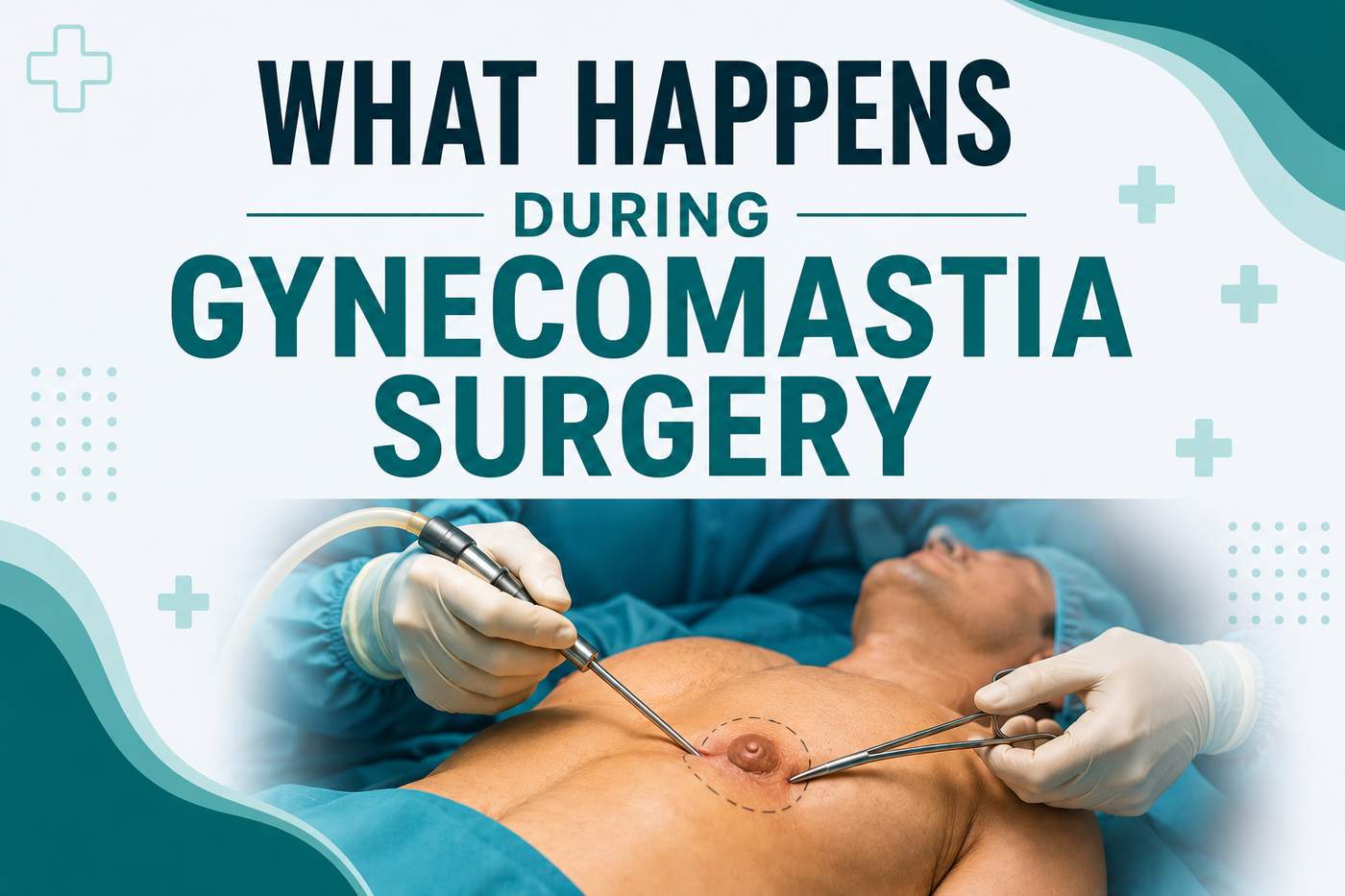
So, what happens during gynecomastia surgery? The procedure generally involves anesthesia, preparation of the chest, removal of excess fat and/or glandular tissue, reshaping of the chest, closing the incisions, and postoperative monitoring. The exact approach depends on the amount and type of tissue present.
What Happens During Gynecomastia Surgery
The first step in understanding what happens during gynecomastia surgery is knowing that it is not exactly the same for every patient. A surgeon evaluates the chest to determine whether enlargement is mainly caused by fat, glandular breast tissue, excess skin, or a combination.
The surgical plan may include:
- Liposuction to remove excess fatty tissue
- Excision to remove firm glandular tissue
- A combination of liposuction and excision
- Removal of excess skin in selected cases
- Adjustment of the areola or nipple position when significant tissue or skin needs to be removed
The goal is to create a flatter and more proportionate chest contour rather than simply removing as much tissue as possible.
What Happens Before Gynecomastia Surgery
Before discussing what happens during gynecomastia surgery, it is important to understand the preparation stage.
A medical consultation usually includes a review of your medical history, current medications, previous surgeries, allergies, lifestyle factors, and the duration and development of breast enlargement.
The chest may be physically examined to assess:
- Amount of glandular tissue
- Amount of fatty tissue
- Skin quality and elasticity
- Areola size and position
- Whether one or both sides are affected
- Overall chest symmetry
Additional testing may be recommended when the clinical assessment suggests it is necessary.
Patients may also receive instructions about medications, smoking, supplements, eating and drinking before surgery, and arranging transportation home.
Why Does Gynecomastia Develop
Knowing the underlying cause helps explain why different surgical techniques may be required.
Gynecomastia can develop when there is an imbalance between estrogen and testosterone activity. It may occur during puberty, with aging, because of certain medications, through some medical conditions, or alongside increased body weight.
Common contributing factors include:
- Hormonal changes
- Puberty-related breast development
- Aging
- Excess body weight
- Certain medications
- Some liver, kidney, or thyroid conditions
- Anabolic steroid use
Not every enlarged male chest is true gynecomastia. Some men have predominantly fatty tissue, sometimes called pseudogynecomastia. This distinction matters because fatty tissue and glandular tissue respond differently to treatment.
What Are the Types of Gynecomastia
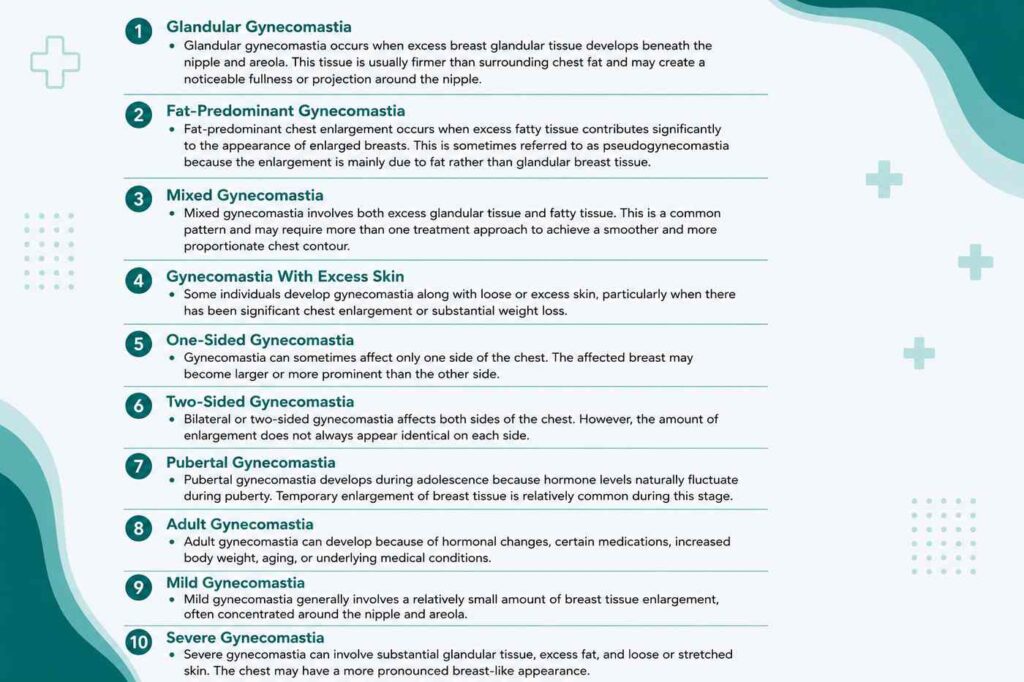
Understanding the tissue involved provides useful context for what happens during gynecomastia surgery.
Glandular Gynecomastia
This involves firm breast gland tissue beneath the nipple or areola. Because glandular tissue is denser than fat, it may require surgical excision.
Fat-Predominant Enlargement
When excess fatty tissue is the main concern, liposuction may be sufficient in selected patients.
Mixed Gynecomastia
Some patients have both glandular tissue and excess fat. In these cases, combining liposuction with tissue excision may provide a more balanced contour.
Gynecomastia With Loose Skin
Significant enlargement or major weight loss can leave excess skin. Depending on the situation, skin removal may be incorporated into the surgical plan.
What Happens During Anesthesia
One of the first things that happens during gynecomastia surgery is administration of anesthesia.
The appropriate anesthesia depends on the surgical plan, the extent of treatment, and the patient’s medical circumstances. Options may include intravenous sedation or general anesthesia.
With general anesthesia, the patient is unconscious throughout the procedure. In selected situations, sedation and local anesthesia may be appropriate.
The anesthesia team monitors vital signs throughout the operation, including breathing, heart rate, blood pressure, and oxygen levels.
The purpose of anesthesia is to keep the patient comfortable and allow the surgical team to perform the procedure safely.
What Happens During Liposuction
When excess fat contributes significantly to chest enlargement, liposuction may form part of the procedure.
During this part of what happens during gynecomastia surgery, small incisions are made in appropriate areas of the chest. A thin tube called a cannula is introduced through the incision.
The cannula is carefully moved through the fatty layer to loosen and remove unwanted fat using controlled suction.
Liposuction can help improve the transition between the chest and surrounding areas. However, liposuction does not remove firm glandular breast tissue itself.
This is why a patient with substantial glandular tissue may require excision in addition to liposuction.
What Happens During Glandular Tissue Removal
Another important part of what happens during gynecomastia surgery is excision of glandular tissue.
Firm tissue beneath the nipple may not respond adequately to liposuction alone. In such cases, the surgeon creates an incision that provides access to the glandular tissue.
The excess tissue is carefully removed while preserving appropriate surrounding structures and aiming for a natural chest contour.
The location and size of the incision vary according to the amount of tissue being removed, skin excess, areola characteristics, and the surgical technique selected.
The surgeon may combine excision with liposuction to smooth the surrounding area and reduce the possibility of an abrupt transition between treated and untreated tissue.
What Happens During Chest Contouring
Removing tissue is only one component of what happens during gynecomastia surgery.
After excess fat and glandular tissue are removed, the chest is assessed for symmetry and contour. The aim is to avoid an overly hollow appearance and create a smooth transition across the chest.
In more advanced cases, excess skin may also need to be addressed. When significant tissue and skin are removed, the nipple or areola may need repositioning to maintain appropriate proportions.
This contouring stage is important because the desired result is not simply a smaller chest. It is a chest shape that appears appropriately proportioned to the individual’s body.
What Happens After the Tissue Is Removed
Once the planned tissue removal and contouring are completed, the surgical team checks the treated areas carefully.
The incisions are closed using appropriate surgical techniques. Dressings or bandages are then placed over the treated areas.
In some cases, a small temporary drain may be used to help remove blood or fluid that collects beneath the skin. Whether a drain is required depends on the surgical approach and individual circumstances.
A compression garment may also be recommended. It can provide support and help control postoperative swelling while the tissues heal.
What Happens Immediately After Gynecomastia Surgery
After understanding what happens during gynecomastia surgery itself, patients often want to know what happens immediately afterward.
Following the procedure, the patient is taken to a recovery area where the medical team observes the recovery from anesthesia.
Some temporary effects can include:
- Swelling
- Bruising
- Tenderness
- Tightness across the chest
- Mild discomfort
- Temporary changes in skin sensation
The intensity of these effects varies between individuals.
Pain medication may be prescribed or recommended according to the patient’s needs. Postoperative instructions generally cover wound care, medication use, activity restrictions, compression garments, and follow-up appointments
What Are the Benefits of Gynecomastia Surgery
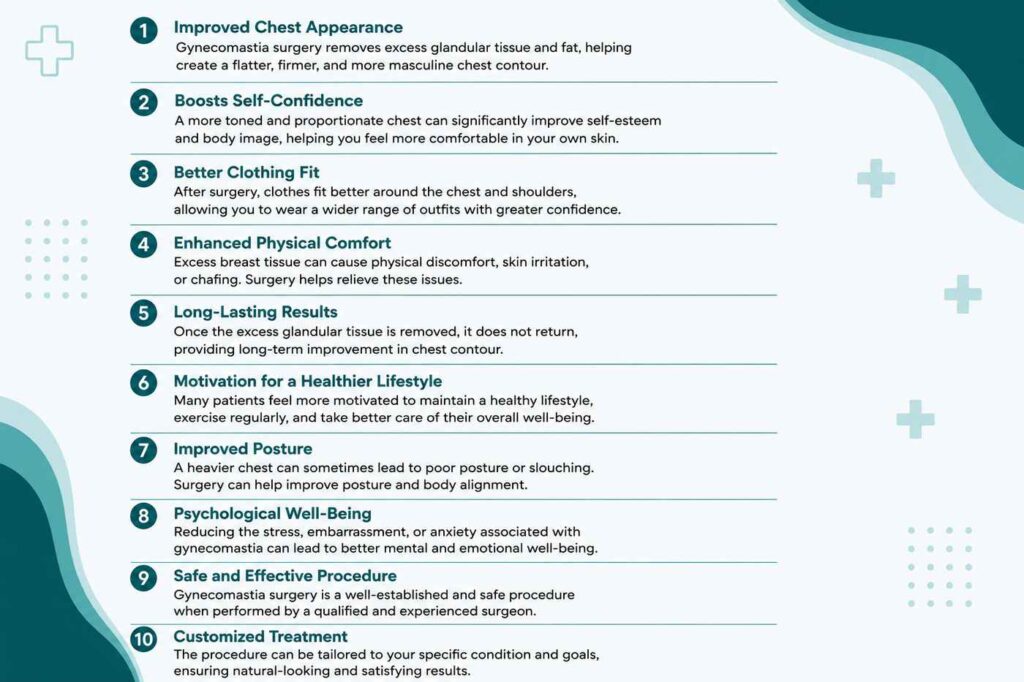
The main benefit of what happens during gynecomastia surgery is correction of excess chest tissue and improvement of chest contour.
Potential benefits include:
- A flatter-looking chest
- Reduced excess glandular tissue
- Reduction of localized chest fat
- Improved chest proportions
- Better definition of the chest contour
- Reduction of excess skin in appropriately selected cases
- Greater comfort with clothing and physical activities
The procedure is primarily intended to correct physical enlargement. Changes in confidence and body image may occur afterward, but individual experiences vary.
The expected result depends on factors such as the amount of tissue removed, skin elasticity, healing, body composition, and the surgical technique used.
How Long Does Recovery Take
Recovery is an important part of what happens during gynecomastia surgery, even though it occurs after the operation.
Patients commonly experience swelling and bruising during the early recovery period. A compression garment may be recommended to support the chest and help manage swelling.
The exact recovery timeline differs according to the extent of surgery and individual healing.
Patients should follow their surgeon’s instructions regarding:
- Returning to work
- Showering
- Driving
- Sleeping position
- Physical activity
- Exercise
- Heavy lifting
- Wearing compression garments
- Wound care
The chest may continue changing as swelling decreases. Final results may take several months to become fully apparent.
What Are the Risks of Gynecomastia Surgery
Like other surgical procedures, what happens during gynecomastia surgery can involve potential risks and complications.
Possible complications include:
- Bleeding
- Infection
- Fluid collection
- Hematoma
- Changes in sensation
- Persistent numbness
- Scarring
- Uneven contours
- Asymmetry
- Delayed wound healing
- Reactions related to anesthesia
Liposuction can also have risks such as contour irregularities, temporary or persistent numbness, fluid accumulation, and other uncommon complications.
It is important to discuss individual risks with the treating surgical team rather than assuming that every patient has the same risk profile.
What Should You Do Before Surgery
Good preparation can make the overall treatment process more organized.
Before what happens during gynecomastia surgery, patients should provide complete information about their health and medications.
Helpful preparation may include:
- Follow preoperative instructions carefully.
- Tell the medical team about all medications and supplements.
- Follow instructions regarding medicines that may increase bleeding.
- Stop smoking if advised.
- Arrange transportation after surgery.
- Arrange assistance during the initial recovery period.
- Prepare comfortable clothing that is easy to put on and remove.
- Understand wound-care and compression-garment instructions before the operation.
ASPS notes that patients may be asked to undergo medical evaluation or laboratory testing and may need to modify certain medications before surgery.
What Should You Do After Surgery
The aftercare period is essential to the overall outcome.
After what happens during gynecomastia surgery, patients should follow their individualized postoperative instructions instead of relying on general online advice.
Important tips include:
- Keep the surgical area clean as instructed.
- Wear the recommended compression garment.
- Take prescribed medicines according to instructions.
- Avoid strenuous activity until cleared.
- Do not lift heavy objects prematurely.
- Attend scheduled follow-up appointments.
- Protect healing incisions from unnecessary irritation.
- Contact the surgical team if unusual symptoms develop.
Do not restart exercise simply because pain has decreased. Internal healing can continue even when the outside of the chest appears improved.
When Can You See the Results
The initial improvement may be visible relatively soon after what happens during gynecomastia surgery, but swelling can temporarily hide the final contour.
As healing progresses, swelling gradually decreases and the chest becomes more defined.
According to the American Society of Plastic Surgeons, final results can take approximately three to six months, although the timeline varies between patients. Incision lines may also continue fading over time but are permanent scars.
Maintaining a relatively stable weight can help preserve the overall contour achieved through surgery.
Who May Consider Gynecomastia Surgery
Surgery may be considered for men with persistent breast enlargement that causes physical or psychological concerns, particularly when the enlargement has stabilized and other appropriate approaches have not provided the desired improvement.
A suitable candidate generally needs to have realistic expectations and understand that surgery has limitations and risks.
However, surgery is not automatically the right solution for every enlarged male chest.
A medical assessment may be appropriate when there is:
- A new breast lump
- Persistent breast or nipple pain
- Nipple discharge or bleeding
- Skin changes
- Rapid or unexplained enlargement
- Significant one-sided changes
These symptoms should be medically evaluated rather than assumed to be ordinary gynecomastia
Conclusion
Knowing what happens during gynecomastia surgery helps patients understand that the procedure is a carefully planned process rather than simply removing chest tissue. Depending on the underlying anatomy, treatment may involve liposuction, glandular tissue excision, excess skin removal, or a combination of techniques.
The process generally includes preoperative assessment, anesthesia, tissue removal, chest contouring, incision closure, postoperative monitoring, and structured recovery. The technique is selected according to the type and severity of gynecomastia and the patient’s individual anatomy.
Understanding the causes, tissue types, symptoms, treatment options, benefits, risks, and recovery expectations can help patients make informed decisions. For those considering treatment in Thrissur, an appropriate medical consultation is the best way to determine whether surgery is suitable and which technique may provide the most appropriate result.
Frequently Asked Questions

Dr Prince
Consultant Plastic & Cosmetic Surgeon
Dr Prince is a Consultant Plastic and Reconstructive Surgeon at the Sushrutha Institute of Plastic Surgery, Elite Mission Hospital, Thrissur. He specializes in aesthetic and reconstructive procedures performed in a fully equipped hospital environment with strict safety protocols.
His expertise includes liposuction, rhinoplasty, gynecomastia correction, tummy tuck, breast surgery, and advanced facial aesthetic procedures, with a focus on safe techniques and natural-looking results.
Sushrutha Institute of Plastic Surgery, Elite Mission Hospital, Thrissur, Kerala