Risks and Safety of Breast Implants: What Every Patient Should Know

Choosing breast implant surgery is a significant personal decision, and understanding the Risks and Safety of Breast Implants is an important part of preparing for the procedure. While breast implant surgery is widely performed, every surgical procedure carries potential risks. Learning about these risks, the safety measures followed before and after surgery, and the importance of choosing an experienced plastic surgeon helps patients make informed decisions with realistic expectations.
Modern breast implant surgery is performed using evidence-based techniques, careful surgical planning, and structured post-operative care to prioritize patient safety. At every stage of treatment, from consultation through recovery, the focus remains on minimizing complications, supporting healthy healing, and achieving natural-looking, long-lasting results. This guide explains the Risks and Safety of Breast Implants, common concerns, safety protocols, and how patients can actively contribute to a successful surgical outcome.
Understanding Breast Implant Safety
Understanding the Risks and Safety of Breast Implants begins with recognizing that breast implant surgery is a carefully planned medical procedure. Every patient undergoes an individual assessment to determine whether the surgery is appropriate based on their health, goals, and medical history.
Patient safety is not limited to the operating room. It begins during the consultation, continues throughout the surgical procedure, and remains a priority during the recovery period through regular follow-up appointments and structured post-operative care.
Are Breast Implants Safe?
For appropriately selected patients, breast implant surgery is generally considered a safe procedure when performed by a qualified plastic surgeon in a fully equipped hospital environment.
Safety depends on several important factors, including:
- Comprehensive pre-operative evaluation
- Individualized surgical planning
- Evidence-based surgical techniques
- Strict infection control measures
- Accredited hospital facilities
- Careful post-operative monitoring
- Patient compliance with recovery instructions
Understanding both the benefits and the Risks and Safety of Breast Implants allows patients to make informed healthcare decisions.
Factors That Influence the Risks and Safety of Breast Implants
Several factors contribute to surgical safety and recovery outcomes.
1) Patient Health
Overall health plays an important role in both surgery and recovery. Your surgeon will evaluate your medical history before recommending treatment.
2) Following Medical Advice
Carefully following pre-operative and post-operative instructions supports safer healing and reduces the likelihood of avoidable complications.
3) Hospital Environment
A fully equipped hospital with established safety protocols provides the infrastructure needed to support safe surgical care.
4) Surgical Experience
Choosing an experienced plastic surgeon contributes to appropriate surgical planning, patient education, and structured post-operative care.
Preparing for Breast Implant Surgery
Preparation is an important part of reducing the Risks and Safety of Breast Implants.
Before surgery, patients may receive guidance regarding:
- Medical evaluation
- Current medications
- Lifestyle recommendations
- Smoking cessation, if applicable
- Recovery planning
- Post-operative support at home
Being well prepared helps patients approach surgery with greater confidence.
Safety During Breast Implant Surgery
Patient safety remains the primary focus throughout the surgical procedure.
Important safety measures include:
- Careful surgical planning
- Sterile operating environment
- Modern surgical techniques
- Continuous patient monitoring
- Experienced surgical team
- Hospital-based care
- Structured anaesthesia protocols
Each step is designed to support patient well-being while maintaining high clinical standards.
Recovery and Post-Operative Safety
Recovery is an essential part of the Risks and Safety of Breast Implants. Proper healing depends on both medical supervision and patient participation.
Patients should:
- Attend all follow-up appointments
- Wear recommended support garments
- Take prescribed medications as directed
- Keep incision sites clean
- Avoid strenuous physical activity until medically cleared
- Follow recovery instructions carefully
Structured post-operative care helps monitor healing and supports a safe recovery. Understanding the recovery process is an important part of reducing the Risks and Safety of Breast Implants. Patients who would like a detailed explanation of healing stages, recovery milestones, and post-operative care can read our complete guide on Breast Implant Recovery Timeline to learn what to expect after breast implant surgery.
How Patients Can Support Safe Healing
Patients play an active role in achieving successful surgical outcomes.
Helpful recovery habits include:
- Getting adequate rest
- Staying hydrated
- Maintaining a balanced diet
- Avoiding smoking
- Avoiding heavy lifting
- Following medication instructions
- Monitoring healing progress
- Reporting unexpected symptoms promptly
These practices help support overall recovery while minimizing unnecessary risks.
Why Choosing an Experienced Plastic Surgeon Matters
Choosing a qualified plastic surgeon is one of the most important decisions when considering breast implant surgery.
An experienced surgeon provides:
- Detailed consultation
- Personalized treatment planning
- Evidence-based recommendations
- Realistic expectations
- Structured recovery guidance
- Continuous post-operative follow-up
A patient-centered approach helps ensure every stage of treatment is carefully planned with safety as the priority.
Conclusion
Understanding the Risks and Safety of Breast Implants helps patients make informed decisions and prepare confidently for breast implant surgery. While every surgical procedure involves potential risks, careful planning, evidence-based surgical techniques, and structured post-operative care significantly contribute to patient safety and successful outcomes. To learn more about breast implant safety and patient education, visit the American Society of Plastic Surgeons (ASPS).
Choosing an experienced plastic surgeon and an accredited hospital environment plays a vital role in every stage of treatment. With personalized care, comprehensive consultations, and a strong commitment to patient safety, individuals can better understand the Risks and Safety of Breast Implants while working toward natural-looking results with confidence.
Frequently Asked Questions
Yes. Breast implants are generally considered safe when the procedure is performed by a qualified plastic surgeon in a fully equipped hospital, followed by appropriate post-operative care and regular follow-up.
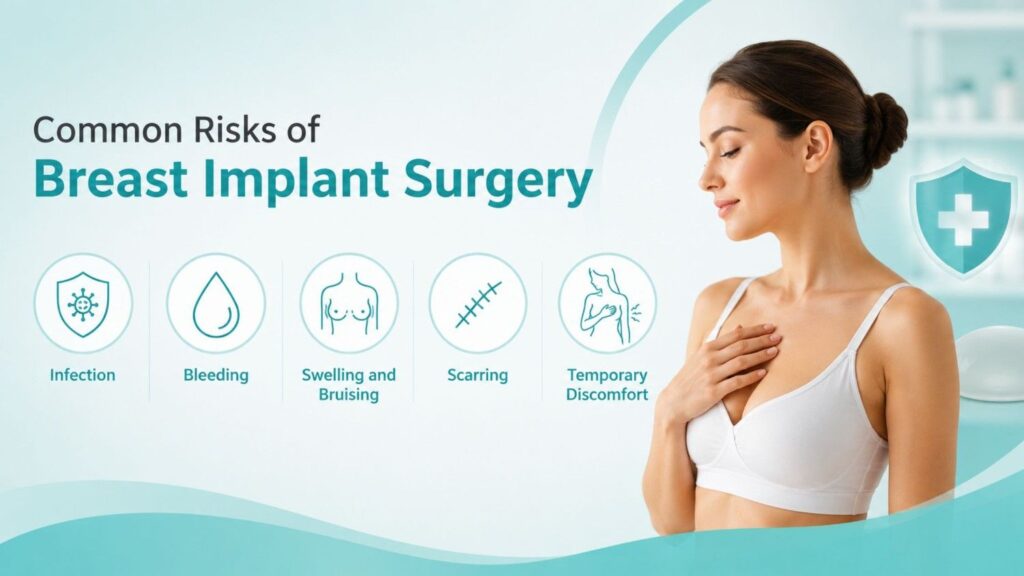
Common risks may include infection, bleeding, swelling, bruising, scarring, temporary discomfort, and other surgical risks that should be discussed during your consultation.
While no surgical procedure is completely risk-free, careful surgical planning, following pre- and post-operative instructions, and attending follow-up appointments can help minimize potential risks.
Choosing an experienced plastic surgeon is one of the most important factors in achieving safe treatment, personalized surgical planning, and structured post-operative care.
Follow-up appointments allow your surgeon to monitor healing, assess recovery, answer questions, and identify any concerns early to support a safe recovery.
Recovery typically includes temporary swelling, bruising, and mild discomfort that gradually improve over time. Your surgeon will provide personalized guidance based on your recovery progress.
Yes. Undergoing surgery in a fully equipped and accredited hospital with established safety protocols contributes to a safer surgical experience and comprehensive patient care.
Following your surgeon's instructions, attending follow-up visits, wearing recommended support garments, maintaining good nutrition, staying hydrated, and avoiding strenuous activities all contribute to a safer recovery.
Every surgical procedure involves incisions, and scars gradually mature over time. Proper incision care and following your surgeon's recommendations can support healthy scar healing.
Understanding the Risks and Safety of Breast Implants helps patients make informed decisions, develop realistic expectations, prepare for surgery, and actively participate in achieving a safe recovery.

Dr Prince
Consultant Plastic & Cosmetic Surgeon
Dr Prince is a Consultant Plastic and Reconstructive Surgeon at the Sushrutha Institute of Plastic Surgery, Elite Mission Hospital, Thrissur. He specializes in aesthetic and reconstructive procedures performed in a fully equipped hospital environment with strict safety protocols.
His expertise includes liposuction, rhinoplasty, gynecomastia correction, tummy tuck, breast surgery, and advanced facial aesthetic procedures, with a focus on safe techniques and natural-looking results.
Sushrutha Institute of Plastic Surgery, Elite Mission Hospital, Thrissur, Kerala