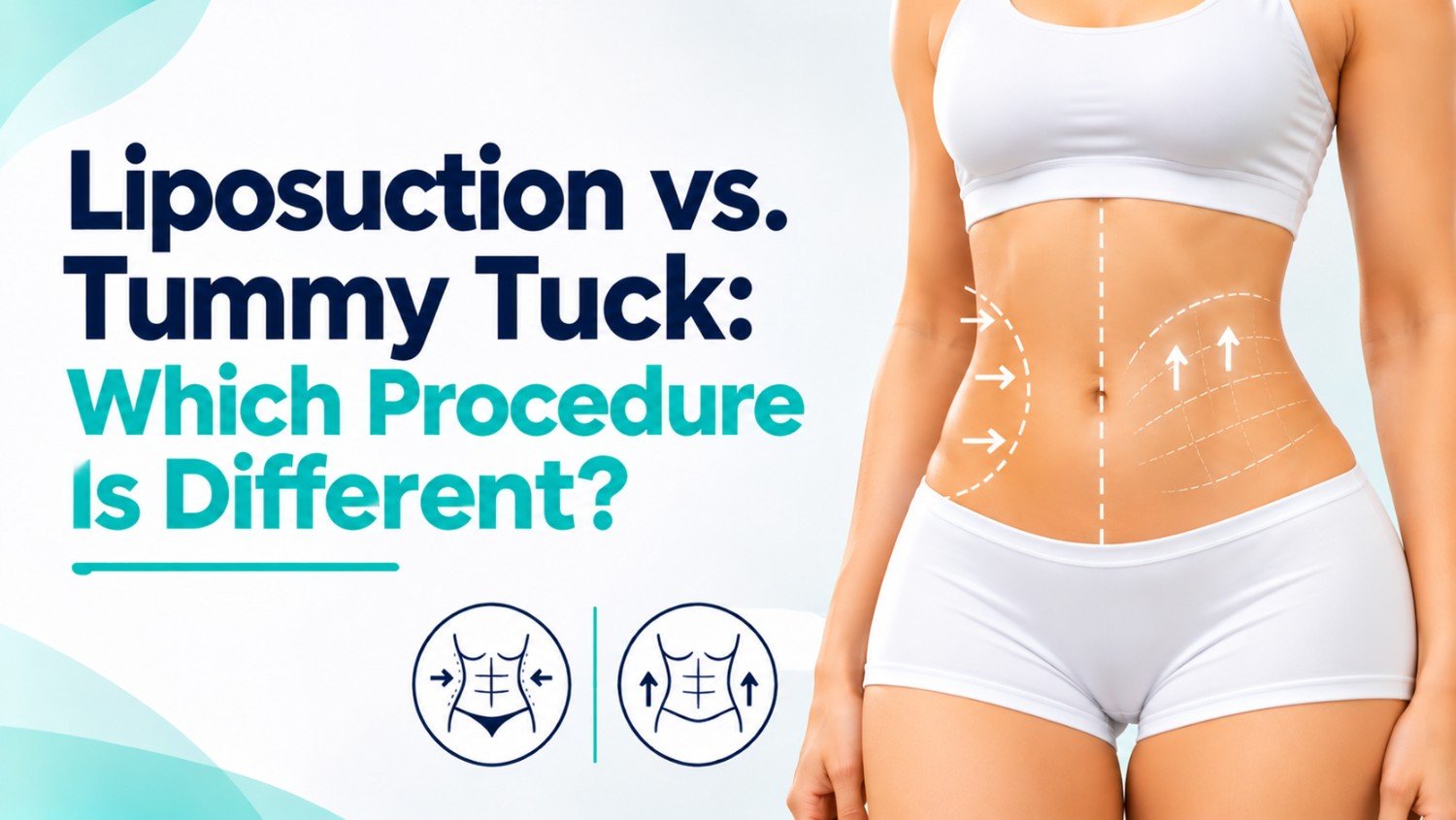
Liposuction vs. Tummy Tuck: Which Procedure Is Different? can help individuals choose an appropriate body contouring option based on their concerns and goals. Although both procedures can improve abdominal appearance, they address different issues. Liposuction focuses on removing stubborn pockets of fat that remain despite diet and exercise, while a tummy tuck removes excess skin and may tighten weakened abdominal muscles. Knowing these differences can help you understand which procedure may be more suitable for your needs.
For individuals considering Liposuction vs. Tummy Tuck in Thrissur, the right choice depends on factors such as skin elasticity, the amount of excess fat, loose abdominal skin, muscle separation, and overall health. A qualified plastic surgeon can assess these factors and explain the expected benefits, limitations, recovery process, and possible risks of each procedure. Understanding these aspects before making a decision can help you approach body contouring with realistic expectations.
1.Liposuction vs Tummy Tuck: Which Procedure Is Different?
Liposuction and tummy tuck surgery are two different cosmetic procedures used to improve the appearance of the abdomen. Liposuction focuses mainly on removing unwanted fat deposits from specific areas. A thin instrument called a cannula is inserted through small incisions to loosen and remove fat using suction. It is commonly considered by people who have stubborn fat despite maintaining a stable weight and healthy lifestyle. The procedure can also be used on areas such as the hips, thighs, arms, back, and chin, depending on individual suitability.
A tummy tuck focuses on improving the abdominal area by removing excess skin and fat and, when needed, tightening weakened or separated abdominal muscles. This procedure may be suitable for people who have loose skin after pregnancy, significant weight loss, or ageing. Unlike liposuction alone, a tummy tuck can address abdominal muscle separation, medically known as diastasis recti. The surgeon may also use liposuction during a tummy tuck to improve body contours. Therefore, both procedures have different purposes and should not be considered interchangeable treatments.
2. Main Difference Between Liposuction and Tummy Tuck Surgery
The most important difference is the type of concern each procedure addresses. Liposuction is designed primarily to remove localised fat beneath the skin. It does not remove significant amounts of loose skin or repair separated abdominal muscles. People with reasonably firm skin and stubborn fat deposits may be considered for this procedure. The aim is to improve body contours rather than achieve major weight loss. It is important to understand that liposuction cannot remove fat located deep inside the abdomen around internal organs.
A tummy tuck addresses excess abdominal skin and can tighten weakened or separated muscles while removing some excess fat and skin. It usually involves a larger incision than liposuction and may leave a longer scar across the lower abdomen. The belly button may also need repositioning during a full tummy tuck. The procedure is often considered after pregnancy or major weight changes when the abdominal skin has become loose. A surgeon evaluates the amount of excess skin, muscle condition, health, and personal goals before recommending surgery.
3. Liposuction vs. Tummy Tuck: Which Procedure Is Different for Removing Belly Fat?
Liposuction may be appropriate for people who have localised fat deposits around the abdomen but relatively good skin elasticity. For example, someone may maintain a healthy weight and exercise regularly but still have a small amount of stubborn fat around the waist or lower abdomen. Liposuction can remove selected fat deposits and improve the body’s contour. However, it is not a treatment for obesity, and it cannot remove visceral fat, which is stored deeper inside the abdominal cavity around internal organs.
A tummy tuck may be more suitable when abdominal fullness is accompanied by loose or hanging skin. This can happen after pregnancy, significant weight loss, or natural ageing. During surgery, the surgeon removes excess skin and may repair separated abdominal muscles to create a firmer abdominal wall. If a patient has both stubborn fat and loose skin, a combined approach may be considered. The surgeon must assess the patient’s anatomy carefully because removing fat alone may not achieve the desired appearance when significant loose skin is present.
4. Who Is a Good Candidate for Liposuction?
A good candidate for liposuction is generally a healthy adult who is close to a stable body weight and has specific areas of unwanted fat. The person should have reasonably good skin elasticity because the skin needs to adjust to the body’s new contours after fat removal. Liposuction is not intended to replace healthy eating, physical activity, or medical weight-management treatment. People should also understand that the procedure has limitations and that results vary according to individual anatomy, healing, and lifestyle.
During a consultation, the plastic surgeon reviews medical history, current health, previous surgeries, medications, and body-contouring goals. Smoking, certain medical conditions, and medicines that affect bleeding or healing may influence surgical suitability. Patients should discuss these factors honestly. Realistic expectations are also important because liposuction cannot guarantee a perfectly flat abdomen or remove cellulite. A detailed examination helps determine whether liposuction alone is appropriate or whether another procedure may better address the patient’s concerns.
5. Who Is a Good Candidate for Tummy Tuck Surgery?
A tummy tuck may be considered by healthy adults who have excess abdominal skin, weakened abdominal muscles, or a combination of both. It is commonly discussed by people who have experienced pregnancy or significant weight loss. For example, a person may have lost considerable weight but still have a loose fold of skin around the lower abdomen. Exercise can strengthen muscles, but it cannot always remove large amounts of stretched skin. A tummy tuck can address these concerns through surgical removal of excess skin and, when appropriate, muscle repair.
Patients considering a tummy tuck should ideally be at a stable weight and have realistic expectations about the results and surgical scar. People planning future pregnancies or major weight loss may be advised to postpone the procedure because these changes can affect the outcome. Smoking and certain health conditions may increase the risk of complications. A qualified plastic surgeon evaluates the patient’s health, skin condition, abdominal muscles, and personal goals before recommending a full or mini tummy tuck.
6. Liposuction vs. Tummy Tuck: Which Procedure Is Different in Surgical Techniques?
Liposuction is usually performed through small incisions placed near the treatment area. The surgeon inserts a thin cannula beneath the skin and uses controlled movements and suction to remove selected fat deposits. Different techniques may be used depending on the patient’s anatomy and the surgeon’s treatment plan. The small incisions generally leave smaller scars than a traditional tummy tuck, although scar appearance varies between individuals. The procedure may involve local or general anaesthesia depending on the extent of treatment.
A tummy tuck generally requires a longer incision across the lower abdomen. Through this incision, the surgeon removes excess skin and fat and may tighten separated abdominal muscles. In a full tummy tuck, an additional incision around the belly button may be required to reposition it. A mini tummy tuck is a smaller procedure that usually addresses excess skin and fullness below the belly button. The surgical technique depends on the amount of loose skin, muscle weakness, and the patient’s abdominal structure.
7. Recovery Time and Aftercare: Liposuction vs. Tummy Tuck
Recovery after liposuction depends on the number of areas treated, the amount of fat removed, and the patient’s general health. Swelling, bruising, tenderness, and temporary changes in sensation are common during the healing period. Patients may be advised to wear compression garments to support the treated areas and help manage swelling. Light walking may be encouraged when permitted, but heavy lifting and strenuous exercise should be avoided until the surgeon gives approval. Swelling can take several weeks or months to settle completely.
Tummy tuck recovery may involve more restrictions because the procedure includes skin removal and possible muscle tightening. Patients may experience abdominal tightness, swelling, discomfort, and difficulty standing completely upright during the early healing period. Depending on the operation, drains may be used temporarily to remove excess fluid. Patients need to follow wound-care instructions, attend follow-up appointments, and avoid strenuous activities for the period recommended by their surgeon. Recovery varies considerably, so patients should not compare their healing progress with another person’s experience.
8. Benefits, Risks, and Possible Scarring
Liposuction can improve body contours by removing selected fat deposits from areas that do not respond easily to diet and exercise. It generally involves smaller incisions than tummy tuck surgery. However, possible risks include bruising, swelling, infection, bleeding, contour irregularities, fluid accumulation, and changes in skin sensation. Liposuction does not reliably tighten significantly loose skin. Patients with poor skin elasticity may notice that loose skin remains after fat removal. The surgeon should explain the possible results and limitations before the procedure.
A tummy tuck can remove excess abdominal skin and tighten weakened or separated abdominal muscles. It may be helpful for people who have loose skin after pregnancy or major weight loss. However, it usually creates a longer scar across the lower abdomen, and the healing process may involve more restrictions. Possible complications include infection, bleeding, fluid accumulation, poor wound healing, blood clots, changes in sensation, and unfavourable scarring. Both procedures require careful surgical planning, appropriate patient selection, and postoperative follow-up.
9. Can Liposuction and Tummy Tuck Be Performed Together?
In some patients, liposuction and tummy tuck surgery can be combined to address different abdominal concerns during the same operation. For example, a patient may have stubborn fat deposits along the waist along with loose abdominal skin and separated muscles. Liposuction can help remove selected fat deposits, while a tummy tuck can remove excess skin and tighten the abdominal wall when appropriate. Combining procedures may allow the surgeon to address more than one concern within a single treatment plan.
However, combined surgery is not suitable for everyone. The surgeon must consider the patient’s health, amount of fat and skin to be treated, surgical duration, and potential risks. In some cases, performing procedures separately may be safer than combining them. The decision should be based on an individual examination and a discussion of the benefits, limitations, recovery requirements, and possible complications. Patients should never choose a combined procedure simply because they expect faster results or a shorter overall treatment journey.
10. Liposuction vs. Tummy Tuck in Thrissur: How to Choose the Right Procedure
People researching Liposuction vs. Tummy Tuck in Thrissur should begin by understanding their main abdominal concern. If the concern is localised fat with reasonably firm skin, liposuction may be discussed. If the main problem is loose or hanging skin or weakened abdominal muscles, a tummy tuck may be more appropriate. Some patients may benefit from a combination of procedures, while others may not need surgery at all. The correct recommendation depends on a physical examination and a review of the patient’s medical history.
Before choosing a procedure, consult a qualified plastic surgeon and ask about surgical techniques, expected results, scars, recovery time, risks, and postoperative care. It is also useful to understand the surgeon’s experience with the recommended procedure and the facilities where surgery will be performed. Patients should receive clear information about costs and follow-up arrangements before making a decision. The best procedure is not necessarily the more extensive one; it is the option that safely addresses the patient’s individual concerns and realistic treatment goals.