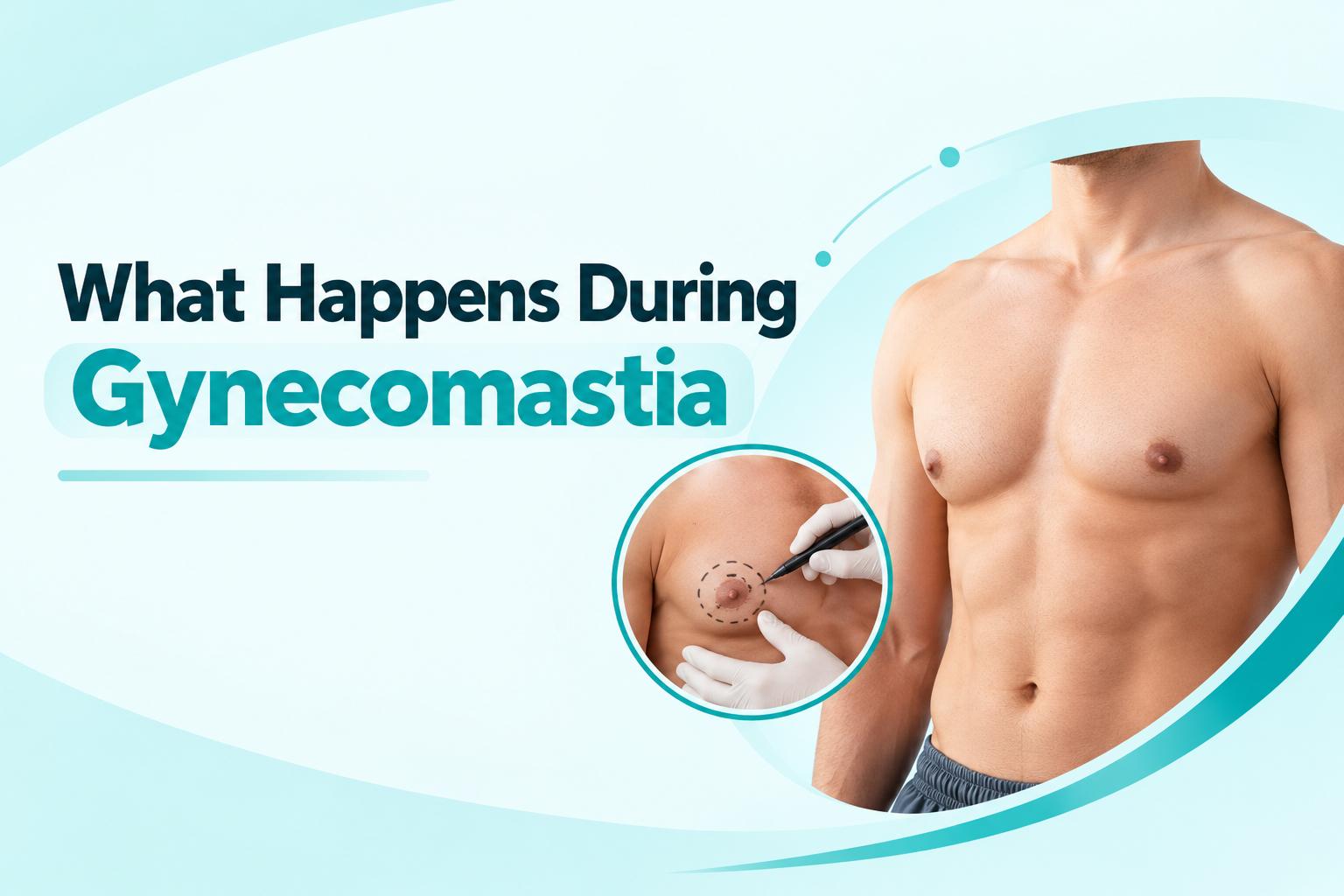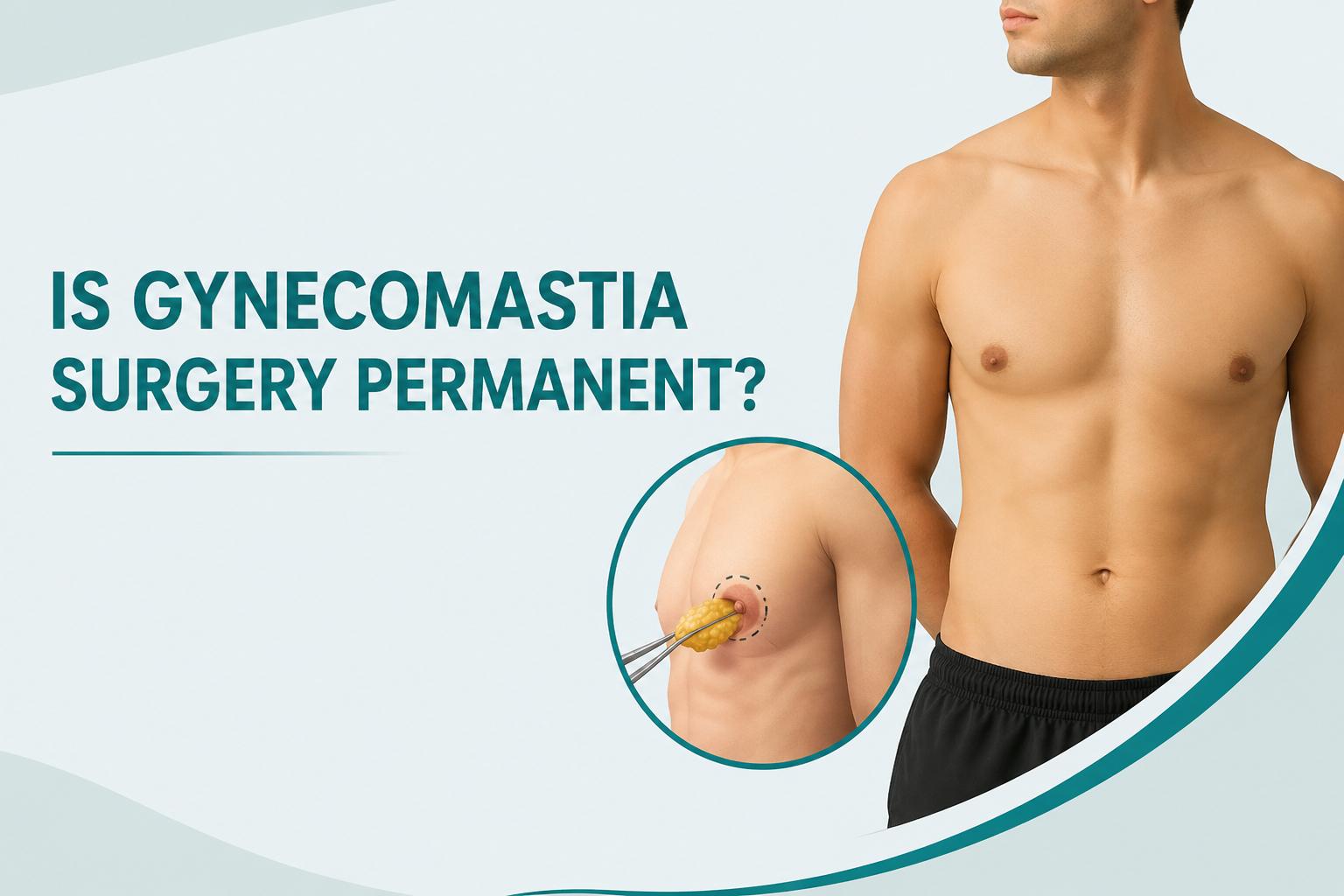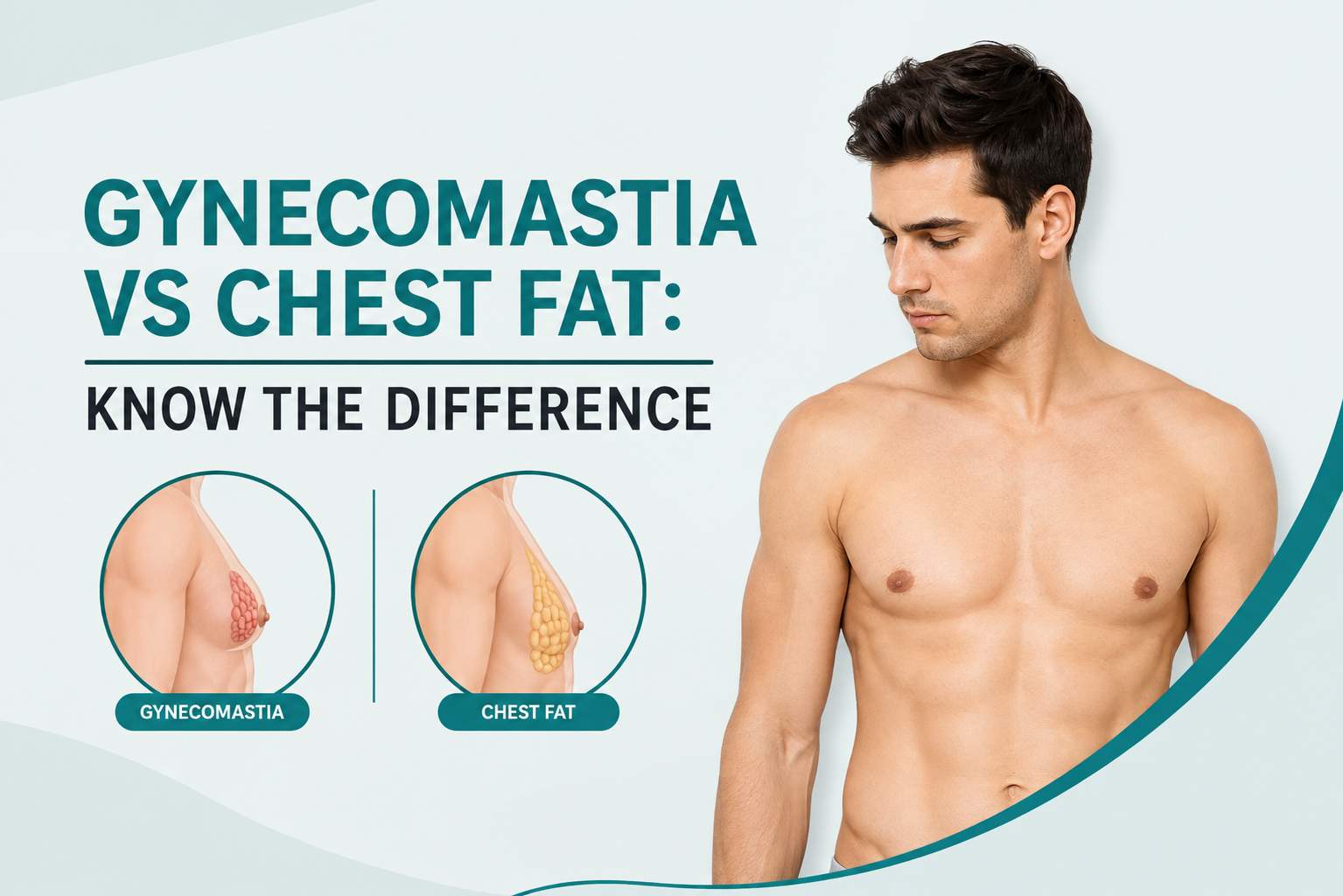
Gynecomastia vs Chest Fat: 7 Key Differences You Should Know
Understanding gynecomastia vs chest fat can be confusing because both conditions can make the male chest look enlarged. However, they are not the same. Gynecomastia is associated with the growth of glandular breast tissue, while chest fat is mainly excess fatty tissue stored around the chest. Knowing the difference can help you understand why your chest looks enlarged and what type of treatment may be appropriate.
For people in Kerala, recognizing the difference between gynecomastia vs chest fat can also make it easier to discuss concerns about chest appearance during a professional evaluation. While body weight, hormones, age, genetics, and lifestyle can all influence the chest, the underlying cause determines the most suitable solution.
This guide explains gynecomastia vs chest fat in simple terms, including causes, types, symptoms, differences, treatment options, benefits, and practical tips.
What Is Gynecomastia
Gynecomastia is the enlargement of male breast tissue. It commonly occurs when there is an imbalance between estrogen and testosterone activity in the body.
Unlike simple fat accumulation, gynecomastia involves actual enlargement of glandular tissue beneath or around the nipple area. It may affect one side of the chest or both sides.
Gynecomastia can occur at different stages of life, including:
- Puberty
- Adulthood
- Later life
Some cases are temporary, particularly during puberty. Others may persist and become a long-term concern.
When comparing gynecomastia vs chest fat, the presence of firm tissue underneath the nipple is one of the important clues that may point toward gynecomastia.
What Is Chest Fat
Chest fat refers to excess fatty tissue stored around the chest. It is generally related to overall body fat rather than enlargement of breast glands.
Men who gain weight may notice additional fat around several areas, including:
- Chest
- Abdomen
- Waist
- Back
- Arms
- Face
Chest fat usually feels softer than glandular tissue. Its appearance may also change as overall body weight increases or decreases.
In the comparison of gynecomastia vs chest fat, chest fat is primarily associated with adipose tissue, while gynecomastia involves glandular breast tissue.
Gynecomastia vs Chest Fat: The 7 Key Differences
Knowing the differences between these two conditions can help you better understand what may be contributing to chest enlargement.
1. Type of Tissue
The biggest difference in gynecomastia vs chest fat is the type of tissue involved.
Gynecomastia involves glandular breast tissue. Chest fat consists mainly of excess adipose tissue.
This difference is important because fat reduction and glandular tissue removal are not the same treatment approach.
2. How the Chest Feels
Chest fat generally feels soft and evenly distributed. Gynecomastia may feel firmer, particularly directly beneath the nipple or areola.
A firm or rubbery area under the nipple can occur with gynecomastia, although physical examination is required to determine the exact cause.
3. Relationship With Weight
Chest fat is commonly associated with increased body fat. Losing weight may reduce the amount of fat stored around the chest.
Gynecomastia may remain even after substantial weight loss because glandular tissue does not necessarily disappear through dieting or exercise.
This is one of the most useful points when considering gynecomastia vs chest fat.
4. Appearance of the Nipple Area
Gynecomastia can create a more prominent or puffy appearance around the nipple and areola.
With chest fat, enlargement is often more diffuse across the chest rather than concentrated directly underneath the nipple.
However, appearance alone cannot always distinguish gynecomastia vs chest fat.
5. Response to Exercise
Exercise can reduce overall body fat and improve chest muscle definition. This can be particularly helpful when excess chest fat is the primary concern.
However, exercise does not directly eliminate enlarged glandular breast tissue.
Therefore, if chest enlargement remains despite significant improvements in body composition, gynecomastia may need to be considered.
6. Causes
Chest fat is frequently connected with excess calorie intake, weight gain, reduced activity, and overall body-fat percentage.
Gynecomastia can have several possible causes, including hormonal changes, certain medications, underlying medical conditions, and normal changes associated with age.
7. Treatment Approach
Treatment for chest fat may focus on weight management, exercise, nutrition, and body-fat reduction.
Persistent gynecomastia may require a different approach, depending on its cause, severity, duration, and the amount of glandular and fatty tissue present.
Causes of Gynecomastia
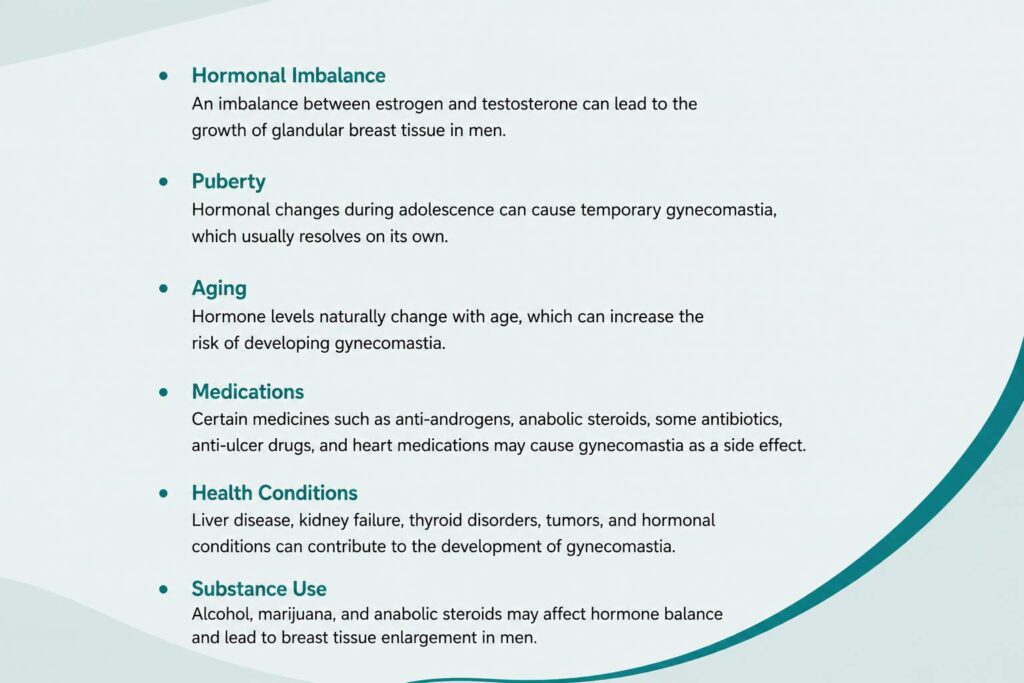
Understanding the possible causes is an important part of gynecomastia vs chest fat.
Hormonal Changes
Hormonal fluctuations can affect breast tissue growth. Gynecomastia may develop when estrogen activity becomes relatively stronger compared with testosterone activity.
This can occur naturally during puberty and aging.
Medications
Some medications have been associated with gynecomastia. The effect depends on the specific medication and individual circumstances.
Anyone concerned about a possible medication-related change should discuss it with a qualified healthcare professional rather than stopping prescribed medication independently.
Health Conditions
Certain health conditions can influence hormone balance and contribute to breast tissue enlargement.
A professional assessment can help identify whether an underlying condition needs attention.
Age
Gynecomastia can appear during puberty and later adulthood. Changes in hormone levels associated with aging may contribute to breast tissue enlargement.
Causes of Chest Fat
Chest fat generally develops as part of increased overall body fat.
Common contributing factors include:
- Excess calorie intake
- Weight gain
- Limited physical activity
- High-calorie processed foods
- Poor dietary balance
- Changes in metabolism
- Genetic tendency to store fat around the chest
When excess body fat is the primary cause, gradual weight reduction may help decrease chest fullness.
Types of Gynecomastia
Gynecomastia can vary in appearance and severity.
Pubertal Gynecomastia
This develops during puberty because of temporary hormonal changes. In many cases, it improves naturally as hormone levels stabilize.
Adult Gynecomastia
Gynecomastia can persist or develop during adulthood. Possible contributors include medications, hormonal changes, health conditions, and increased age.
Unilateral Gynecomastia
This affects one side of the chest more noticeably than the other.
Bilateral Gynecomastia
This affects both sides of the chest. The degree of enlargement does not always have to be identical on each side.
Symptoms of Gynecomastia
Possible signs include:
- Enlarged breast tissue
- Firm tissue beneath the nipple
- Puffy nipples
- Increased sensitivity
- Tenderness in some cases
- Uneven chest appearance
- Persistent enlargement despite weight loss
Symptoms vary between individuals.
Symptoms of Chest Fat
Chest fat is more commonly associated with:
- Soft chest tissue
- General chest fullness
- Increased body-fat percentage
- Changes in chest size with weight gain or loss
- More even fat distribution across the chest
Unlike glandular enlargement, chest fat generally responds to overall fat-loss strategies.
Gynecomastia vs Chest Fat: How Can You Tell
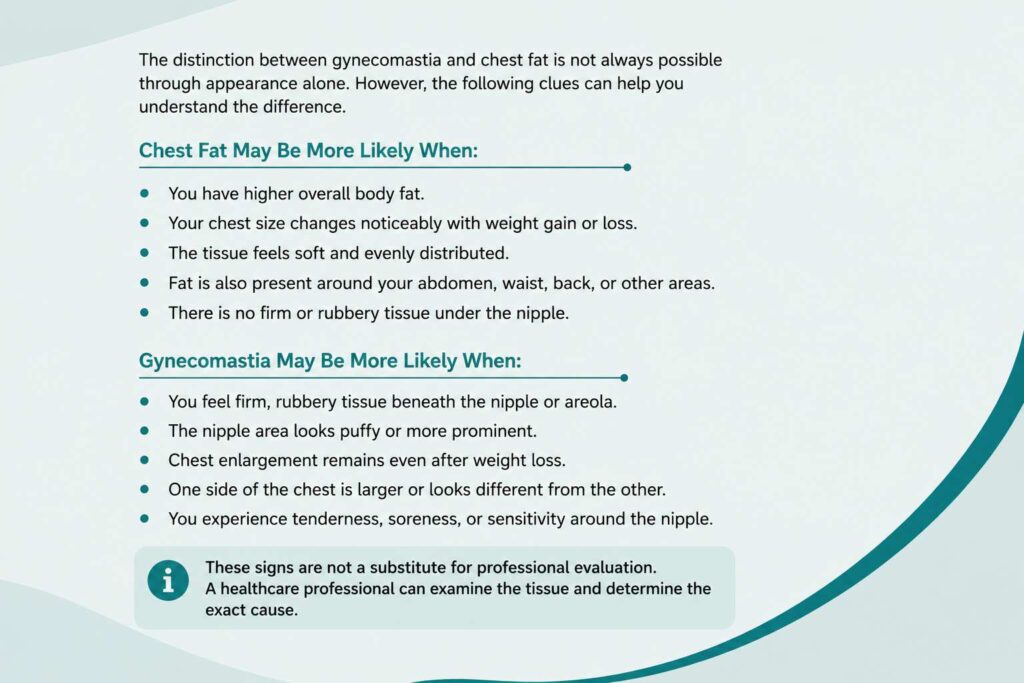
The distinction between gynecomastia vs chest fat is not always possible through appearance alone.
Several clues may be useful.
Chest fat may be more likely when:
- You have higher overall body fat.
- Your chest changes noticeably with weight changes.
- The tissue feels soft.
- Fat is also present around your abdomen, waist, or other areas.
Gynecomastia may be more likely when:
- There is firm tissue beneath the nipple.
- The nipple area looks puffy.
- Enlargement remains after weight loss.
- One side is noticeably different from the other.
- There is tenderness or sensitivity around the nipple.
These signs are not a substitute for professional assessment. A healthcare professional can evaluate the tissue and determine whether further investigation is appropriate.
Can Exercise Remove Gynecomastia
Exercise is beneficial for improving overall fitness and reducing excess body fat. Strength training can also develop the chest muscles and create a more defined appearance.
However, exercise cannot directly remove established glandular breast tissue.
This distinction is important in gynecomastia vs chest fat. If the enlargement is primarily caused by excess fat, weight loss may produce noticeable improvement. If glandular tissue is responsible, exercise alone may not fully correct the enlargement.
Can Weight Loss Reduce Chest Fat
Yes. When chest enlargement is primarily caused by excess fat, reducing overall body fat can make the chest smaller.
Effective weight management generally involves:
- A balanced calorie-controlled diet
- Adequate protein intake
- Regular resistance training
- Cardiovascular exercise
- Sufficient sleep
- Consistent daily activity
Spot reduction is not possible. Performing only chest exercises does not specifically burn chest fat.
Instead, overall fat reduction can gradually change chest appearance.
Treatment Options for Gynecomastia
Treatment depends on the underlying cause and the severity of the condition.
Observation
Some cases, especially those related to temporary hormonal changes, may improve without invasive treatment.
A healthcare professional may recommend monitoring when appropriate.
Addressing the Underlying Cause
If medication, hormonal imbalance, or another condition contributes to gynecomastia, addressing the underlying issue may be part of treatment.
Liposuction
Liposuction may be considered when excess fatty tissue contributes significantly to chest enlargement.
It is particularly relevant when the comparison involves gynecomastia vs chest fat, because fatty tissue can sometimes be removed through a fat-reduction procedure.
Glandular Tissue Removal
When enlarged glandular tissue is the main concern, surgical removal of the tissue may be considered.
In some cases, both fat and glandular tissue contribute to the chest shape, so a combination approach may be appropriate.
Treatment Options for Chest Fat
When excess fat is the primary reason for chest enlargement, lifestyle changes are usually an important starting point.
Nutrition
Focus on a balanced eating pattern containing:
- Lean protein
- Vegetables
- Fruits
- Whole grains
- Healthy fats
- Adequate fluids
Reducing frequent consumption of highly processed, calorie-dense foods can help support weight management.
Strength Training
Resistance exercises can help build the chest and upper-body muscles.
Useful exercises may include:
- Push-ups
- Bench presses
- Chest presses
- Incline presses
- Dumbbell exercises
These exercises strengthen the chest but do not selectively burn chest fat.
Cardiovascular Exercise
Walking, cycling, swimming, running, or other cardiovascular activities can support calorie expenditure and overall fitness.
A consistent combination of strength training and cardiovascular activity is generally more useful than focusing exclusively on chest exercises.
Benefits of Understanding Gynecomastia vs Chest Fat
Learning the difference between gynecomastia vs chest fat can help you make more informed decisions about your body and treatment options.
Better Understanding of the Cause
You can better recognize whether chest enlargement may be associated with excess fat or glandular tissue.
More Appropriate Treatment
Different causes may require different approaches. Understanding the underlying issue helps avoid relying on a strategy that may not address the actual tissue involved.
Better Expectations
Knowing whether the chest enlargement is primarily fat or glandular tissue can help create more realistic expectations about exercise, weight loss, and treatment.
Improved Confidence
Persistent chest enlargement can affect clothing choices, social comfort, and body confidence. Understanding the condition can be the first step toward addressing the concern appropriately.
Tips for Managing Chest Enlargement
Whether you are concerned about gynecomastia vs chest fat, the following tips can help:
- Maintain a healthy body weight.
- Follow a balanced diet.
- Exercise consistently.
- Include resistance training in your routine.
- Avoid extreme crash diets.
- Track gradual changes rather than daily fluctuations.
- Wear properly fitting clothing.
- Discuss persistent or concerning changes with a healthcare professional.
- Do not take hormone-related medicines without appropriate medical advice.
- Be patient with changes resulting from lifestyle improvements.
When Should You Seek Professional Evaluation
Persistent or unexplained chest enlargement deserves professional assessment, particularly when the cause is unclear.
You should consider seeking medical advice if you notice:
- A new lump
- Rapid enlargement
- Significant pain
- Persistent tenderness
- Nipple discharge
- Skin changes
- Noticeable one-sided enlargement
- Chest enlargement that does not improve with weight changes
These symptoms do not automatically indicate a serious problem, but they should be evaluated appropriately.
Conclusion
Understanding gynecomastia vs chest fat is important because the two conditions may look similar but involve different types of tissue and may require different approaches. Chest fat is generally linked to overall body-fat levels and may improve with weight management, while gynecomastia involves glandular breast tissue and may persist despite exercise and weight loss.
If you are uncertain about gynecomastia vs chest fat, avoid relying only on appearance or internet comparisons. A professional assessment can help identify the likely cause and guide you toward an appropriate treatment plan. For individuals seeking evaluation and treatment options in Kerala, understanding the underlying cause is an important first step toward achieving a more balanced chest appearance. For more detailed information about gynecomastia, visit the Mayo Clinic’s gynecomastia overview to learn about its causes, symptoms, and treatment options.
Frequently Asked Questions

Dr Prince
Consultant Plastic & Cosmetic Surgeon
Dr Prince is a Consultant Plastic and Reconstructive Surgeon at the Sushrutha Institute of Plastic Surgery, Elite Mission Hospital, Thrissur. He specializes in aesthetic and reconstructive procedures performed in a fully equipped hospital environment with strict safety protocols.
His expertise includes liposuction, rhinoplasty, gynecomastia correction, tummy tuck, breast surgery, and advanced facial aesthetic procedures, with a focus on safe techniques and natural-looking results.
Sushrutha Institute of Plastic Surgery, Elite Mission Hospital, Thrissur, Kerala