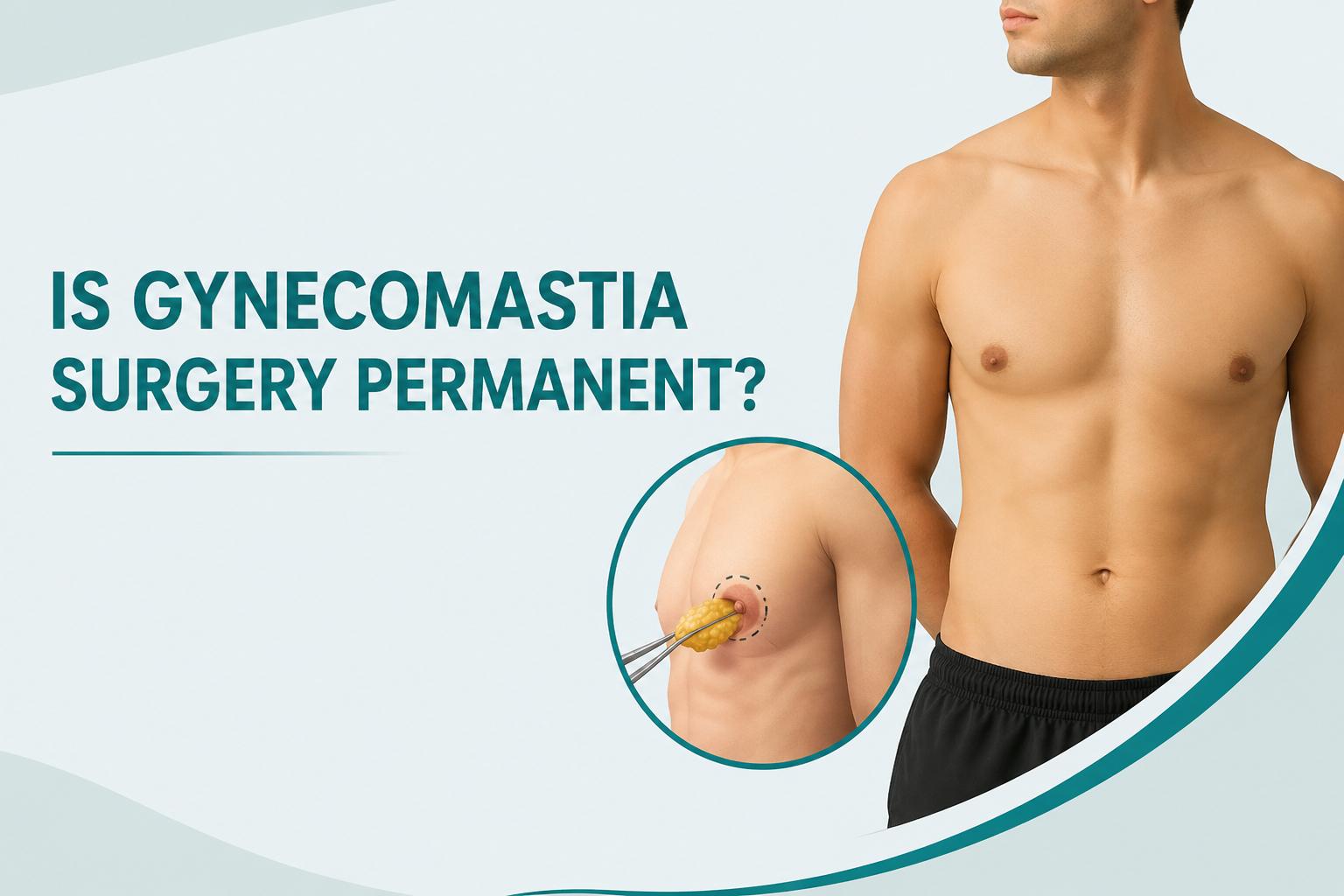
Gynecomastia Myths vs Facts
Gynecomastia myths vs facts can make it difficult for men to understand what male breast enlargement really means. Many people assume that enlarged male breasts are always caused by excess weight, poor fitness, or lifestyle choices. In reality, gynecomastia can develop for several reasons, including hormonal changes, certain medicines, health conditions, puberty, aging, and changes in body composition.
Understanding gynecomastia myths vs facts is important because accurate information can help a person recognize the condition, understand possible causes, and choose an appropriate approach to evaluation and treatment. Gynecomastia is common and does not automatically indicate a serious health problem.
Gynecomastia Myths vs Facts: Why Understanding the Difference Matters
Misinformation can cause unnecessary embarrassment or lead people to choose inappropriate treatments.Some people try extreme diets, excessive exercise, supplements, or unregulated hormone products without first determining whether they actually have gynecomastia.
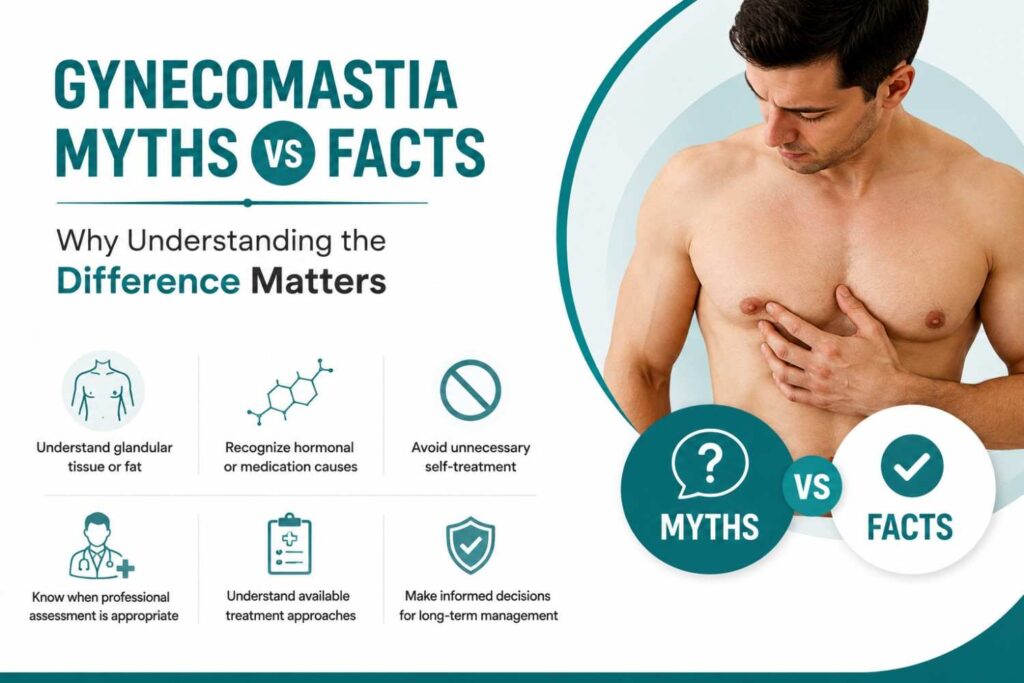
Knowing the difference between myths and facts can help you:
- Understand whether the enlargement involves glandular tissue or fat.
- Recognize possible hormonal or medication-related causes.
- Avoid unnecessary self-treatment.
- Know when professional assessment may be appropriate.
- Understand available treatment approaches.
- Make informed decisions about long-term management.
9 Gynecomastia Myths vs Facts You Should Know
Myth 1: Gynecomastia Is Always Caused by Being Overweight
- Fact: Excess body fat can contribute to chest enlargement, but true gynecomastia involves glandular breast tissue.
- Obesity may increase aromatase activity. Aromatase is an enzyme that converts some androgens into estrogen. Increased estrogen activity can contribute to breast tissue development.
- However, a person with a healthy body weight can also develop gynecomastia.
- This is one of the most important gynecomastia myths vs facts because not every enlarged male chest is simply a result of excess fat.
Myth 2: Gynecomastia Means You Have Poor Fitness
- Fact: Gynecomastia is not a simple measure of fitness.
- A physically active person can develop gynecomastia because of hormonal changes, medications, puberty, aging, or other factors.
- Exercise can improve overall fitness and may reduce excess chest fat, but it cannot necessarily remove established glandular breast tissue.
- This distinction is important when discussing gynecomastia myths vs facts. A person should not automatically blame himself for the condition.
Myth 3: Exercise Alone Can Always Remove Gynecomastia
- Fact: Exercise may reduce overall body fat, but it does not directly eliminate glandular breast tissue.
- Strength training can improve the appearance of the chest by building the underlying muscles and reducing excess fat. However, persistent glandular tissue may remain even after significant weight loss.
- The appropriate approach depends on whether the enlargement is caused mainly by fat, glandular tissue, or a combination of both.
- Therefore, gynecomastia myths vs facts should always distinguish between true gynecomastia and pseudogynecomastia.
Myth 4: Gynecomastia Only Happens During Puberty
- Fact: Puberty is a common time for gynecomastia, but it can occur at different stages of life.
- During puberty, changing hormone levels can temporarily cause breast tissue enlargement. In many adolescents, the condition gradually improves as hormonal levels stabilize.
Adults can also develop gynecomastia because of:
- Age-related hormonal changes.
- Certain medicines.
- Reduced testosterone production.
- Thyroid conditions.
- Liver or kidney problems.
- Alcohol or substance use.
- Certain hormone-related conditions.
- Significant changes in body composition.
Understanding age-related causes is another important part of gynecomastia myths vs facts.
Myth 5: Gynecomastia Is Always Permanent
- Fact: Some cases improve naturally.
- Pubertal gynecomastia frequently becomes less noticeable as hormone levels stabilize. Recent cases may also improve when an underlying cause is identified and addressed.
- However, long-standing glandular tissue can become more fibrous over time. When persistent tissue does not improve, treatment options may be discussed with a qualified professional.
- The duration of the condition is therefore an important factor when considering gynecomastia myths vs facts.
Myth 6: Gynecomastia Is Always Painful
- Fact: Gynecomastia may or may not cause discomfort.
- Some people experience tenderness, sensitivity, or swelling, especially during the early stages. Others may notice enlargement without significant pain.
- Symptoms can vary depending on the cause, duration, and amount of tissue involved.
Common symptoms include:
- Enlargement beneath the nipple.
- A firm or rubbery area of tissue.
- Nipple sensitivity.
- Tenderness.
- Swelling.
- Enlargement on one or both sides.
The absence of pain does not necessarily mean that breast enlargement is not gynecomastia.
Myth 7: Gynecomastia Is Always a Serious Disease
- Fact: Gynecomastia is commonly benign, but unexplained or unusual breast changes should still be assessed.
- Many cases are related to normal hormonal changes or identifiable factors. However, certain medical conditions can also affect hormone levels.
Professional evaluation becomes particularly important when there is:
- A hard or unusual lump.
- Rapid enlargement.
- Significant or persistent pain.
- Nipple discharge.
- Bleeding.
- Skin changes.
- Nipple retraction.
- Sudden unexplained changes.
Understanding gynecomastia myths vs facts does not mean ignoring unusual symptoms. Instead, it means recognizing when proper evaluation is appropriate.
Myth 8: Gynecomastia Is the Same as Chest Fat
- Fact: Gynecomastia and pseudogynecomastia are different.
- True gynecomastia involves enlargement of glandular breast tissue. Pseudogynecomastia primarily involves excess fatty tissue.
- The two conditions can sometimes occur together.
- A physical examination can help a healthcare professional determine the likely tissue involved. Additional evaluation may be recommended when the diagnosis is uncertain.
- This distinction is central to understanding gynecomastia myths vs facts because treatment may differ depending on the type of chest enlargement.
Myth 9: You Can Treat Gynecomastia Safely With Any Hormone Supplement
- Fact: Unsupervised hormone products can create additional hormonal problems.
- Some people consider testosterone boosters, anabolic steroids, or other hormone-related products after noticing chest enlargement. This can be counterproductive.
- Anabolic steroids, for example, can interfere with the body’s natural hormone production and may contribute to gynecomastia.
- Hormonal treatment should only be considered after appropriate assessment and under professional supervision.
Types of Gynecomastia
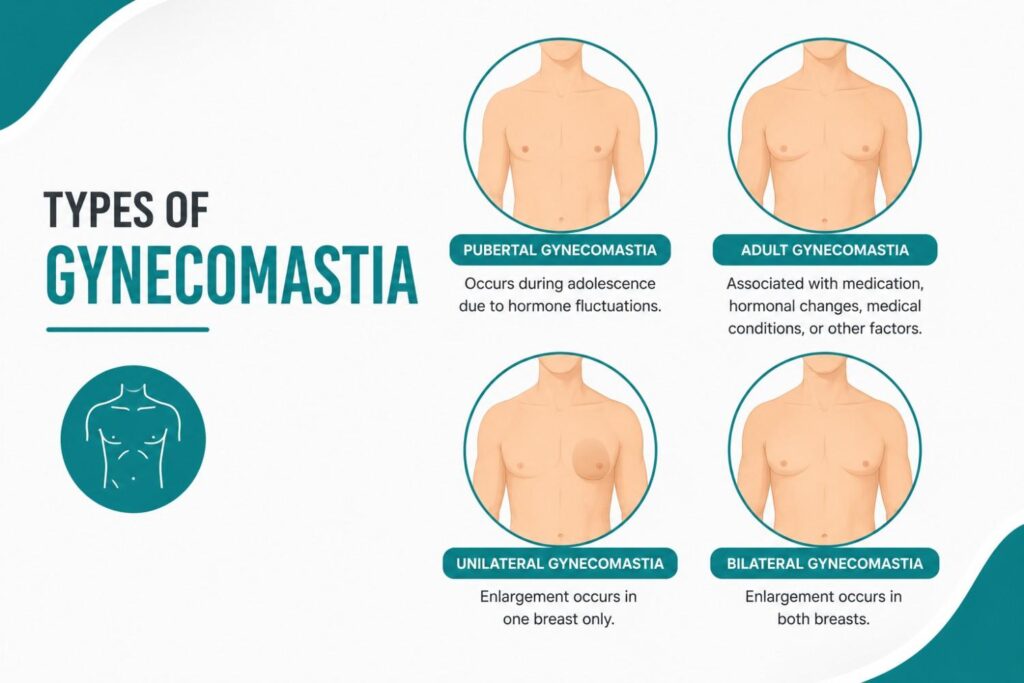
Understanding the different types can make gynecomastia myths vs facts easier to interpret.
Pubertal Gynecomastia
This develops during adolescence because hormone levels can fluctuate rapidly. It may affect one or both sides and may be tender.
In many cases, it improves naturally over time.
Adult Gynecomastia
Adult-onset gynecomastia may be associated with medication use, hormonal changes, medical conditions, alcohol, body composition, or other factors.
Persistent adult breast enlargement deserves appropriate evaluation.
Unilateral Gynecomastia
Only one breast may become enlarged. Mild differences between the two sides can occur, but noticeable or rapidly developing one-sided changes should be assessed.
Bilateral Gynecomastia
Both breasts may become enlarged. The amount of enlargement does not always have to be identical on each side.
Symptoms of Gynecomastia
The symptoms can differ from one person to another.
Common signs include:
- Enlarged breast tissue.
- Firm tissue beneath the nipple.
- Tenderness.
- Nipple sensitivity.
- Swelling.
- One-sided enlargement.
- Enlargement of both breasts.
Some individuals notice the condition gradually, while others notice it after a relatively sudden change.
How Is Gynecomastia Diagnosed?
Diagnosis usually begins with a medical history and physical examination.
A healthcare professional may ask about:
- When the enlargement started.
- Whether one or both sides are affected.
- Pain or tenderness.
- Current medicines.
- Supplements.
- Alcohol or substance use.
- Existing health conditions.
- Recent weight changes.
- Hormonal symptoms.
The examination helps distinguish glandular tissue from excess fat.
Depending on the findings, additional tests may be considered, such as:
- Blood tests.
- Hormone testing.
- Liver and kidney function tests.
- Thyroid testing.
- Imaging when clinically appropriate.
The exact evaluation depends on the individual’s presentation.
Tips for Managing Gynecomastia
Lifestyle changes cannot correct every case of true gynecomastia, but healthy habits can still be useful.
Maintain a Healthy Weight
A healthy weight can help reduce excess chest fat and support general metabolic health.
Exercise Regularly
Strength training and cardiovascular exercise can improve body composition and overall fitness.
However, exercise should not be viewed as a guaranteed way to remove glandular breast tissue.
Avoid Unsupervised Hormonal Products
Avoid using anabolic steroids, testosterone products, or hormone supplements without professional guidance.
Review Medicines
Keep a current list of prescription medicines, supplements, and over-the-counter products and discuss concerns with a healthcare professional.
Limit Excessive Alcohol
Reducing excessive alcohol consumption may support liver and hormonal health.
Monitor Changes
Pay attention to changes in size, tenderness, symmetry, and other breast-related symptoms.
When Should You Seek Professional Evaluation?
Evaluation may be appropriate when:
- Enlargement persists.
- The cause is unclear.
- Changes develop suddenly.
- There is significant tenderness.
- One side becomes noticeably larger.
- A firm or unusual lump develops.
- There is nipple discharge.
- Skin or nipple changes occur.
- The condition causes significant emotional distress.
The purpose of evaluation is not to assume that something serious is wrong. Instead, it helps determine what type of breast enlargement is present and whether treatment is necessary.
Conclusion
Understanding gynecomastia myths vs facts is essential for separating common misconceptions from medically relevant information. Gynecomastia is not simply a result of poor fitness or excess weight. Hormonal changes, puberty, aging, medicines, health conditions, alcohol or substance use, and body composition can all play a role.
Some cases improve naturally, while persistent glandular tissue may require further discussion about treatment. The most appropriate approach depends on the cause, duration, symptoms, and individual circumstances.
Rather than relying on internet myths, extreme exercise, or unregulated hormone products, it is better to seek an appropriate evaluation when breast enlargement persists or changes unexpectedly. Knowing the gynecomastia myths vs facts can help men make informed decisions, understand their options, and approach treatment with greater confidence. According to Mayo Clinic’s guide to gynecomastia, hormonal imbalance, certain medicines, health conditions, and lifestyle factors can contribute to male breast enlargement.
FREQUENTLY ASKED QUESTIONS

Dr Prince
Consultant Plastic & Cosmetic Surgeon
Dr Prince is a Consultant Plastic and Reconstructive Surgeon at the Sushrutha Institute of Plastic Surgery, Elite Mission Hospital, Thrissur. He specializes in aesthetic and reconstructive procedures performed in a fully equipped hospital environment with strict safety protocols.
His expertise includes liposuction, rhinoplasty, gynecomastia correction, tummy tuck, breast surgery, and advanced facial aesthetic procedures, with a focus on safe techniques and natural-looking results.
Sushrutha Institute of Plastic Surgery, Elite Mission Hospital, Thrissur, Kerala