7 Key Facts About Different Grades of Gynecomastia Explained
Gynecomastia is a condition in which glandular breast tissue becomes enlarged in boys or men. Understanding the different grades of gynecomastia can help explain how the condition varies in severity, from a small amount of tissue enlargement to more pronounced breast enlargement with excess skin. If you are looking for information about gynecomastia in Thrissur, knowing the grading system can also help you understand why treatment approaches may differ from one person to another.
Gynecomastia can affect one or both sides of the chest and may develop during puberty, adulthood, or later in life. It is commonly associated with changes in the balance between estrogen and testosterone.
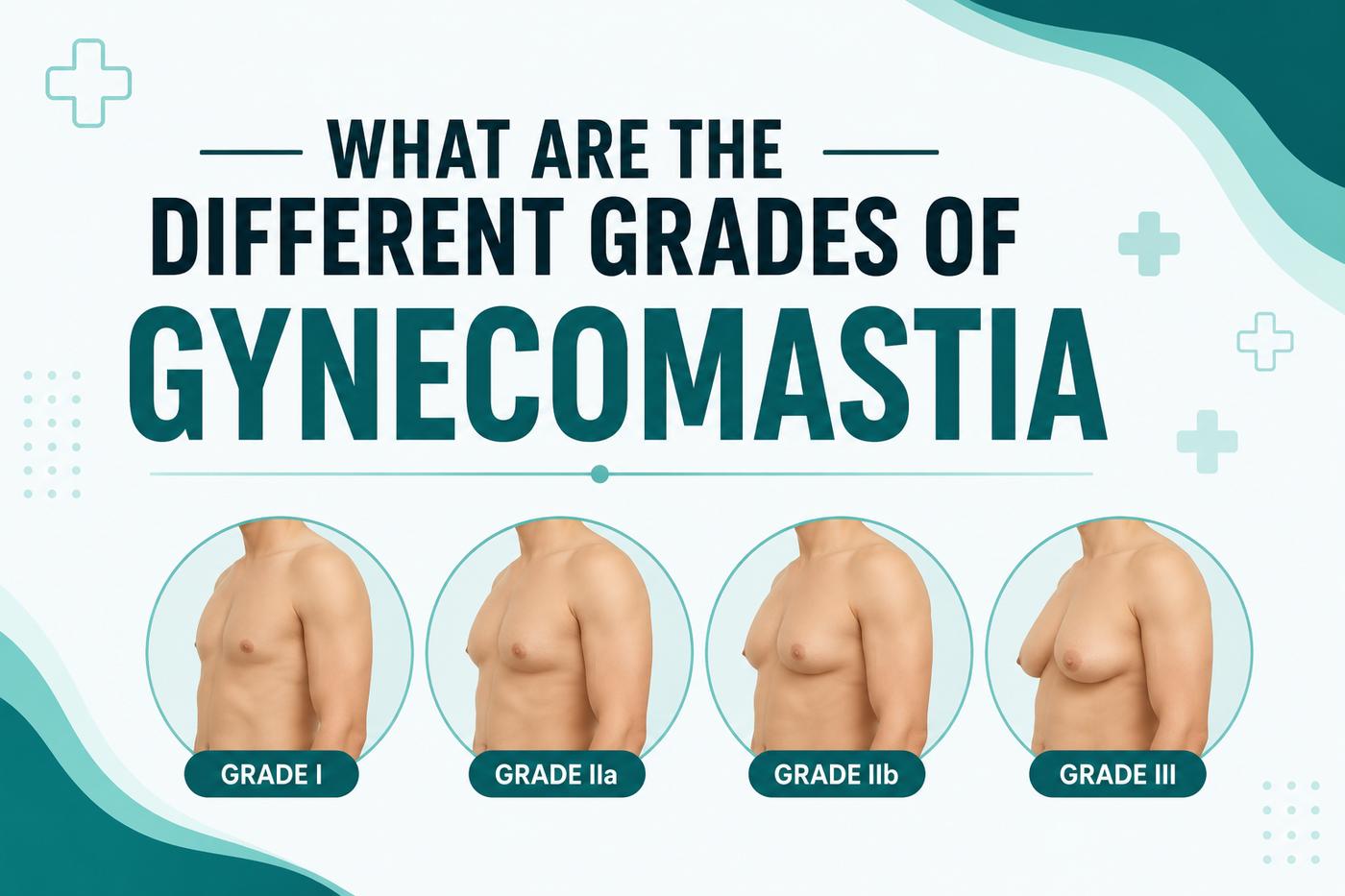
The severity of gynecomastia is often described using clinical grading systems. One commonly referenced system, the Simon classification, divides gynecomastia into Grade I, Grade IIa, Grade IIb, and Grade III according to the amount of enlargement and the presence of excess skin.
What Is Gynecomastia
Gynecomastia is an enlargement of male breast glandular tissue. It is different from simply having excess fat around the chest.
Normally, men have much higher levels of testosterone than estrogen, although both hormones are naturally present. When the balance between these hormones changes, breast gland tissue can grow.
Gynecomastia can occur:
- On one side of the chest
- On both sides of the chest
- Unevenly between the two sides
- With or without tenderness
- With varying amounts of glandular tissue
- With or without excess skin
It is important to distinguish true gynecomastia from pseudogynecomastia. Pseudogynecomastia mainly involves increased fat rather than enlargement of breast glandular tissue. This distinction can influence the assessment and treatment approach.
The different grades of gynecomastia primarily describe the physical appearance and severity of glandular enlargement rather than identifying the underlying cause.
Why Are Gynecomastia Grades Used
Grading gives healthcare professionals a standardized way to describe the extent of breast enlargement.
Not every person with gynecomastia has the same amount of tissue enlargement. Someone may have a small, localized enlargement around the nipple, while another person may have substantial breast enlargement and excess skin.
The grading system can help assess:
- Amount of breast enlargement
- Presence of excess skin
- Overall chest contour
- Degree of tissue development
- Possible surgical requirements
- Changes over time
The Simon classification describes four clinical levels: Grade I, Grade IIa, Grade IIb, and Grade III. Grade I represents relatively small enlargement, while Grade III represents marked enlargement associated with excess skin.
However, grading is only one part of a medical evaluation. The cause, duration, symptoms, age, medications, medical history, and physical findings may also influence management.
What Are the Different Grades of Gynecomastia
The different grades of gynecomastia are commonly described using the Simon classification.
Grade I Gynecomastia
Grade I is considered a mild form of gynecomastia.
It involves:
- Small enlargement of breast tissue
- Usually limited enlargement around the nipple or areola
- No significant excess skin
- Relatively little change in the overall chest contour
The chest may appear almost normal when the person is wearing clothing, while the enlargement may become more noticeable when the chest is uncovered.
Grade I gynecomastia does not necessarily cause significant physical symptoms. Some individuals may experience tenderness, particularly when the tissue is relatively new or actively developing.
Grade IIa Gynecomastia
Grade IIa involves moderate enlargement of the breast tissue without significant excess skin.
Compared with Grade I, the enlargement is more noticeable and can affect the contour of the chest.
Typical characteristics include:
- Moderate breast enlargement
- More visible chest fullness
- No major excess skin
- Increased glandular tissue beneath the areola
The distinction between Grade I and Grade IIa is primarily based on the degree of enlargement.
Grade IIb Gynecomastia
Grade IIb also involves moderate enlargement, but it is associated with a small amount of excess skin.
Possible features include:
- Moderate breast enlargement
- More noticeable chest projection
- Minor skin excess
- Changes in the contour of the lower chest
- Greater visible difference compared with mild gynecomastia
This grade may be more challenging to manage when the enlargement has been present for a long period.
Grade III Gynecomastia
Grade III represents marked breast enlargement with excess skin.
The chest can develop a more pronounced breast-like appearance, and the skin may become loose or redundant. The classification describes this degree of enlargement as resembling female breast ptosis.
Possible characteristics include:
- Significant breast enlargement
- Excess skin
- Greater alteration of chest shape
- More pronounced tissue descent
- A more visible change in the chest contour
Grade III does not simply mean that the condition is painful or medically dangerous. It describes the physical severity and appearance of the breast enlargement.
What Causes Different Grades of Gynecomastia
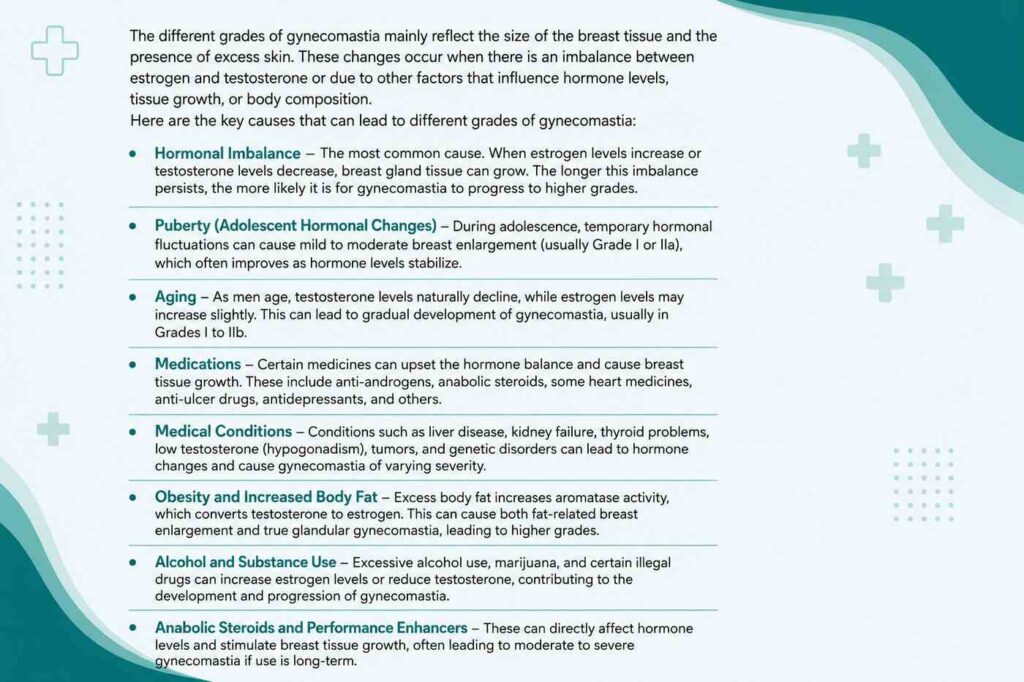
The severity of gynecomastia does not necessarily identify its cause. A person can develop gynecomastia for several reasons, and the underlying cause needs to be evaluated separately.
Hormonal Changes
Changes in the balance between testosterone and estrogen are a major factor in gynecomastia.
This can happen naturally during:
- Infancy
- Puberty
- Aging
Pubertal gynecomastia is relatively common and often resolves without treatment as hormone levels stabilize.
Medications
Some medicines can contribute to breast tissue enlargement.
Examples include certain:
- Anti-androgen medications
- Medicines used for prostate conditions
- Some heart medications
- Certain ulcer medications
- Some psychiatric medicines
- Anabolic steroids
A medication should never be stopped suddenly without medical advice. If a medicine is suspected to contribute to gynecomastia, a healthcare professional can determine whether a change is appropriate.
Medical Conditions
Certain medical conditions can affect hormone levels and contribute to gynecomastia.
These may include:
- Hypogonadism
- Thyroid disorders
- Liver disease
- Kidney disease
- Certain tumors
- Conditions affecting hormone production
A proper evaluation may therefore be important when breast enlargement is new, persistent, progressive, or associated with other symptoms.
Body Weight and Chest Fat
Higher body fat can make the chest appear enlarged. This may represent pseudogynecomastia rather than true gynecomastia.
Some individuals can have both excess chest fat and glandular breast tissue. A clinical examination helps distinguish these conditions.
What Symptoms Can Occur With Different Grades of Gynecomastia
The physical appearance varies according to grade, but symptoms do not always correspond directly to severity.
Common symptoms may include:
- Enlarged breast tissue
- Swelling around the nipple
- Breast tenderness
- Nipple sensitivity
- Discomfort when pressure is applied
- Uneven enlargement between the two sides
Tenderness can be particularly noticeable during the development of gynecomastia.
Some people with substantial enlargement may have little or no pain, while someone with relatively mild enlargement may experience considerable tenderness.
Emotional effects are also possible. Visible chest enlargement may cause embarrassment, reduced confidence, discomfort while changing clothes, or reluctance to participate in activities where the chest is exposed.
How Is the Grade of Gynecomastia Determined
A healthcare professional usually begins with a medical history and physical examination.
The assessment may consider:
- When the enlargement began
- Whether one or both breasts are affected
- Whether the enlargement is increasing
- Presence of pain or tenderness
- Current and previous medications
- Use of anabolic steroids or other substances
- Existing medical conditions
- Changes in body weight
- Physical characteristics of the breast tissue
Depending on the findings, additional tests may be recommended.
These can include:
- Blood tests
- Mammography
- Ultrasound
- Testicular ultrasound
- Other imaging tests
- Tissue biopsy in selected cases
The purpose of testing is not simply to assign a grade. It can also help identify the cause of enlargement and distinguish gynecomastia from other conditions.
How Do the Different Grades of Gynecomastia Affect Treatment
Treatment depends on several factors rather than the grade alone.
A healthcare professional may consider:
- Age
- Cause
- Duration
- Severity
- Symptoms
- Amount of glandular tissue
- Presence of excess skin
- Overall health
- Personal concerns about appearance
Observation
Some cases do not require immediate treatment.
Gynecomastia associated with puberty may resolve naturally. Mayo Clinic notes that pubertal gynecomastia often disappears within six months to two years.
Observation may therefore be appropriate when the condition is expected to improve and there are no concerning findings.
Treating the Underlying Cause
If gynecomastia is related to an underlying medical condition, addressing that condition may be part of treatment.
If a medication is suspected, a healthcare professional may consider whether another medication or approach is appropriate.
Medication
In selected cases, medication may be considered, particularly when gynecomastia is relatively recent or associated with specific clinical circumstances.
Medicines such as tamoxifen or raloxifene have been used in some patients, but they are not appropriate for everyone and should only be considered under medical supervision. Mayo Clinic notes that these medicines are not specifically FDA-approved for gynecomastia in the United States.
Surgery
Surgery may be considered when enlarged breast tissue persists, causes significant discomfort, or produces substantial concern about appearance.
Surgical approaches can include:
- Liposuction to remove excess fat
- Removal of glandular breast tissue
- A combination of liposuction and glandular tissue removal
- Skin reduction in selected cases with substantial excess skin
The appropriate technique depends on the amount and type of tissue involved.
Can Exercise Reduce Different Grades of Gynecomastia
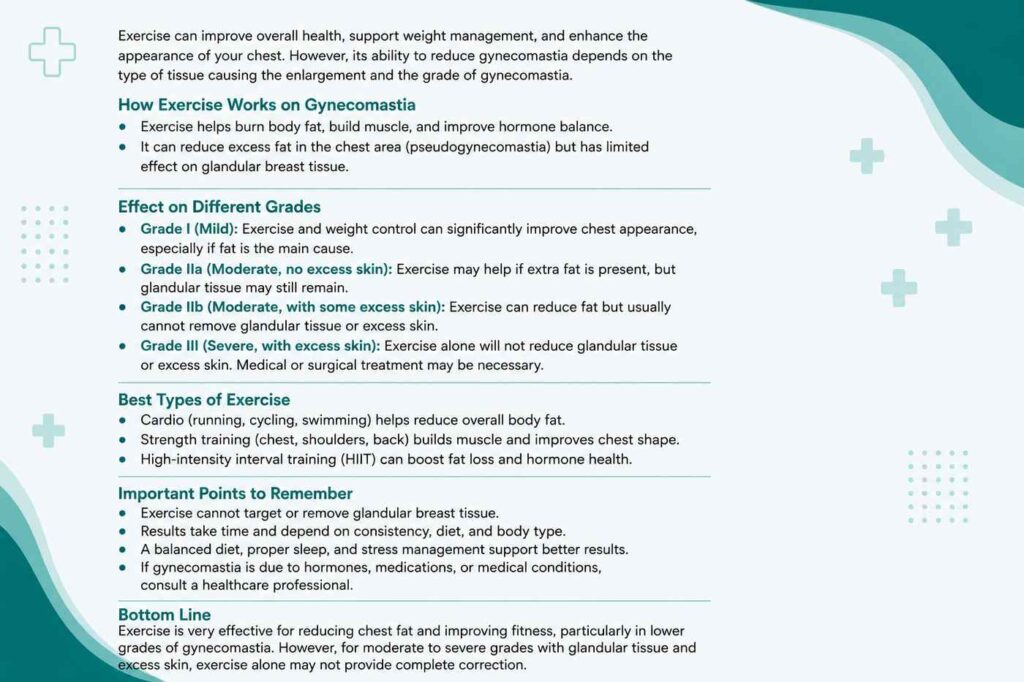
Exercise can help improve overall body composition and reduce excess body fat, but exercise does not directly remove enlarged glandular breast tissue.
This distinction is important.
If the chest enlargement is mainly caused by excess fat, weight management may improve the chest contour. However, true gynecomastia involves glandular tissue, which may persist even after significant weight loss.
A balanced approach can include:
- Regular physical activity
- Strength training
- Cardiovascular exercise
- A balanced diet
- Maintaining a healthy body weight
- Avoiding anabolic steroids
Exercise can support general health and body composition, but it should not be considered a guaranteed treatment for persistent glandular gynecomastia.
When Should You Seek Medical Evaluation
Gynecomastia is often benign, but new or unusual breast changes should be assessed when there is uncertainty about the cause.
Medical evaluation is especially important if there is:
- A firm or hard lump
- One-sided enlargement
- Rapid breast enlargement
- Persistent pain or tenderness
- Nipple discharge
- Skin dimpling
- Significant changes in the nipple
- Swelling that continues to increase
Male breast cancer is uncommon, but a new firm lump or other unusual breast changes should not automatically be assumed to be gynecomastia.
What Are the Key Differences Between the Grades
The easiest way to understand the classification is to compare the amount of enlargement and excess skin.
| Grade | Typical enlargement | Excess skin |
|---|---|---|
| Grade I | Small | None |
| Grade IIa | Moderate | None |
| Grade IIb | Moderate | Minor |
| Grade III | Marked | Significant |
This table provides a simplified overview of the Simon classification. Individual cases can vary, and clinical grading should be performed by a qualified healthcare professional rather than determined from photographs or online descriptions alone.
It is also important to remember that the grade does not automatically determine whether someone needs surgery. Treatment decisions require an assessment of the complete clinical picture.
Tips for Managing Gynecomastia
If you notice chest enlargement, avoid assuming that it is simply a result of weight gain.
Useful steps include:
- Arrange an appropriate medical assessment.
- Keep a list of current medications and supplements.
- Avoid anabolic steroids unless medically prescribed and supervised.
- Maintain a healthy body weight.
- Follow recommended investigations.
- Do not stop prescription medication without professional advice.
- Monitor changes in size, pain, or other breast symptoms.
- Seek evaluation if a new lump or unusual breast change develops.
Understanding the different grades of gynecomastia can reduce confusion, but grading should be viewed as part of a broader assessment.
Conclusion
Understanding the different grades of gynecomastia provides a useful framework for recognizing how male breast enlargement can vary. Grade I involves relatively small enlargement, Grade II represents moderate enlargement with Grade IIb including some excess skin, and Grade III involves marked enlargement with excess skin.
However, the grade alone does not determine the cause or the most appropriate treatment. Hormonal changes, medications, underlying health conditions, body composition, and the duration of the condition can all influence management. A proper clinical assessment can distinguish true gynecomastia from pseudogynecomastia and identify whether further investigation is needed. For individuals seeking evaluation or treatment information in Thrissur, discussing persistent or concerning breast changes with a qualified healthcare professional is an appropriate next step. For more detailed information about gynecomastia, its causes, symptoms, and treatment options, refer to the Mayo Clinic’s gynecomastia guide.
Frequently Asked Questions

Dr Prince
Consultant Plastic & Cosmetic Surgeon
Dr Prince is a Consultant Plastic and Reconstructive Surgeon at the Sushrutha Institute of Plastic Surgery, Elite Mission Hospital, Thrissur. He specializes in aesthetic and reconstructive procedures performed in a fully equipped hospital environment with strict safety protocols.
His expertise includes liposuction, rhinoplasty, gynecomastia correction, tummy tuck, breast surgery, and advanced facial aesthetic procedures, with a focus on safe techniques and natural-looking results.
Sushrutha Institute of Plastic Surgery, Elite Mission Hospital, Thrissur, Kerala