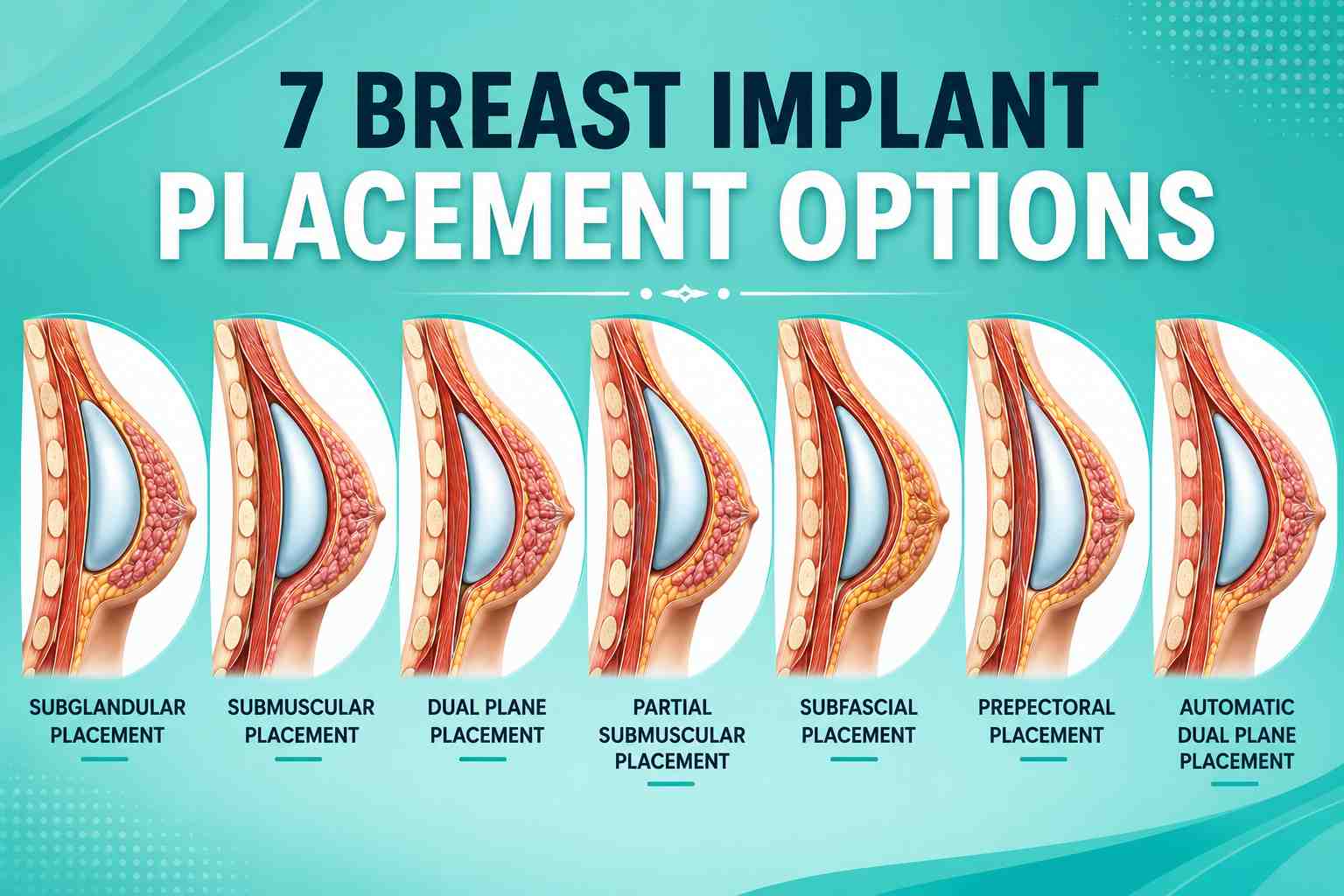
7 Breast Implant Placement Options for Better Results Guide
Choosing the right Breast Implant Placement Options is one of the most important decisions when planning breast augmentation surgery. The placement of the implant influences the final appearance, comfort, recovery, and long-term results. Whether you are considering surgery for cosmetic enhancement or reconstruction, understanding the available options helps you make a confident and informed decision. Patients in Thrissur and other regions often seek detailed information about implant placement before discussing their treatment plan with a qualified plastic surgeon.
Every individual has unique body proportions, skin quality, lifestyle, and personal goals. Because of these differences, there is no single placement technique that works for everyone. Instead, surgeons evaluate multiple factors before recommending the most suitable approach. This guide explains the different Breast Implant Placement Options, their advantages, disadvantages, recovery expectations, and important considerations to help you understand the procedure better.
Understanding Breast Implant Placement
Breast implant placement refers to the position where the implant is inserted in relation to the chest muscle. The selected placement affects:
- Breast shape
- Implant visibility
- Cleavage
- Recovery time
- Risk of complications
- Mammogram imaging
- Implant longevity
- Natural appearance
Modern surgical techniques provide several placement methods that can be customized according to the patient’s anatomy and desired outcome.
Why Breast Implant Placement Matters
Selecting the proper implant placement is just as important as choosing the implant size and shape.
The right placement can:
- Create a more natural appearance
- Improve implant stability
- Reduce visible implant edges
- Enhance upper breast fullness
- Lower certain surgical risks
- Improve overall symmetry
- Support long-term cosmetic outcomes
Incorrect placement may affect both appearance and comfort, making careful planning an essential part of breast augmentation.
Main Breast Implant Placement Options
There are several Breast Implant Placement Options available today. Each offers unique benefits depending on body type, breast tissue, and aesthetic goals.
1. Subglandular Placement
Subglandular placement positions the implant directly behind the natural breast tissue but above the chest muscle.
Advantages
- Shorter surgical procedure
- Faster recovery
- Less discomfort after surgery
- Better enhancement of mild breast sagging
- More noticeable cleavage
- Easier implant adjustment during revision procedures
Considerations
- Implant edges may become visible in thinner patients.
- Slightly higher chance of implant rippling.
- Less soft tissue coverage.
- Greater visibility if minimal breast tissue is present.
This placement is often recommended for individuals with adequate natural breast tissue.
2. Submuscular Placement
Submuscular placement positions the implant beneath the pectoralis major muscle.
This is one of the most commonly recommended Breast Implant Placement Options because it provides additional soft tissue coverage.
Benefits
- More natural appearance
- Reduced implant visibility
- Lower risk of capsular contracture
- Better mammogram visualization
- Improved upper breast contour
- Reduced rippling
Considerations
- Longer recovery
- Temporary muscle tightness
- More postoperative discomfort
- Implant movement during chest muscle contraction
Many surgeons prefer this method for lean individuals with limited natural breast tissue.
3. Dual Plane Placement
Dual Plane placement combines both subglandular and submuscular techniques.
The upper portion of the implant sits beneath the chest muscle, while the lower portion rests beneath the breast tissue.
Benefits
- Natural breast slope
- Improved lower pole fullness
- Better correction of mild breast drooping
- Excellent implant coverage
- Attractive long-term results
Possible Limitations
- Slightly more complex surgery
- Recovery similar to submuscular placement
- Requires careful surgical planning
This technique has become increasingly popular because it combines the advantages of both major placement methods.
Factors That Influence Breast Implant Placement Options
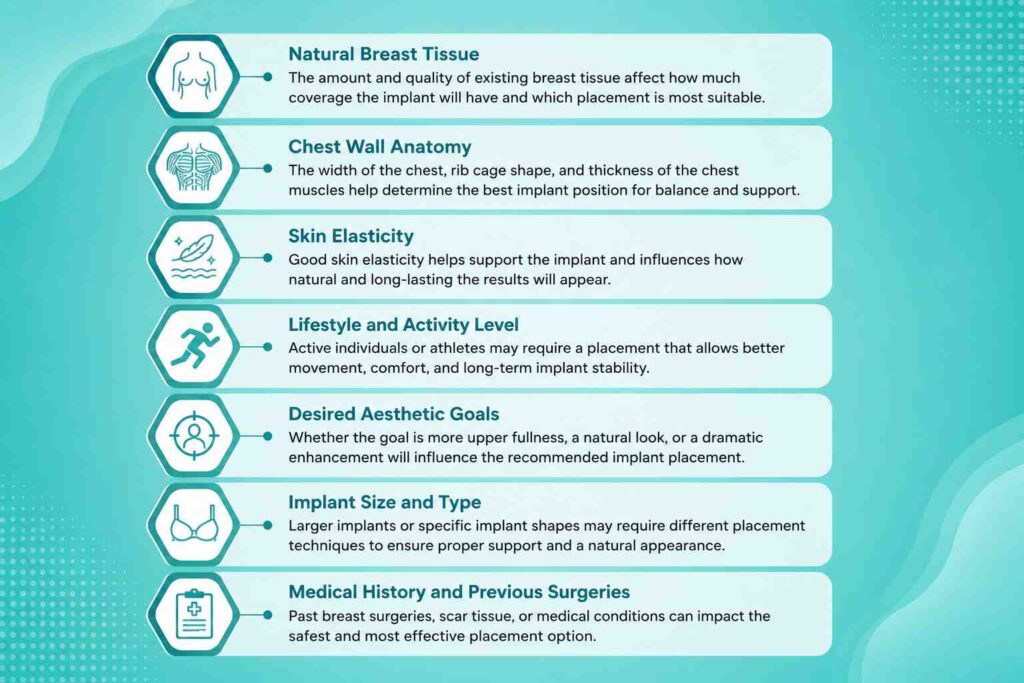
Every patient requires an individualized evaluation before selecting implant placement.
Common factors include:
Natural Breast Tissue
Women with more breast tissue usually have greater flexibility regarding placement choices.
Chest Wall Anatomy
The width, muscle thickness, and rib cage shape influence implant positioning.
Skin Elasticity
Healthy skin supports implants more effectively and contributes to lasting results.
Lifestyle
Athletes and individuals who frequently perform upper-body exercises may require special consideration when selecting implant placement.
Desired Appearance
Some patients prefer:
- More upper fullness
- Softer contours
- Natural projection
- Dramatic enhancement
Each goal may influence the recommended placement.
Implant Size
Larger implants sometimes require different placement strategies to ensure adequate support and minimize complications.
Comparing the Different Breast Implant Placement Options
| Feature | Subglandular | Submuscular | Dual Plane |
|---|---|---|---|
| Recovery | Faster | Moderate | Moderate |
| Natural Appearance | Good | Excellent | Excellent |
| Implant Visibility | Higher | Lower | Lower |
| Rippling Risk | Higher | Lower | Lower |
| Mammogram Imaging | Slightly More Difficult | Better | Better |
| Muscle Movement | None | Possible | Minimal |
| Soft Tissue Coverage | Less | More | Balanced |
Benefits of Choosing the Right Breast Implant Placement Options
Proper implant placement contributes significantly to overall surgical success.
Some important benefits include:
Improved Cosmetic Results
Correct positioning helps achieve balanced breast proportions and natural contours.
Better Implant Support
Proper placement provides structural support that helps maintain implant position over time.
Reduced Risk of Rippling
Adequate tissue coverage minimizes visible implant folds.
Longer-Lasting Results
Well-planned placement helps maintain breast shape for many years.
Better Symmetry
Careful implant positioning improves balance between both breasts.
Increased Patient Satisfaction
Patients often experience greater confidence when the chosen placement aligns with their aesthetic goals.
How Surgeons Decide the Best Placement
Selecting among various Breast Implant Placement Options involves a detailed consultation.
The surgeon evaluates:
- Current breast size
- Existing breast tissue
- Degree of breast sagging
- Chest muscle thickness
- Skin quality
- Previous surgeries
- Overall health
- Future pregnancy plans
- Lifestyle habits
- Cosmetic expectations
Advanced measurements and imaging may also assist in planning the procedure.
Preparing for Breast Implant Surgery
Preparation plays an important role in achieving successful outcomes.
Patients are commonly advised to:
- Maintain a healthy lifestyle.
- Stop smoking if recommended.
- Follow medication instructions.
- Arrange transportation after surgery.
- Prepare comfortable recovery clothing.
- Stay hydrated.
- Follow all preoperative instructions carefully.
Proper preparation supports smoother healing and reduces surgical risks.
Recovery After Different Breast Implant Placement Options
Recovery varies depending on the selected Breast Implant Placement Options, your overall health, and how closely you follow postoperative instructions. While each person heals differently, most patients gradually return to normal activities within a few weeks.
What to Expect During Recovery
Immediately after surgery, it is common to experience:
- Mild to moderate swelling
- Temporary bruising
- Tightness in the chest
- Mild discomfort
- Fatigue during the first few days
These symptoms typically improve steadily as healing progresses.
First Week
During the first week, patients should:
- Get adequate rest.
- Wear the recommended surgical support bra.
- Take prescribed medications as directed.
- Avoid lifting heavy objects.
- Sleep on the back with the upper body slightly elevated.
Weeks Two to Four
As healing continues:
- Swelling gradually decreases.
- Walking and light daily activities become easier.
- Most patients can resume desk work.
- Follow-up appointments help monitor progress.
Long-Term Healing
Final results usually become more noticeable as the implants settle into their natural position over the following months. Regular follow-up visits ensure that healing is progressing well and any concerns are addressed promptly.
Risks Associated with Breast Implant Placement Options
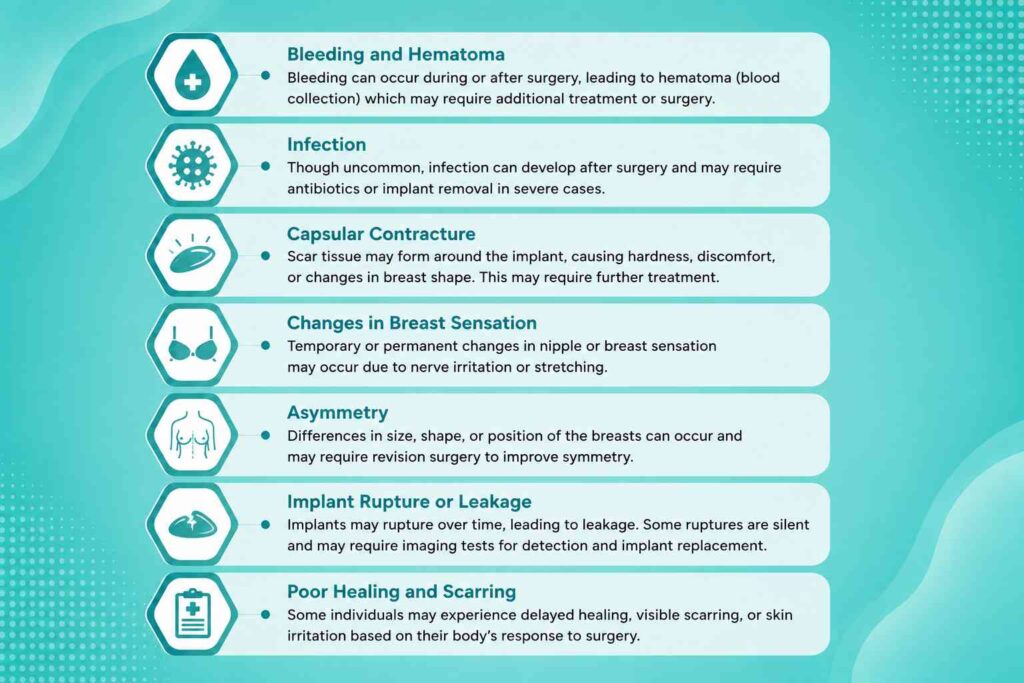
Like any surgical procedure, Breast Implant Placement Options carry certain risks. Understanding these possibilities helps patients make informed decisions and recognize when to seek medical advice.
Capsular Contracture
Scar tissue naturally forms around every implant. In some cases, this tissue becomes unusually tight, causing firmness, discomfort, or changes in breast shape.
Implant Rippling
Rippling refers to visible or palpable folds in the implant. It is more common in individuals with thin breast tissue and may vary depending on implant placement.
Implant Displacement
An implant may shift from its intended position if healing is affected or adequate support is not maintained.
Infection
Although uncommon, infection can occur after surgery. Early diagnosis and treatment are important for preventing complications.
Bleeding
Minor bleeding is expected immediately after surgery, but significant bleeding is uncommon and requires prompt medical attention.
Changes in Sensation
Some patients notice temporary or permanent changes in nipple or breast sensation as nerves recover following surgery.
Implant Rupture
Modern implants are designed for durability, but rupture can occur over time due to aging of the implant or injury. Regular follow-up examinations help detect potential issues.
How to Choose the Right Breast Implant Placement Options
Choosing among different Breast Implant Placement Options involves considering multiple personal and anatomical factors.
Important considerations include:
Your Body Structure
Chest width, muscle thickness, and breast tissue influence which placement offers the best support and appearance.
Cosmetic Goals
Some individuals prefer a fuller upper breast, while others desire a softer and more natural contour.
Existing Breast Tissue
Patients with more natural tissue may benefit from different placement strategies than those with minimal breast volume.
Lifestyle
People who participate in heavy upper-body exercise or competitive sports should discuss how muscle activity may influence implant positioning.
Future Pregnancy Plans
Pregnancy and breastfeeding may affect breast appearance over time. Discussing future family planning during consultation can help guide treatment decisions.
Surgeon Experience
An experienced plastic surgeon evaluates all relevant factors before recommending the most suitable implant placement technique.
Tips for Better Results After Breast Implant Surgery
Following your surgeon’s recommendations is essential for achieving the best possible outcome after choosing Breast Implant Placement Options.
Follow All Postoperative Instructions
Carefully following medical advice promotes smoother healing and reduces unnecessary complications.
Wear the Recommended Support Garment
A properly fitted surgical bra helps support the implants while tissues heal.
Avoid Smoking
Smoking reduces blood circulation and may slow healing. Avoiding tobacco products before and after surgery supports recovery.
Maintain a Stable Weight
Significant weight fluctuations can affect breast appearance and implant positioning over time.
Avoid Strenuous Exercise Initially
Heavy lifting and intense workouts should only be resumed after receiving medical clearance.
Attend Follow-Up Visits
Routine postoperative appointments allow your surgeon to monitor healing and address any concerns early.
Practice Healthy Living
A balanced diet, adequate hydration, regular sleep, and overall healthy habits contribute to better long-term results.
Common Myths About Breast Implant Placement Options
Several misconceptions surround Breast Implant Placement Options. Understanding the facts helps patients make confident decisions.
Myth 1: One Placement Is Best for Everyone
Fact: Every patient has unique anatomy and cosmetic goals. The ideal placement varies from person to person.
Myth 2: Implants Always Look Artificial
Fact: Proper implant selection and placement often produce natural-looking results.
Myth 3: Recovery Takes Several Months
Fact: While complete healing takes time, many patients return to routine daily activities within a few weeks.
Myth 4: Implants Last Forever
Fact: Breast implants are durable but are not considered lifetime devices. Regular evaluations help monitor implant condition.
Myth 5: Larger Implants Always Look Better
Fact: The best implant size depends on body proportions, tissue characteristics, and personal preferences rather than simply choosing a larger implant.
When to Contact Your Surgeon
Seek medical advice if you experience:
- Persistent or increasing pain
- Excessive swelling
- Fever
- Redness around the incision
- Fluid leakage
- Sudden breast asymmetry
- Difficulty breathing
- Severe chest discomfort
Prompt evaluation helps ensure appropriate treatment if complications arise.
Conclusion
Understanding Breast Implant Placement Options allows patients to make informed decisions based on their body type, lifestyle, and aesthetic goals. Whether considering subglandular, submuscular, or dual plane placement, each technique offers distinct advantages and considerations. A thorough consultation, realistic expectations, and careful postoperative care contribute significantly to successful long-term outcomes. If you are exploring breast augmentation, discussing your options with a qualified plastic surgeon can help determine the most appropriate approach for your individual needs. Patients seeking professional guidance in Thrissur should prioritize comprehensive evaluation and personalized treatment planning to achieve safe, balanced, and natural-looking results. Learn more about Breast Implant Placement Options, implant positioning, and breast augmentation procedures from the American Society of Plastic Surgeons Breast Augmentation Guide.
Frequently Asked Questions
Breast Implant Placement Options refer to the different positions where breast implants can be placed during augmentation surgery, such as subglandular, submuscular, and dual plane placement.
Submuscular and dual plane placements are often associated with a more natural appearance because they provide additional soft tissue coverage.
Each placement has its own benefits and risks. The safest option depends on individual anatomy, health, and surgical goals.
Yes. Recovery may vary depending on whether the implant is placed above or below the chest muscle.
Yes. Certain placement techniques may allow easier visualization of breast tissue during mammographic examinations.
Implants gradually settle into position during healing. Significant movement is uncommon when postoperative instructions are followed.
Many individuals can successfully breastfeed after augmentation, although outcomes vary depending on surgical technique and personal factors.
Breast implants are durable but may eventually require replacement or revision. Regular medical evaluations are recommended.
Yes. Placement beneath the chest muscle generally provides more tissue coverage, which may reduce the appearance of rippling.
The decision is based on body structure, breast tissue, skin quality, lifestyle, cosmetic goals, and a comprehensive clinical evaluation.

Dr Prince
Consultant Plastic & Cosmetic Surgeon
Dr Prince is a Consultant Plastic and Reconstructive Surgeon at the Sushrutha Institute of Plastic Surgery, Elite Mission Hospital, Thrissur. He specializes in aesthetic and reconstructive procedures performed in a fully equipped hospital environment with strict safety protocols.
His expertise includes liposuction, rhinoplasty, gynecomastia correction, tummy tuck, breast surgery, and advanced facial aesthetic procedures, with a focus on safe techniques and natural-looking results.
Sushrutha Institute of Plastic Surgery, Elite Mission Hospital, Thrissur, Kerala