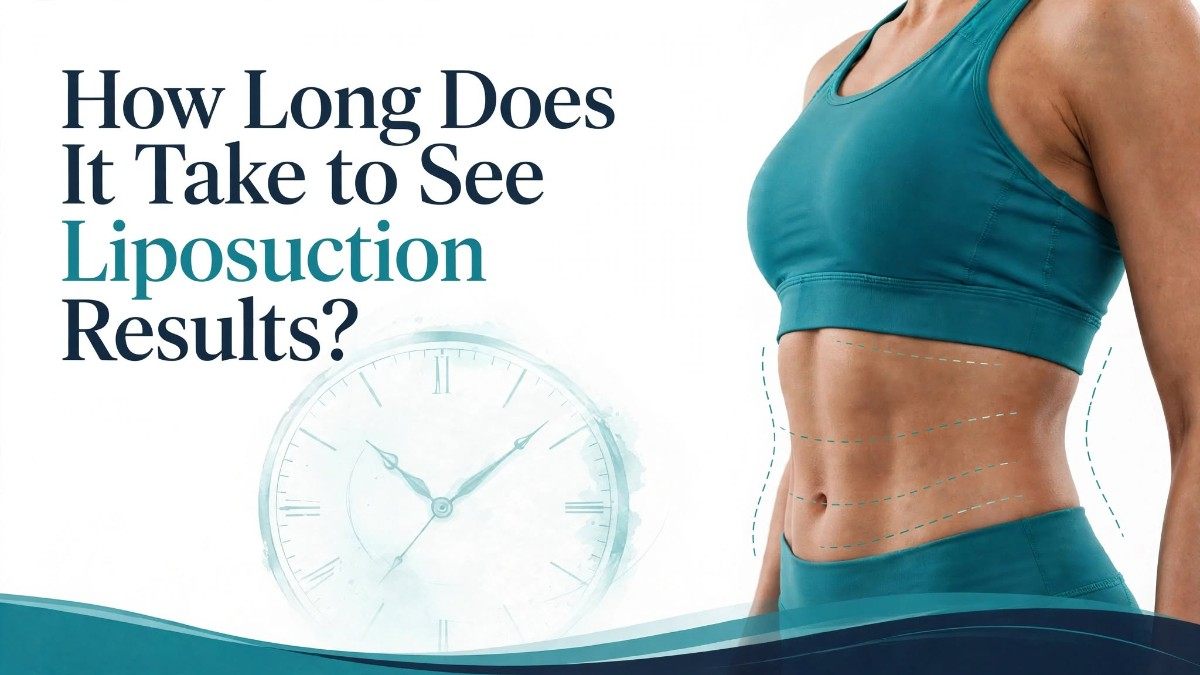
How Long Does It Take to See Liposuction Results? : 8 important facts
How long to see liposuction results is a common question among people considering body contouring surgery. Although liposuction removes unwanted fat deposits during the procedure, the final body shape does not become visible immediately. Swelling, fluid retention, bruising and the body’s natural healing process can temporarily affect the appearance of treated areas. Some changes may become noticeable within a few weeks, while the final contour can take several months to develop.
Understanding what liposuction is and how the procedure works helps patients develop realistic expectations about the treatment and recovery process. Patients considering liposuction in Thrissur can explore Dr Prince’s plastic surgery practice for information about the procedure, body-contouring options and individual surgical assessment.
How Long Does It Take to See Liposuction Results?
Liposuction results develop gradually as postoperative swelling decreases and the treated tissues heal. Some patients notice early differences in their body shape within the first few weeks. However, these changes may not represent the final outcome because swelling can temporarily hide the improvement.
For many patients, visible improvements become clearer over approximately four to six weeks. The treated areas may continue to become more defined over the following months. Depending on the extent of the procedure, treatment areas, skin elasticity and individual healing, it may take three to six months or sometimes longer for the results to settle.
There is no single timeline that applies to everyone. A patient undergoing liposuction in one small area may experience a different recovery process from someone having multiple areas treated during the same operation.
The most important point is that liposuction results should be assessed after sufficient healing rather than immediately after surgery.
Liposuction Results Timeline: What Happens During Recovery?
Understanding the different recovery stages can help patients know what changes to expect after surgery. The following timeline is a general guide, not a fixed medical schedule. Individual recovery depends on the procedure and the patient’s health.
First Week After Liposuction
During the first week, swelling, bruising, soreness and temporary changes in sensation are common. The treated area may appear swollen or feel firmer than expected.
Some patients may initially feel that their body shape has not changed much. This does not necessarily mean the procedure has not achieved its intended effect. Postoperative fluid retention and tissue swelling can temporarily affect the appearance of the treated area.
During this stage, patients should:
Allow sufficient time for rest and recovery.
Follow the prescribed medication instructions.
Wear compression garments as directed by the surgeon.
Keep surgical sites clean according to postoperative instructions.
Avoid strenuous activities and unnecessary physical exertion.
Attend scheduled postoperative appointments.
The first week is primarily focused on healing rather than evaluating cosmetic results.
Two to Three Weeks After Liposuction
During weeks two and three, many patients begin to feel more comfortable as initial soreness and bruising improve. Some may notice that the treated areas are becoming less swollen.
Early body contour changes may start to become noticeable during this period. However, the results can still appear uneven or less defined because the tissues have not completely healed.
Depending on the nature of their work and the extent of surgery, some patients may be able to return to their usual work routine during this stage. Physical restrictions should still be followed.
Compression garments may continue to be necessary to support the treated areas and help manage swelling.
Four to Six Weeks After Liposuction
Between the fourth and sixth weeks, visible changes may become easier to recognise. Bruising generally improves, while swelling continues to reduce.
The waist, abdomen, thighs, arms or other treated areas may begin to show clearer contours. Clothing may also fit differently as the initial swelling decreases.
Although many patients notice encouraging changes during this period, some residual swelling can remain. Therefore, the appearance at six weeks should not automatically be considered the final outcome.
Your surgeon will advise when light exercise and other physical activities can be resumed safely.
Two to Three Months After Liposuction
By the second or third month, the treated areas may look more defined as recovery progresses. The reduction in swelling can make the changes in body proportions easier to appreciate.
Some patients may see a substantial improvement in their body contours during this stage. However, deeper tissue healing and subtle swelling can continue beyond this period.
The speed of improvement depends on the amount of fat removed, the areas treated, skin characteristics and individual healing response.
Three to Six Months After Liposuction
Between three and six months, many patients can appreciate a more settled body contour. Residual swelling may continue to resolve, allowing the treated areas to become more defined.
For some patients, the results may settle earlier, while others may need additional time. The surgeon’s follow-up assessment helps determine whether healing is progressing as expected.
The American Society of Plastic Surgeons explains that swelling may take several months to disappear completely, allowing the new body contours to develop gradually.
Why Are Liposuction Results Not Visible Immediately?
Although liposuction removes localised fat deposits during surgery, the body needs time to recover from the procedure.
Several temporary changes can make the treated area appear different during the early recovery period.
Postoperative Swelling
Swelling is one of the main reasons patients cannot immediately appreciate their liposuction results. The tissues respond naturally to surgery, causing temporary inflammation and fluid accumulation.
This swelling may make the treated area appear larger than expected. As healing progresses, the swelling gradually reduces and the body contours become easier to recognise.
Fluid Retention
Temporary fluid retention can affect body weight and appearance after surgery. This may create confusion for patients who expect an immediate reduction in measurements.
Changes in body weight during early recovery do not necessarily reflect the amount of fat removed or the final result.
Bruising and Tissue Healing
Bruising and temporary tissue changes are part of the recovery process. The treated area may feel firm, sensitive or slightly uneven while the tissues heal.
These changes generally improve with time, although the recovery period varies between individuals.
Skin Adjustment
After the removal of excess fat, the overlying skin needs to adapt to the new body contour. Skin elasticity plays an important role in this process.
Patients with good skin elasticity may experience better natural skin adaptation. Those with reduced elasticity or significant loose skin may have different contour outcomes and may need an alternative or additional body-contouring procedure.
What Factors Affect How Quickly Liposuction Results Appear?
The time required to see visible changes after liposuction differs from patient to patient. Several factors influence the recovery process and the development of the final contour.
1. Number of Areas Treated
The extent of the procedure can influence recovery. Patients undergoing treatment in several body areas may experience a different swelling pattern and recovery period compared with those having a smaller treatment area addressed.
2. Amount of Fat Removed
The volume of fat removed can influence postoperative swelling and tissue healing. More extensive procedures may require additional recovery time.
Fat removal is planned according to the patient’s anatomy, health and surgical suitability rather than simply aiming to remove the largest possible amount.
3. Skin Elasticity
Skin elasticity affects how well the skin adapts after fat removal. When the skin has adequate elasticity, it may contract more effectively around the new contour.
Reduced elasticity can contribute to loose or irregular skin after liposuction. This is an important consideration during preoperative assessment.
4. Individual Healing Response
Every person heals differently. Age, general health, medical conditions, circulation and other individual factors may influence the recovery process.
Some patients experience a relatively gradual reduction in swelling, while others notice visible changes earlier.
5. Postoperative Care
Following postoperative instructions plays an important role in recovery. Compression garment use, activity restrictions, wound care and scheduled follow-up appointments should be managed according to the surgeon’s advice.
Ignoring recovery instructions or returning to strenuous activities too early may interfere with healing.
6. Lifestyle and Weight Stability
Maintaining a reasonably stable weight can help preserve the body contour achieved through surgery.
Significant weight changes after liposuction may affect the appearance of treated and untreated areas. A balanced diet and suitable physical activity support long-term body composition and general health.
Does Swelling Affect the Final Liposuction Results?
Yes. Swelling can temporarily hide the changes achieved through liposuction.
Immediately after surgery, the treated tissues undergo a natural healing response. Fluid accumulation and inflammation may make the area look fuller, firmer or less defined.
As swelling reduces, the difference in body contour becomes easier to appreciate. However, mild residual swelling can persist for several months in some patients.
This is why comparing early postoperative photographs with later recovery photographs can sometimes create misleading impressions.
Patients should avoid making conclusions about their final outcome based only on the first few weeks. Their surgeon can assess changes during follow-up appointments and explain whether the recovery is progressing normally.
How Can You Support Recovery and Help Maintain Liposuction Results?
Although the natural healing process takes time, following appropriate aftercare instructions can support recovery.
Some useful measures include:
Wear compression garments: Use the recommended garment for the duration advised by your surgeon. These garments help manage swelling and support the treated tissues during recovery.
Follow activity restrictions: Gentle movement may be encouraged early, but strenuous exercise should be delayed until your surgeon confirms that it is safe.
Maintain balanced nutrition: Include a suitable variety of nutritious foods to support general health and recovery.
Stay adequately hydrated: Maintain appropriate fluid intake unless your medical team has advised otherwise.
Avoid smoking: Smoking and nicotine can interfere with wound healing. Follow your surgeon’s instructions regarding nicotine use before and after surgery.
Attend follow-up appointments: Regular assessments allow your surgeon to monitor swelling, healing and changes in body contour.
Maintain a stable weight: Significant weight fluctuations can affect the long-term appearance of the treated areas.
These measures support recovery but cannot guarantee a particular cosmetic outcome or shorten the healing period for every patient.
When Should You Be Concerned About Swelling After Liposuction?
Some swelling and bruising are expected after liposuction. However, patients should understand the difference between ordinary recovery changes and symptoms that need medical attention.
Contact your surgical team if you experience:
Increasing or severe pain rather than gradual improvement.
Increasing redness, warmth or discharge around an incision.
Fever or symptoms that may indicate an infection.
Sudden or unusual swelling.
Persistent symptoms that concern you or appear different from the recovery instructions provided.
Chest pain, sudden breathlessness or fainting require immediate medical attention.
Do not assume that every postoperative symptom is part of normal healing. Prompt medical evaluation is important when concerning changes occur.
What Should You Expect from Your Liposuction Results?
Liposuction is primarily a body-contouring procedure designed to reduce localised deposits of subcutaneous fat. It is not intended to replace weight-loss treatment or address every concern involving the appearance of the body.
The outcome depends on several factors, including:
The distribution of fat before surgery.
The amount of fat that can be safely removed.
Skin elasticity and tissue characteristics.
The treatment areas selected.
The healing process.
Weight stability after surgery.
Patients should also understand that liposuction does not reliably correct significant loose skin or cellulite. Additional procedures may be considered in selected cases depending on individual needs.
A realistic understanding of these limitations helps patients evaluate their results more appropriately.
Understanding Liposuction Recovery and Results with Dr Prince in Thrissur
Patients considering liposuction should understand the expected recovery process before deciding on surgery. A proper assessment helps determine the areas that may be treated, the appropriate surgical approach and the recovery considerations involved.
Dr Prince’s liposuction service information covers body-contouring treatment and postoperative care in Thrissur, Kerala. The recovery process and expected changes should be discussed according to each patient’s health, skin characteristics, treatment areas and surgical plan.
For more information about the procedure, explore the liposuction treatment information in Kerala.
Patients can also discuss their concerns about swelling, recovery time, activity restrictions and the expected development of body contours during an individual surgical assessment.
Table Of Contents

Dr Prince
Consultant Plastic & Cosmetic Surgeon
Dr Prince is a Consultant Plastic and Reconstructive Surgeon at the Sushrutha Institute of Plastic Surgery, Elite Mission Hospital, Thrissur. He specializes in aesthetic and reconstructive procedures performed in a fully equipped hospital environment with strict safety protocols.
His expertise includes liposuction, rhinoplasty, gynecomastia correction, tummy tuck, breast surgery, and advanced facial aesthetic procedures, with a focus on safe techniques and natural-looking results.
Sushrutha Institute of Plastic Surgery, Elite Mission Hospital, Thrissur, Kerala