Types of Liposuction Procedures and Their Benefits
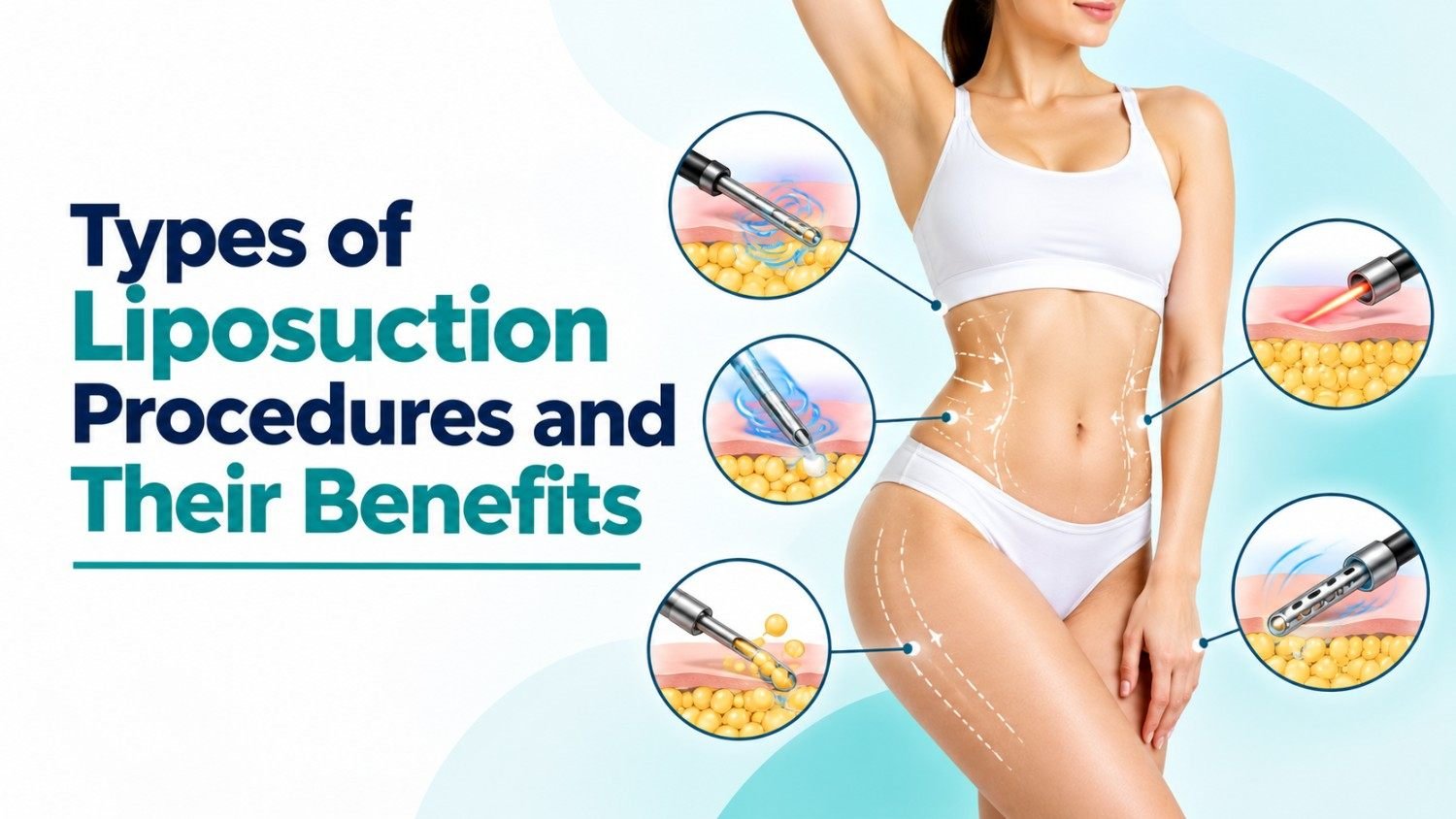
Types of Liposuction Procedures and Their Benefits are important to understand when exploring surgical options for removing stubborn fat and improving body contours. Liposuction techniques use different methods to loosen or remove unwanted fat from selected areas of the body. Common options include traditional suction-assisted liposuction, tumescent liposuction, power-assisted liposuction, ultrasound-assisted liposuction, VASER liposuction, laser-assisted liposuction, and water-assisted liposuction. Each technique has specific characteristics, and the most appropriate method depends on the treatment area, the amount of fat being removed, the patient’s anatomy, overall health, and the plastic surgeon’s experience and clinical assessment.
The benefits of different liposuction procedures may include removing localized fat deposits, improving body contours, and helping create a more proportionate appearance. Some techniques use mechanical movement, ultrasound energy, laser energy, or a controlled stream of fluid to assist with fat removal. However, no single method is best for everyone, and claims about faster recovery or improved skin tightening should be evaluated carefully. Liposuction is a surgical procedure with potential risks, including swelling, bruising, infection, contour irregularities, and complications related to anaesthesia. Consulting a qualified plastic surgeon helps patients understand the available techniques, expected results, recovery process, and limitations before choosing a suitable approach.
1. Traditional Liposuction and Its Benefits
Traditional liposuction, also called suction-assisted liposuction, is one of the established methods of removing unwanted fat. During the procedure, a surgeon makes small incisions in the treatment area and inserts a thin, hollow tube called a cannula beneath the skin. The cannula helps loosen the fat, which is then removed using suction. The procedure may be used to treat areas such as the abdomen, hips, thighs, arms, and back. The exact approach depends on the amount and location of fat, the patient’s anatomy, and the surgical plan.
One potential benefit of traditional liposuction is that it allows the surgeon to target specific fat deposits and improve body contours. It can be useful when diet and exercise have not reduced certain localized areas of fat. However, the procedure is still surgery and carries risks, including bleeding, infection, contour irregularities, and anaesthesia-related complications. It does not treat obesity or replace a healthy lifestyle. A qualified plastic surgeon can explain whether traditional liposuction is suitable and what results may reasonably be expected.
2. Tumescent Liposuction and Its Benefits
Tumescent liposuction involves injecting a special fluid into the area being treated before removing fat. This fluid usually contains saline, a local anaesthetic, and a medicine that narrows blood vessels. The solution helps numb the area and can reduce bleeding during the procedure. Once the fluid has taken effect, the surgeon removes the targeted fat using a cannula and suction. The amount of fluid, type of anaesthesia, and treatment plan depend on the patient’s needs and the extent of surgery.
A potential benefit of tumescent liposuction is that the fluid helps prepare the fat for removal while providing local anaesthesia and reducing blood loss. It may also help manage discomfort and bruising. However, the technique is not risk-free, and the medicines used must be carefully calculated and monitored. The procedure may be performed with different anaesthesia arrangements depending on the treatment area and patient. The surgeon should explain the expected recovery, possible side effects, and safety measures before the operation.
3. Power-Assisted Liposuction and Its Benefits
Power-assisted liposuction, commonly called PAL, uses a special cannula that moves rapidly back and forth with mechanical assistance. This movement helps loosen fat so the surgeon can remove it through suction. The surgeon still controls the instrument and guides it through the treatment area. PAL may be considered for different body areas, including the abdomen, thighs, hips, arms, and back. Its suitability depends on the patient’s body composition, the amount of fat being treated, and the surgeon’s experience with the technique.
One potential benefit of power-assisted liposuction is that the moving cannula can make fat removal more efficient, particularly in areas where fat is dense or fibrous. It may reduce the physical effort required from the surgeon during the procedure. However, this does not mean every patient will achieve better results or recover faster than with another method. The final outcome depends on several factors, including technique, skin elasticity, healing, and aftercare. A consultation can help determine whether PAL is appropriate for the patient’s goals.
4. Ultrasound-Assisted Liposuction and Its Benefits
Ultrasound-assisted liposuction, or UAL, uses sound-wave energy delivered through a specialised instrument to help break down or emulsify fat before it is removed. The surgeon inserts a probe through a small incision and applies the energy to the selected area. The loosened fat is then removed using suction. This method may be considered for areas with dense or fibrous fat, depending on the patient’s anatomy and the surgeon’s assessment. The treatment requires appropriate equipment and careful control of energy delivery.
A potential benefit of ultrasound-assisted liposuction is that the energy can help loosen fat that may be more difficult to remove using suction alone. It may be useful in selected body-contouring procedures, including some areas where the fat is relatively firm. However, ultrasound energy can cause heat-related injury if it is not used correctly. The technique is not automatically safer or more effective than other methods. Patients should ask about the surgeon’s experience, device selection, risks, and expected outcomes before deciding whether this procedure is suitable.
5. VASER Liposuction and Its Benefits
VASER liposuction is a form of ultrasound-assisted liposuction. It uses specialised ultrasound technology to help separate fat from surrounding tissues before the fat is removed with a cannula. The surgeon makes small incisions and carefully applies the ultrasound energy to the selected area. The loosened fat is then extracted through suction. Depending on the patient’s needs, this technique may be considered for body-contouring procedures involving areas such as the abdomen, waist, back, or chest.
One potential benefit of VASER is that its ultrasound technology can help the surgeon work with selected fat deposits, including some dense or fibrous areas. It may be used when a patient wants more defined body contours, but results depend on individual anatomy, skin quality, surgical technique, and healing. VASER is not a weight-loss procedure, and it does not guarantee a muscular appearance or perfectly defined body shape. Patients should also understand that ultrasound-assisted procedures carry risks, including burns and other tissue injuries. A qualified surgeon can explain whether VASER is appropriate.
6. Laser-Assisted Liposuction and Its Benefits
Laser-assisted liposuction uses laser energy delivered through a thin fibre inserted beneath the skin through a small incision. The energy helps disrupt or liquefy targeted fat before it is removed through a cannula. Some laser-assisted systems are also intended to produce a degree of tissue heating that may influence skin tightening, but the effect varies and should not be guaranteed. The specific device, treatment area, and amount of fat being removed influence the surgeon’s approach.
A potential benefit of laser-assisted liposuction is that laser energy can assist fat removal in selected treatment areas. Some systems may provide additional effects on tissue contraction, but this does not mean that significant loose skin can always be corrected without a skin-removal procedure. Laser energy also creates a risk of burns or other thermal injuries if used improperly. Patients should ask which device will be used, what evidence supports the expected benefits, and how the risks compare with alternative techniques before making a decision.
7. Water-Assisted Liposuction and Its Benefits
Water-assisted liposuction uses a controlled stream of fluid to help loosen fat cells from the surrounding tissue. A specialised cannula delivers the fluid while the loosened fat and fluid are removed during the procedure. This approach differs from traditional liposuction because the water stream assists the separation of fat. The technique may be considered for selected body-contouring procedures, depending on the surgeon’s experience, the patient’s needs, and the equipment available.
One potential benefit of water-assisted liposuction is that the fluid stream helps loosen fat while the surgeon removes it. Some patients may be offered this technique when the surgical team considers it appropriate for the treatment area. However, claims that it always causes less bruising, less pain, or faster recovery should be treated cautiously because outcomes vary. Water-assisted liposuction remains a surgical procedure with risks and recovery requirements. The surgeon should explain the expected results, possible complications, and alternatives before treatment.
8. Choosing the Right Liposuction Procedure for Different Body Areas
Different liposuction techniques may be considered for different body areas. The abdomen, hips, thighs, upper arms, back, chin, and neck are among the areas that may be treated. The surgeon considers the thickness and firmness of the fat, skin elasticity, the size of the treatment area, and the patient’s overall health. For example, dense fat may influence whether an assisted technique is considered, while a small treatment area may require a different approach from a larger one.
Choosing a procedure should not be based on a brand name or an online advertisement alone. A technique that is suitable for one person may not be appropriate for another. Liposuction removes fat beneath the skin but does not reliably treat cellulite or significant loose skin. It also does not remove visceral fat around the internal organs. A consultation allows the surgeon to explain which areas can be treated, what changes may be possible, and whether another procedure or no surgery would be a better choice.
9. Understanding Recovery, Safety, and Possible Risks
Recovery after liposuction varies according to the technique used, the treatment area, the amount of fat removed, and the patient’s general health. Swelling, bruising, soreness, and temporary changes in skin sensation may occur. Some patients need compression garments to help manage swelling and support the treated areas. Light activities may be possible relatively early, but strenuous exercise and heavy lifting should be resumed only according to the surgeon’s instructions. Final contours can take several months to become clear as swelling settles.
All types of liposuction involve risks, even when performed by an appropriately qualified surgeon. Possible complications include infection, bleeding, fluid accumulation, uneven contours, changes in sensation, poor wound healing, and anaesthesia-related problems. Energy-assisted methods may also carry technique-specific risks, such as burns or heat-related tissue injury. Patients should ask about the surgeon’s qualifications, the surgical facility, anaesthesia arrangements, emergency planning, and follow-up care. Understanding the recovery process and possible complications is an important part of giving informed consent.
10. How to Select a Suitable Liposuction Technique
Selecting among the types of liposuction procedures and their benefits requires an individual medical assessment. The surgeon should review the patient’s health history, current medications, allergies, previous operations, weight stability, and treatment goals. A physical examination helps assess fat distribution and skin elasticity. The surgeon can then explain the available techniques, the likely benefits and limitations, and whether the desired result can reasonably be achieved. Patients should feel comfortable asking questions and requesting clear explanations before agreeing to surgery.
It is also important to choose a suitably qualified plastic surgeon who has experience with the recommended technique. Patients should understand where the procedure will take place, who will provide anaesthesia, what aftercare is required, and how complications would be managed. No technique can guarantee perfect results or eliminate all risks. The best choice is the one that fits the patient’s medical needs and realistic goals while prioritising safety. Maintaining a stable weight and following recovery instructions can help support the long-term body-contouring results.
Table of Content
Frequently Asked Questions
The main types of liposuction procedures include traditional suction-assisted liposuction, tumescent liposuction, power-assisted liposuction, ultrasound-assisted liposuction, VASER liposuction, laser-assisted liposuction, and water-assisted liposuction. Each technique uses a different method to loosen or remove fat. The most suitable option depends on the treatment area, individual anatomy, health, and the surgeon's assessment.
Liposuction can help remove stubborn fat deposits and improve body contours in selected areas, such as the abdomen, hips, thighs, upper arms, back, chin, and neck. Different techniques may offer benefits depending on the patient's needs. However, liposuction is not a substitute for weight loss, and results vary from person to person. A qualified plastic surgeon can explain the expected benefits and limitations.
Traditional liposuction uses a thin tube called a cannula to loosen and remove fat with suction. Power-assisted liposuction uses a mechanically vibrating cannula to help break up fat and make its removal easier. The vibrating movement may help the surgeon work efficiently in certain treatment areas. The appropriate technique depends on the amount and location of fat, the patient's anatomy, and the surgeon's experience.
Tumescent liposuction involves injecting a specially prepared fluid into the treatment area before fat removal. The fluid typically contains saline, a local anaesthetic, and a medicine that helps reduce bleeding. It can make fat removal easier and help control discomfort and blood loss. The amount of fluid and the anaesthesia plan depend on the procedure and the patient's medical needs.
Ultrasound-assisted liposuction uses sound-wave energy to help loosen fat before it is removed through suction. VASER is a specialised ultrasound-assisted technique designed to target fat tissue. These approaches may be useful in selected cases, including certain areas that require detailed contouring. Neither technique guarantees better results for everyone. The surgeon will assess the treatment area, skin quality, and expected outcome before recommending a method.
Laser-assisted liposuction uses laser energy to help disrupt fat before it is removed. The heat may affect collagen in the skin, but the degree of skin tightening is variable and cannot be guaranteed. Liposuction does not reliably correct significant loose skin. People with reduced skin elasticity may need a different or additional procedure. A surgeon can explain whether laser-assisted liposuction is suitable for the patient's goals.
Water-assisted liposuction uses a controlled stream of fluid to help loosen fat tissue while it is removed through a cannula. The technique may help separate fat from surrounding tissue during the procedure. Its suitability depends on the treatment area, the amount of fat being removed, and the surgeon's assessment. As with other liposuction methods, bruising, swelling, discomfort, and other surgical risks may occur.
The most appropriate type of liposuction for the abdomen depends on the location and amount of fat, skin elasticity, overall health, and desired body contour. Liposuction can remove certain fat deposits beneath the skin, but it does not remove visceral fat located deep inside the abdominal cavity. A qualified plastic surgeon can examine the abdomen and recommend an appropriate approach based on individual needs and realistic expectations.
Recovery after liposuction varies according to the technique used, the size of the treatment area, and the amount of fat removed. Swelling, bruising, tenderness, and temporary changes in sensation can occur. Some people return to light activities within days, while others need longer. Swelling may take several weeks or months to settle. Patients should follow their surgeon's instructions about compression garments, activity, wound care, and follow-up appointments.
Choosing the right liposuction procedure starts with a consultation with a qualified plastic surgeon. The surgeon will assess your medical history, fat distribution, skin elasticity, treatment goals, and general health. They can explain the benefits, limitations, risks, recovery expectations, and costs of suitable techniques. No single method is best for everyone, and the safest choice is based on an individual assessment rather than a procedure's name or popularity.