Gynecomastia Doctor in Kerala – Treatment, Surgery & Recovery is a common search for men looking for appropriate medical evaluation and effective correction of enlarged male breast tissue. Gynecomastia refers to an increase in glandular breast tissue in males and can occur on one or both sides of the chest. It may develop during puberty, adulthood, or later in life because of hormonal changes, certain medicines, underlying health conditions, weight-related factors, or other causes.
For some men, gynecomastia may improve naturally, particularly when it is associated with temporary hormonal changes during puberty. However, persistent enlargement can affect body confidence, clothing choices, physical activities, and emotional well-being. A qualified plastic surgeon can assess the chest, determine whether the enlargement is primarily glandular tissue, excess fat, or a combination, and discuss suitable treatment options.
1. What Causes Gynecomastia?
Gynecomastia can have several possible causes. Natural hormonal changes are one of the most common factors. It can occur during infancy, puberty, and older age when hormone levels naturally fluctuate.
Other possible causes include:
Hormonal disorders affecting testosterone or estrogen
Certain prescription medicines
Use of anabolic steroids
Some liver or kidney conditions
Thyroid disorders
Certain tumors or endocrine conditions
Significant changes in body weight
Alcohol and certain recreational substances
Some medications have also been associated with gynecomastia. Therefore, patients should provide their doctor with a complete list of prescription medicines, supplements, and other substances they use.
Stopping or changing a medication should only be done after discussing it with the prescribing healthcare professional.
2. What Symptoms Should You Look For?
The most noticeable sign is enlargement of the male chest. The breast tissue may feel different from surrounding fat and can sometimes be firm or rubbery beneath the nipple.
Common symptoms can include:
Some men have no physical discomfort and seek treatment primarily because of the appearance of the chest.
Certain symptoms require medical assessment rather than simply assuming that the enlargement is gynecomastia. A hard or firm lump, nipple discharge, skin dimpling, or unusual one-sided enlargement should be evaluated by a healthcare professional.
3. How Is Gynecomastia Diagnosed?
A consultation with a qualified doctor is the first step toward determining the cause of male breast enlargement.
During an assessment, the doctor may review:
A physical examination helps determine the type and extent of tissue enlargement.
Depending on the findings, additional investigations may be recommended. These can include blood tests and imaging examinations such as mammography, ultrasound, CT, or MRI in selected cases. Testicular ultrasound or tissue biopsy may also be considered when clinically indicated.
The purpose of evaluation is not only to confirm gynecomastia but also to rule out other conditions that can cause male breast enlargement.
4. When Should You Consult a Gynecomastia Doctor in Kerala?
A consultation may be appropriate when breast enlargement persists, causes discomfort, or affects confidence and daily activities.
You may consider professional evaluation if:
Chest enlargement has persisted for a long period
The breast tissue is painful or tender
One side appears significantly larger
Exercise and weight management have not changed the glandular enlargement
The condition affects clothing choices
You feel uncomfortable removing your shirt in public
The enlargement affects your confidence
You want to understand whether surgery is appropriate
Not every person with gynecomastia requires surgery. Some cases can improve without an operation, particularly when associated with temporary hormonal changes.
5. What Treatment Options Are Available?
Treatment depends on the underlying cause, duration, severity, and composition of the enlarged chest.
For some patients, observation may be appropriate. If gynecomastia is related to an underlying medical condition or medication, addressing the cause may be an important part of treatment.
In selected cases, medications may be considered by a physician. However, medication is not appropriate for every patient and should not be taken without medical supervision.
When persistent enlargement remains and causes significant physical or psychological concerns, surgical correction may be considered.
Surgical options generally involve removing excess fat, glandular tissue, or both.
6. What Is Gynecomastia Surgery?
Gynecomastia surgery, also called male breast reduction surgery, is designed to reduce excessive male breast tissue and create a flatter, more proportionate chest contour.
The surgical approach depends on the amount and type of tissue present.
Liposuction may be used when excess fatty tissue contributes significantly to chest enlargement. Liposuction removes fat but does not directly remove glandular breast tissue.
Glandular tissue removal may be required when firm breast gland tissue is responsible for the enlargement.
In some cases, liposuction and gland removal are combined. The appropriate technique is selected after examining the patient’s chest and understanding the degree of enlargement.
Information published by the provided practice describes the use of liposuction together with gland removal for appropriate cases, with the incision carefully positioned around the areolar region.
7. How Is Gynecomastia Surgery Performed?
The exact procedure varies according to the patient’s anatomy and surgical requirements.
In suitable cases, liposuction can be used to remove excess fatty tissue from the chest. If glandular tissue remains beneath the nipple-areola complex, it may be removed through a small incision.
The surgical plan may also take into account:
The provided clinical information describes procedures that may be performed under local or general anaesthesia depending on the case. Local anaesthesia may be suitable for selected smaller or moderate cases, while larger or more complex procedures may require general anaesthesia.
A consultation is therefore important before deciding which technique is appropriate.
8. Is Gynecomastia Surgery Painful?
Pain levels vary between individuals and depend on the surgical technique and extent of correction.
When local anaesthesia is used, patients may experience temporary discomfort during administration of the anaesthetic. Once the area is numb, the procedure itself should not cause significant pain.
After surgery, patients may experience:
Mild pain
Tightness
Swelling
Bruising
Temporary sensitivity
Prescribed medication can help control postoperative discomfort.
The clinical information published by the provided practice states that many patients experience only mild pain or tightness following surgery.
Individual experiences differ, so postoperative instructions should always take priority over general recovery information.
9. What Is Recovery Like After Gynecomastia Surgery?
Recovery is an important part of achieving the desired chest contour.
Immediately after surgery, swelling and bruising can occur. A compression garment may be recommended to support the healing tissues and help the skin settle against the underlying chest wall.
The recovery timeline varies according to the surgical technique, extent of correction, general health, and individual healing response.
Information from the provided practice describes a staged return to activities, with walking and basic daily activities potentially beginning soon after surgery, office work often possible within several days, and strenuous upper-body activity delayed for longer.
Patients should not use a generic recovery timeline as a substitute for individualized medical instructions.
10. Why Is a Compression Garment Used?
A compression garment is commonly recommended after gynecomastia surgery.
After fat and glandular tissue are removed, the operated area needs time to heal and settle. Compression can help support the tissues during this period.
Potential benefits include:
Supporting the healing chest
Reducing swelling
Limiting bruising
Helping the skin conform to the new contour
Reducing the possibility of fluid accumulation
The duration of compression garment use varies. Information published by the provided practice recommends prolonged use in many cases, with exact duration depending on the surgical plan and recovery.
11. When Can You Return to Work?
The timing depends largely on the type of work you perform.
People with desk-based jobs may be able to return relatively soon after surgery if their recovery is uncomplicated. Physically demanding jobs may require a longer period away from work.
The provided clinical guidance indicates that desk work may be possible after approximately 3–4 days, whereas physically demanding work may require around 2–3 weeks.
Your surgeon may recommend a different timeline depending on swelling, wound healing, pain, and the physical demands of your occupation.
12. When Can You Exercise After Gynecomastia Surgery?
Exercise should be restarted gradually.
Walking is generally encouraged early during recovery, while strenuous activity involving the chest should be avoided until adequate healing has occurred.
Activities that may need to be restricted temporarily include:
The recovery guidance published by the provided practice recommends avoiding upper-body workouts and several sports for approximately eight weeks in its local-anaesthesia surgical protocol.
The exact return-to-exercise schedule should be determined by the treating surgeon.
13. Will Gynecomastia Surgery Leave Scars?
Any surgical incision can produce a scar. However, the size and visibility of the scar depend on the technique used, individual healing, and the amount of tissue removed.
For suitable cases, small incisions may be positioned around the border of the areola. This can make the resulting scar less conspicuous.
The provided practice describes a keyhole technique in appropriate cases, with scars expected to fade progressively over time.
Patients should understand that scar appearance varies from person to person. Proper wound care and following postoperative instructions can support normal scar maturation.
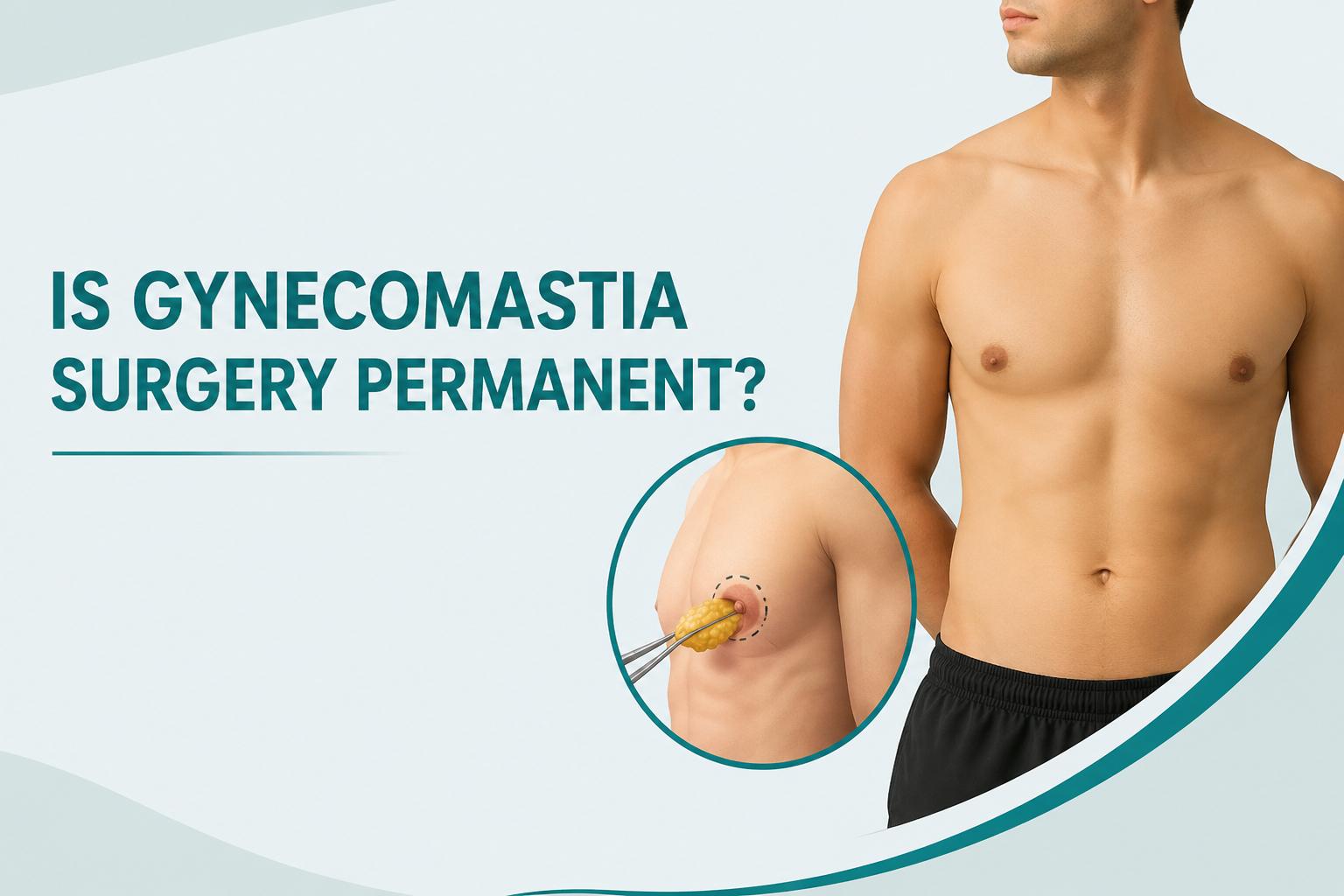
14. Is Gynecomastia Surgery Permanent?
Gynecomastia surgery can provide long-lasting correction when the enlarged glandular tissue and excess fat responsible for the condition are appropriately addressed.
The glandular tissue removed during surgery does not normally grow back. However, changes in body weight, hormonal conditions, medications, or other factors can alter the appearance of the chest in the future.
The provided practice notes that recurrence is uncommon but may occur in a small proportion of patients, with factors such as weight gain and hormonal influences potentially contributing.
Maintaining a stable weight and addressing relevant underlying conditions can help support long-term results.
15. How Should You Prepare for Gynecomastia Surgery?
Preparation begins with a medical consultation and evaluation.
Before surgery, patients may be advised to:
Complete recommended blood investigations
Provide information about existing medical conditions
Discuss all medicines and supplements
Avoid smoking as advised
Avoid alcohol around the surgical period
Arrange transportation
Arrange someone to accompany them
Follow instructions regarding food and medication
Prepare appropriate postoperative clothing and compression garments
The clinical protocol published by the provided practice recommends required investigations before surgery and having a bystander accompany the patient.
Following preparation instructions carefully can help reduce avoidable delays and support a smoother surgical experience.
16. What Factors Should You Consider When Choosing a Gynecomastia Doctor in Kerala?
Choosing a gynecomastia doctor should involve more than comparing procedure prices.
Consider the surgeon’s:
Plastic surgery qualifications
Experience with gynecomastia procedures
Understanding of male chest anatomy
Surgical approach
Hospital and operating-room facilities
Anaesthesia support
Postoperative care
Approach to complications
Follow-up arrangements
Ability to explain realistic outcomes
It is also useful to ask how the surgeon determines the appropriate surgical technique and whether glandular tissue, fat, excess skin, or a combination is contributing to the enlargement.
A proper consultation should provide an opportunity to discuss expected results, possible risks, recovery time, scars, activity restrictions, and follow-up requirements.
17. What Are the Possible Risks of Gynecomastia Surgery?
Gynecomastia surgery, like other surgical procedures, has potential risks.
Possible complications can include:
Bleeding
Infection
Fluid collection
Swelling
Bruising
Changes in nipple sensation
Asymmetry
Visible scarring
Contour irregularities
Changes in skin appearance
Need for revision surgery
The likelihood of complications varies according to the procedure, patient health, surgical technique, and postoperative care.
A detailed consultation is important for understanding individual risks rather than relying only on general statistics.