7 Powerful Facts: What Causes Gynecomastia and Why It Occurs
Understanding what causes gynecomastia can help men recognize why breast tissue may become enlarged and when medical evaluation may be appropriate. Gynecomastia is the enlargement of male breast tissue, usually because of an imbalance between estrogen and testosterone. It can affect one or both breasts and may occur at different stages of life. People searching for answers in Thrissur may also want to understand whether the condition is related to hormones, medicines, weight changes, or another underlying issue.
Gynecomastia is relatively common and does not always indicate a serious health problem. However, persistent, painful, rapidly developing, or unusual breast enlargement should be assessed by a healthcare professional.
Knowing what causes gynecomastia is important because treatment depends largely on the underlying reason. Some cases improve naturally, while others may require medication changes, treatment of an underlying condition, or surgery.
What Is Gynecomastia
Gynecomastia is the enlargement of glandular breast tissue in males. It is different from simply having excess fat around the chest.
The condition generally develops when the balance between two hormones, estrogen and testosterone, changes.
Although estrogen is commonly associated with females, males also naturally produce small amounts of it. Testosterone generally supports male physical characteristics, while estrogen contributes to breast tissue development.
When estrogen has a stronger effect on breast tissue compared with testosterone, enlargement may occur.
Understanding this hormonal relationship is one of the most important parts of learning what causes gynecomastia.
Gynecomastia vs. Chest Fat
Not every enlarged male chest is gynecomastia.
Chest enlargement caused primarily by excess body fat is sometimes called pseudogynecomastia. In this situation, fatty tissue increases without significant enlargement of the underlying glandular breast tissue.
Gynecomastia, on the other hand, involves actual breast gland tissue.
A healthcare professional can help distinguish between these conditions through physical examination and, when necessary, additional testing.
What Causes Gynecomastia
The main reason behind what causes gynecomastia is a change in the balance or activity of hormones.
Several factors can contribute to this imbalance, including:
- Natural hormonal changes
- Puberty
- Age-related hormone changes
- Certain medicines
- Some medical conditions
- Substance or alcohol use
- Obesity and associated hormonal changes
- Hormone-related disorders
- Certain tumors
In some individuals, no single cause can be identified. This is known as idiopathic gynecomastia.
The underlying cause may also vary depending on a person’s age and overall health.
Hormonal Imbalance
A relative increase in estrogen activity or a reduction in testosterone activity can encourage breast tissue growth.
Hormonal imbalance may occur naturally during puberty or aging, but it can also be associated with certain medical conditions.
Puberty
Pubertal gynecomastia is common because hormone levels can fluctuate significantly during adolescence.
During this period, temporary breast enlargement may develop. In many cases, it gradually decreases as hormone levels stabilize.
Aging
As men age, testosterone levels may decline while the effect of estrogen becomes relatively more noticeable.
Changes in body composition can also influence hormone metabolism, making age-related gynecomastia more likely in some individuals.
What Causes Gynecomastia in Adults
When considering what causes gynecomastia in adults, medication use, hormone changes, underlying diseases, and lifestyle factors are particularly important.
Adult gynecomastia may develop gradually or become noticeable relatively quickly.
Potential contributing factors include:
- Reduced testosterone production
- Increased estrogen activity
- Certain prescription medications
- Liver or kidney problems
- Thyroid disorders
- Hormone-producing tumors
- Alcohol or recreational drug use
- Significant weight changes
Adult-onset breast enlargement should not automatically be assumed to be caused by weight gain.
If the enlargement is new or persistent, identifying the underlying reason can help determine whether treatment is necessary.
What Causes Gynecomastia During Puberty
Puberty is one of the most common periods when gynecomastia develops.
During adolescence, testosterone and estrogen levels can change rapidly. For a temporary period, estrogen may have a greater effect on breast tissue.
This can cause a small, firm area of tissue beneath the nipple.
Pubertal gynecomastia may:
- Affect one breast more than the other
- Cause tenderness or sensitivity
- Appear as a small lump behind the nipple
- Improve as puberty progresses
- Resolve without specific treatment in many cases
Because hormonal changes are a normal part of puberty, this type of gynecomastia is often temporary.
However, persistent or rapidly increasing enlargement should be evaluated.
What Causes Gynecomastia Through Hormonal Changes
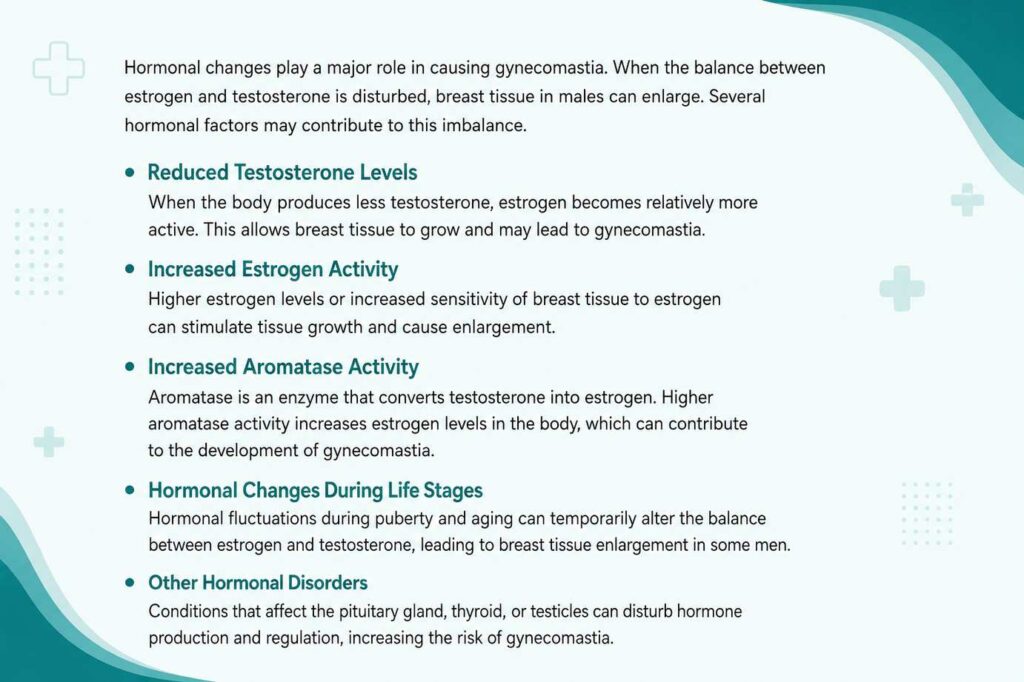
Hormonal changes are central to understanding what causes gynecomastia.
Several mechanisms can alter the estrogen-to-testosterone balance.
Reduced Testosterone
If the body produces less testosterone than expected, estrogen may have a relatively stronger effect on breast tissue.
Low testosterone can have several possible causes, including disorders affecting the testes, pituitary gland, or other parts of the hormonal system.
Increased Estrogen Activity
Increased estrogen production or activity can stimulate breast tissue.
Certain tumors and other medical conditions can sometimes influence hormone production.
Increased Aromatase Activity
Aromatase is an enzyme that converts some androgens into estrogens.
Higher aromatase activity can increase estrogen availability and may contribute to male breast enlargement.
This process can also be influenced by body composition and certain medical conditions.
What Causes Gynecomastia From Medicines
Certain medicines are another important factor when investigating what causes gynecomastia.
A medicine may affect hormone production, hormone receptors, or the way hormones are processed in the body.
Examples of medication categories that have been associated with gynecomastia include:
- Some medicines used for prostate conditions
- Certain medicines affecting blood pressure
- Some medications used for ulcers or digestive conditions
- Certain psychiatric medicines
- Some hormone-related treatments
- Certain medications affecting the nervous system
This does not mean that everyone taking these medicines will develop gynecomastia.
Medication-related risk depends on the specific drug, dose, duration of use, and individual health factors.
Do Not Stop Medicines Without Medical Advice
If breast enlargement develops after starting a medicine, discuss the timing with a healthcare professional.
Stopping a prescribed medication suddenly may cause other health problems. A clinician can determine whether a medication could be contributing and whether an alternative is appropriate.
What Causes Gynecomastia From Health Conditions
Certain health conditions can influence hormone levels and may help explain what causes gynecomastia in some adults.
Potential conditions include:
Liver Disease
The liver plays an important role in hormone metabolism. Liver dysfunction can alter the normal processing of hormones and may contribute to breast tissue enlargement.
Kidney Disease
Kidney problems can affect hormone regulation and may be associated with changes in testosterone and estrogen activity.
Thyroid Disorders
An overactive thyroid can influence hormone metabolism and has been associated with gynecomastia in some individuals.
Hypogonadism
Hypogonadism occurs when the body does not produce sufficient testosterone. Because testosterone and estrogen balance is important for breast tissue regulation, this condition can contribute to gynecomastia.
Certain Tumors
Some tumors can influence hormone production directly or indirectly. This is less common but is one reason unexplained or unusual breast enlargement may require medical assessment.
What Causes Gynecomastia Through Lifestyle Factors
Lifestyle factors can also influence what causes gynecomastia, although they are not responsible for every case.
Alcohol
Heavy alcohol consumption can affect liver function and hormone metabolism. These changes may contribute to breast enlargement in some individuals.
Recreational Drugs
Certain recreational substances have been associated with hormonal changes and may increase the risk of gynecomastia.
Anabolic Steroids
Anabolic-androgenic steroids can interfere with the body’s natural hormone production.
When external androgens are introduced, the body’s hormonal feedback system may reduce natural testosterone production. Changes in estrogen activity can subsequently contribute to breast tissue growth.
Obesity
Excess body fat can increase aromatase activity, which may increase conversion of androgens into estrogen.
Obesity can therefore contribute to both true gynecomastia and pseudogynecomastia.
What Are the Symptoms of Gynecomastia
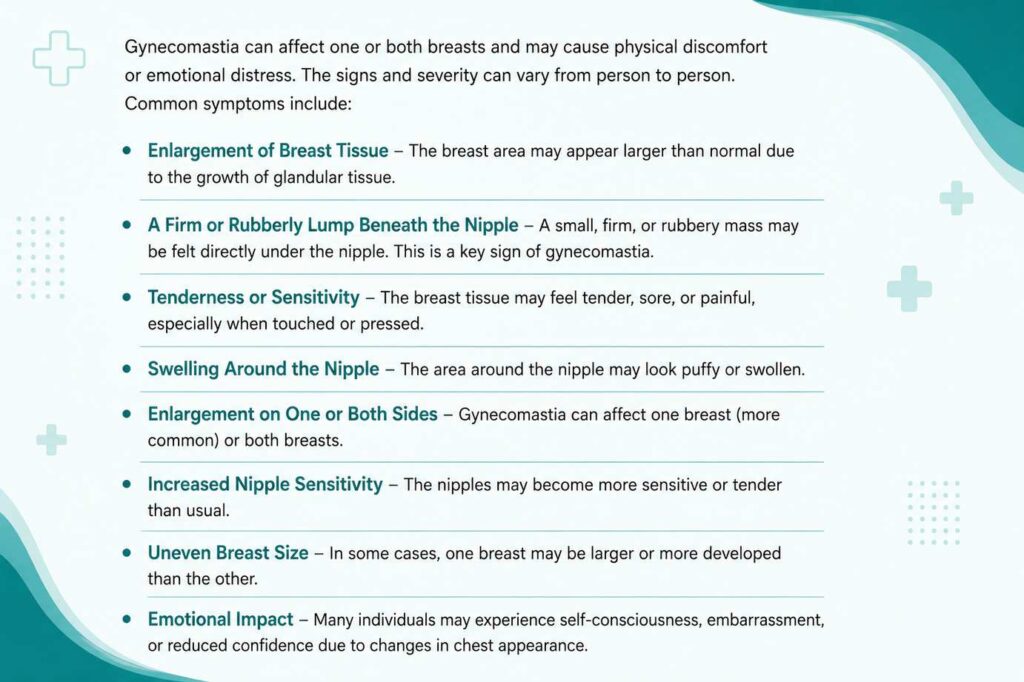
Recognizing the symptoms can help explain what causes gynecomastia and distinguish it from other types of chest enlargement.
Common signs include:
- Enlargement of breast tissue
- A firm or rubbery lump beneath the nipple
- Tenderness or sensitivity
- Swelling around the nipple
- Enlargement on one or both sides
- Increased nipple sensitivity
The amount of enlargement can vary considerably.
Some people notice only a small area behind the nipple, while others develop more noticeable breast tissue.
When Symptoms Need Medical Attention
Seek medical evaluation if there is:
- A hard or unusual lump
- Rapid breast enlargement
- Significant or persistent pain
- Nipple discharge
- Bleeding from the nipple
- Skin changes
- Nipple retraction
- Enlargement that occurs suddenly without an obvious explanation
These symptoms do not necessarily mean something serious is present, but they should be assessed appropriately.
What Are the Benefits of Identifying the Cause Early
Learning what causes gynecomastia can provide several practical benefits.
Identifying
Underlying Conditions
Breast enlargement may occasionally be associated with a hormonal or systemic health problem. Finding the cause can allow appropriate management.
Reviewing Medicines
If a medication is contributing to the condition, a healthcare professional may consider whether a safer alternative is appropriate.
Choosing Appropriate Treatment
Treatment decisions depend on factors such as the cause, duration, severity, symptoms, and amount of glandular tissue.
Avoiding Unnecessary Treatment
Some cases naturally improve. Understanding the cause can prevent unnecessary interventions when observation is appropriate.
Addressing Emotional Concerns
Gynecomastia can affect body confidence and may cause embarrassment in social or physical settings. Understanding the condition can help individuals make informed decisions about management.
How Is Gynecomastia Diagnosed
Diagnosis usually begins with a medical history and physical examination.
A healthcare professional may ask about:
- When the enlargement started
- Whether it affects one or both sides
- Pain or tenderness
- Current medicines
- Supplements
- Alcohol or substance use
- Medical conditions
- Hormonal symptoms
- Changes in weight
A physical examination helps determine whether the enlargement appears to involve glandular breast tissue or mainly fat.
Depending on the findings, additional investigations may be recommended.
These can include:
- Blood tests
- Hormone testing
- Liver and kidney function tests
- Thyroid testing
- Imaging studies when appropriate
The exact evaluation depends on the individual’s symptoms and clinical findings.
What Treatments Are Available for Gynecomastia
Treatment for gynecomastia depends on the underlying cause.
If a reversible cause is identified, addressing that cause may be the first step.
Possible approaches include:
Observation
When gynecomastia is mild, recent, or expected to resolve naturally, monitoring may be recommended.
This is particularly relevant for some cases associated with puberty.
Treating an Underlying Condition
If hormonal, thyroid, liver, kidney, or other health problems contribute to the condition, managing the underlying issue may help.
Reviewing Medicines
If medication is suspected to be responsible, a healthcare professional may review the treatment plan.
Medication
In selected cases, medicines may be considered, particularly when symptoms are relatively recent and there is persistent tenderness or enlargement.
Medication should only be used under appropriate medical supervision.
Surgery
When breast enlargement persists despite other approaches, surgery may be considered.
Surgical management can involve removal of excess glandular tissue, fatty tissue, or both, depending on the individual presentation.
The most appropriate option depends on the amount and type of tissue present.
Can Gynecomastia Go Away Naturally
Whether gynecomastia resolves naturally depends on its cause and duration.
Pubertal gynecomastia, for example, often improves as hormonal levels stabilize.
Some recent cases in adults may also improve when the underlying trigger is addressed.
However, long-standing glandular tissue may become more fibrous over time and may be less likely to disappear without treatment.
This is why understanding what causes gynecomastia and how long it has been present can be important when discussing treatment options.
Tips for Managing Gynecomastia
Although lifestyle changes cannot correct every case of true gynecomastia, several habits may support overall health.
Maintain a Healthy Weight
A healthy body weight can reduce excess chest fat and may support healthier hormone metabolism.
Review Medicines With a Professional
Keep an updated list of prescription medicines, over-the-counter products, and supplements.
Avoid Unsupervised Hormonal Products
Testosterone boosters, anabolic steroids, and other hormone-related products can affect the body’s natural hormone balance.
Limit Excessive Alcohol
Reducing excessive alcohol consumption may support liver and hormonal health.
Follow Medical Advice
If the cause is related to an underlying condition, following the recommended treatment plan is important.
What Causes Gynecomastia and When Should You Seek Help
Knowing what causes gynecomastia can help determine when professional assessment is appropriate.
Medical evaluation is especially useful when:
- Breast enlargement persists
- The condition develops suddenly
- There is significant tenderness
- One breast becomes noticeably larger
- A firm lump is present
- There is nipple discharge
- There are skin or nipple changes
- The cause is unclear
- The enlargement causes significant emotional distress
A professional assessment can determine whether the condition is typical gynecomastia, pseudogynecomastia, or another breast-related issue.
Conclusion
Understanding what causes gynecomastia is the first step toward identifying whether male breast enlargement is related to normal hormonal changes, medication, lifestyle factors, or an underlying health condition. While many cases are harmless and may improve naturally, persistent or unusual changes deserve appropriate evaluation.
The right management depends on the cause, duration, symptoms, and individual circumstances. Avoid self-diagnosis or stopping prescribed medicines without professional guidance. For individuals seeking evaluation and treatment options in Thrissur, a qualified healthcare professional can assess the breast enlargement and recommend an appropriate approach. According to Mayo Clinic’s guide to gynecomastia, hormonal imbalance, certain medicines, health conditions, and lifestyle factors can contribute to male breast enlargement.
Frequently Asked Questions

Dr Prince
Consultant Plastic & Cosmetic Surgeon
Dr Prince is a Consultant Plastic and Reconstructive Surgeon at the Sushrutha Institute of Plastic Surgery, Elite Mission Hospital, Thrissur. He specializes in aesthetic and reconstructive procedures performed in a fully equipped hospital environment with strict safety protocols.
His expertise includes liposuction, rhinoplasty, gynecomastia correction, tummy tuck, breast surgery, and advanced facial aesthetic procedures, with a focus on safe techniques and natural-looking results.
Sushrutha Institute of Plastic Surgery, Elite Mission Hospital, Thrissur, Kerala