Everything You Need to Know About Breast Implant Surgery
Breast implant surgery is a personal procedure that may be considered for cosmetic enhancement, restoration of lost breast volume, correction of asymmetry, or breast reconstruction. For people considering the procedure in Kerala, understanding the choices, limitations, recovery process, and long-term responsibilities is essential. This guide covers Everything You Need to Know About Breast Implant Surgery in clear, practical language so that you can approach a consultation with realistic expectations and informed questions.
Breast implant surgery is not simply about selecting a cup size. The result depends on your anatomy, chest width, existing breast tissue, skin quality, implant dimensions, surgical technique, and healing response. A qualified plastic surgeon evaluates all these factors before recommending a treatment plan.
What Is Breast Implant Surgery?
Breast implant surgery, also called breast augmentation or augmentation mammoplasty, is a surgical procedure in which an implant is placed beneath the breast tissue or chest muscle to alter breast volume, shape, projection, or symmetry.
The procedure may be performed for aesthetic or reconstructive reasons. Some patients want a modest improvement in fullness, while others may want to restore volume after pregnancy, breastfeeding, weight loss, ageing, trauma, or previous surgery.
An important part of Everything You Need to Know About Breast Implant Surgery is recognising that implants do not produce the same result for every person. The surgeon must adapt the procedure to the individual rather than use a standard approach.

Why Do People Consider Breast Implant Surgery?
There is no single reason why someone chooses breast implants. The decision may be related to physical changes, personal preferences, reconstruction, or a combination of factors.
Common reasons include:
- Naturally small breast volume
- Loss of fullness after pregnancy or breastfeeding
- Changes following significant weight loss
- Unequal breast size or shape
- Reduced upper-breast fullness with ageing
- Congenital breast-development differences
- Breast reconstruction after mastectomy
- Correction after injury or previous surgery
- Desire for improved body proportion
- Difficulty achieving balance in clothing
The presence of one of these concerns does not automatically mean surgery is necessary. A consultation helps determine whether implants, fat transfer, a breast lift, or another procedure would be more suitable.
Changes That May Lead Someone to Seek Consultation
Breast implant surgery does not treat a disease or a set of medical symptoms in most cosmetic cases. However, certain physical or emotional concerns may encourage a person to request professional advice.
These may include:
- Noticeable loss of breast volume
- Deflation of the upper part of the breast
- Persistent breast asymmetry
- Loose skin following pregnancy or weight change
- Difficulty finding well-fitting bras or clothing
- Dissatisfaction with breast proportion
- Developmental differences between the breasts
- Changes following breast surgery
- Concerns about reconstruction after cancer treatment
These concerns should be discussed openly during consultation. A responsible surgeon also evaluates whether the patient’s goals are realistic and whether surgery is being considered for personal reasons rather than outside pressure.
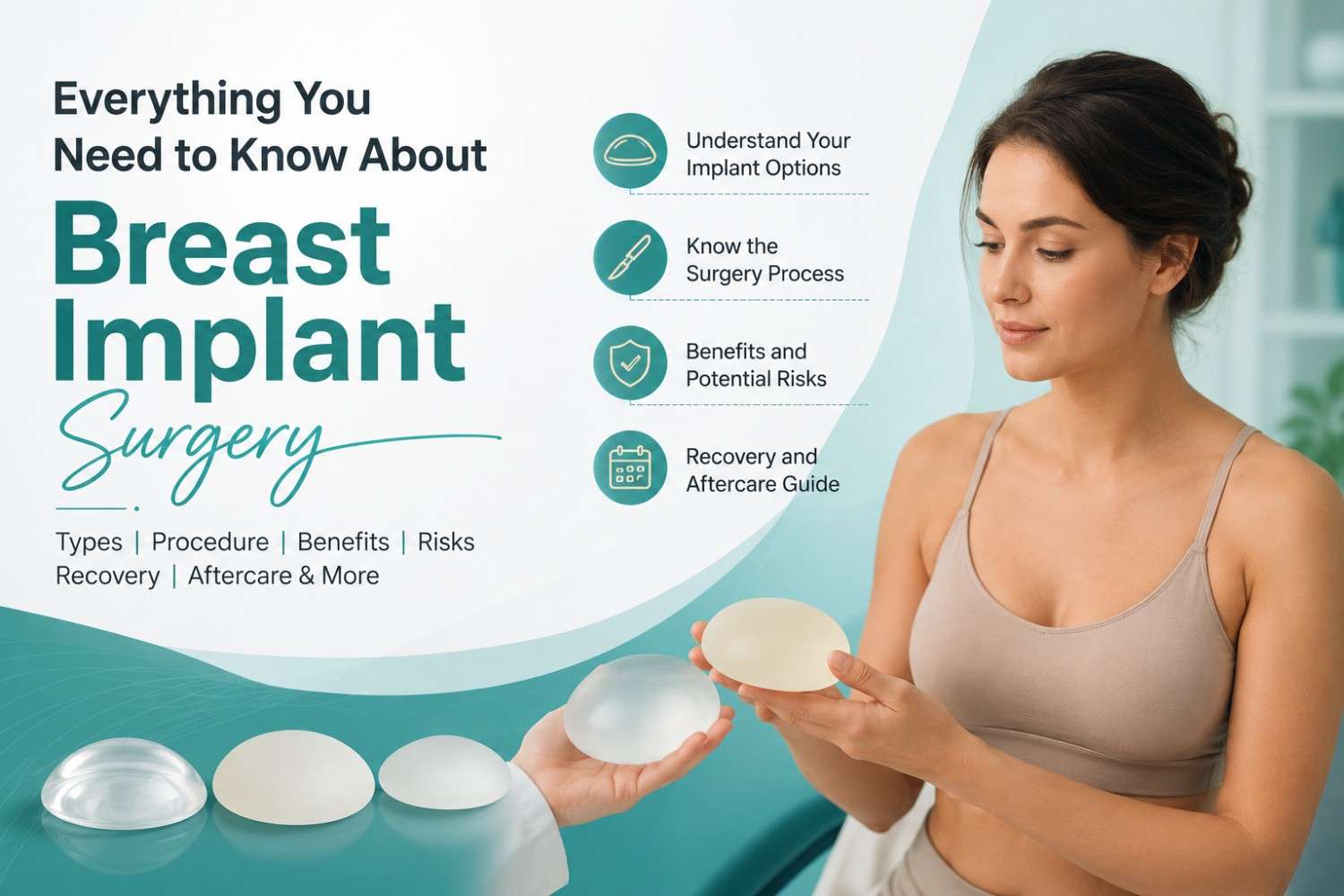
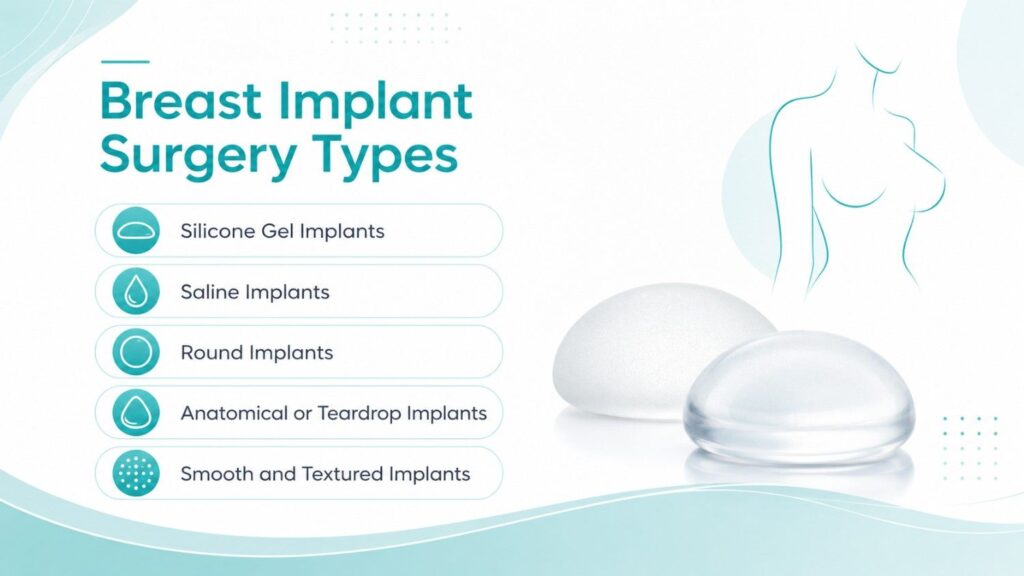
Everything You Need to Know About Breast Implant Surgery Types
Different implant types are available, and each has particular characteristics. Implant selection should be based on anatomy, desired appearance, tissue coverage, lifestyle, and medical assessment.
- Silicone Gel Implants
Silicone implants contain a cohesive silicone gel. They are commonly chosen because they may provide a soft feel and natural-looking movement.
Modern silicone implants are available in different levels of gel cohesiveness. Some are softer, while others are firmer and designed to maintain their shape.
- Saline Implants
Saline implants have a silicone outer shell filled with sterile salt water. They may be inserted empty and filled after placement.
When a saline implant ruptures, the saline is generally absorbed by the body, and the breast usually loses volume noticeably. However, saline implants may feel less natural in people with limited breast tissue.
- Round Implants
Round implants provide fullness across the breast and may create greater upper-pole volume. They are available in different widths and projections.
A round implant does not always create an obviously rounded result. The final shape also depends on implant size, tissue coverage, placement, and chest anatomy.
- Anatomical or Teardrop Implants
Anatomical implants are shaped with less fullness at the top and more volume toward the lower part. They may be considered in selected cosmetic or reconstructive cases.
Because their shape has a specific orientation, rotation may affect appearance. Their textured surface and suitability must be discussed carefully with the surgeon.
- Smooth and Textured Implants
Smooth implants can move slightly within the implant pocket. Textured implants are designed to adhere more closely to surrounding tissue.
Implant-surface selection requires an individual risk-benefit discussion. Patients should ask which implant is being recommended, why it is suitable, and what long-term monitoring is required.
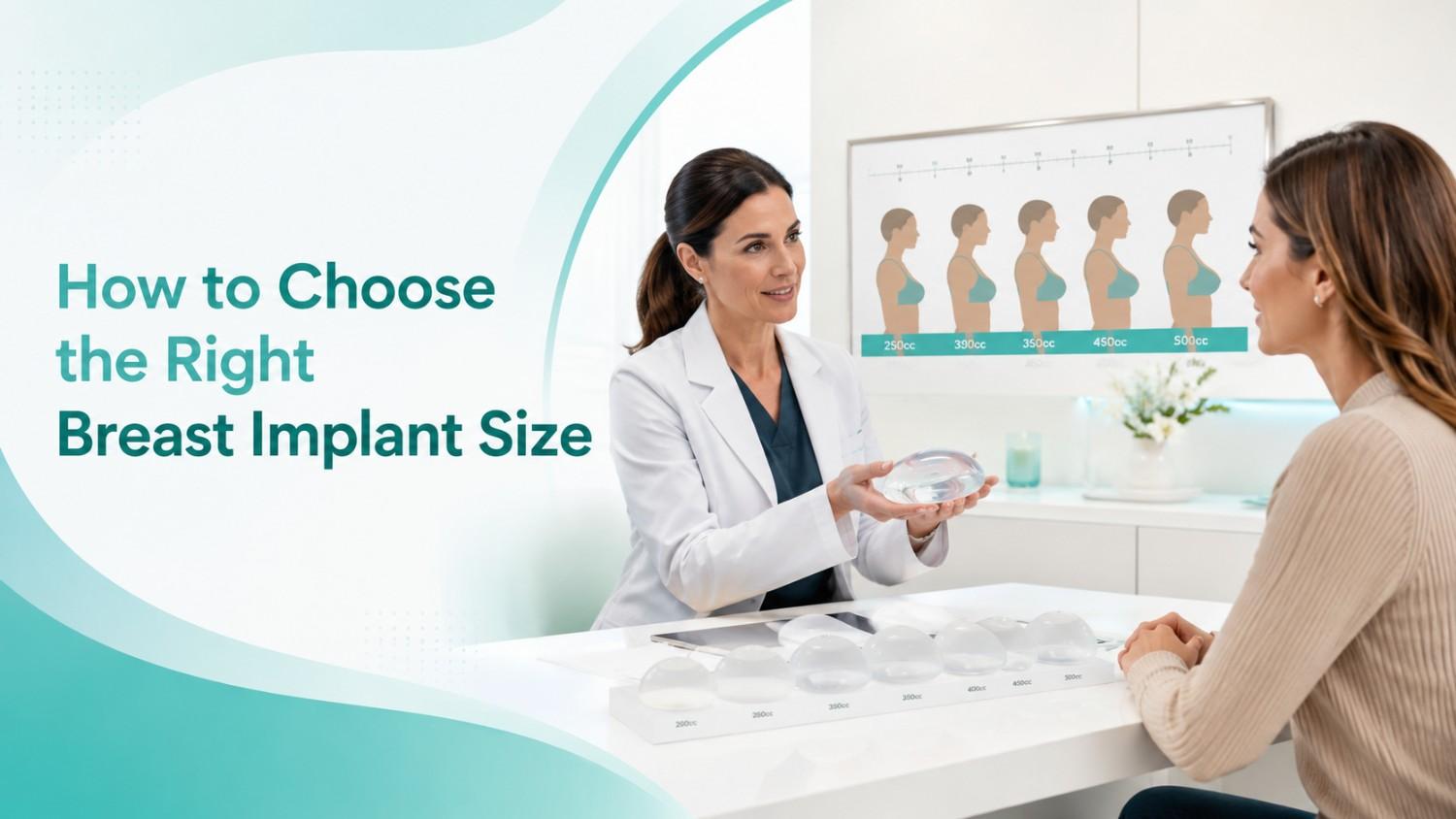
How Breast Implant Size Is Selected
Choosing an implant is more detailed than choosing a bra cup size. Cup sizing is not standardised across clothing brands and cannot reliably guide surgery.
The surgeon considers:
- Chest-wall width
- Breast-base diameter
- Existing breast tissue
- Skin elasticity
- Nipple position
- Degree of asymmetry
- Rib-cage shape
- Implant width and projection
- Desired level of fullness
- Lifestyle and physical activity
Implant dimensions are often more important than volume alone. Two implants with the same volume can create different results when their width and projection differ.
During sizing, patients may try implant sizers, view photographs, or use digital simulation. These tools can support discussion but cannot guarantee an exact postoperative appearance.
Where Can a Breast Implant Be Positioned?
Implants can be placed in different anatomical planes. Placement affects tissue coverage, movement, recovery, and the appearance of the breast.
Subglandular Placement
The implant is positioned behind the breast tissue but above the chest muscle.
Possible advantages include a shorter operation and less muscle-related discomfort. However, patients with thin tissue may have more visible implant edges or rippling.
Submuscular Placement
The implant is positioned partly or fully beneath the pectoral muscle.
This can provide additional implant coverage, especially in patients with limited natural tissue. It may involve greater early tightness and movement-related changes.
Dual-Plane Placement
Dual-plane placement combines partial muscle coverage in the upper breast with less muscle coverage in the lower breast.
It is often selected to balance tissue coverage, lower-breast expansion, and implant position. The appropriate plane depends on individual anatomy rather than a universal rule.
Preparing for Breast Implant Surgery
Preparation begins before the operation. A complete consultation and medical evaluation help identify risks and develop a suitable plan.
Patients may be asked to:
- Share their full medical history
- List current medicines and supplements
- Discuss previous operations
- Report allergies or previous anaesthetic problems
- Complete blood tests or imaging when advised
- Stop smoking or nicotine use
- Avoid selected medicines that increase bleeding risk
- Arrange transport after surgery
- Organise help for the first few days
- Prepare comfortable front-opening clothing
- Follow fasting instructions before anaesthesia
Patients should never stop prescribed medication without medical advice.
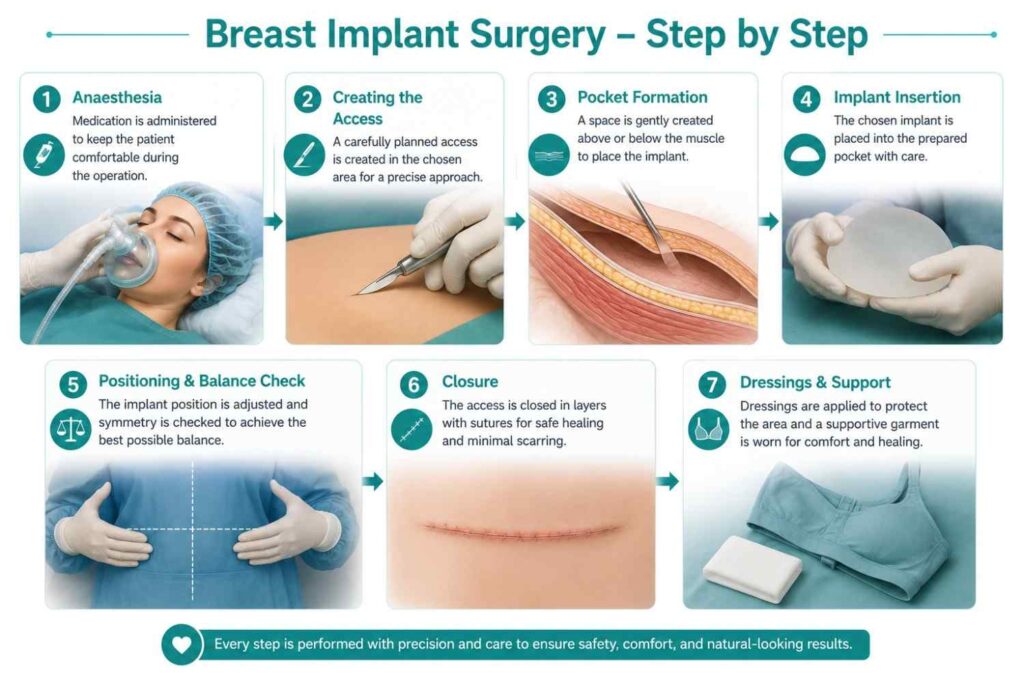
Everything You Need to Know About Breast Implant Surgery Procedure
Breast implant surgery is generally performed under general anaesthesia in an appropriately equipped surgical facility.
The main steps usually include:
- Anaesthesia: Medication is administered to keep the patient comfortable during the operation.
- Incision: The selected incision is carefully created.
- Pocket formation: A space is prepared above or below the chest muscle.
- Implant insertion: The chosen implant is placed into the pocket.
- Symmetry assessment: Implant position and breast balance are evaluated.
- Closure: The incision is closed in layers with sutures.
- Dressings and support: Dressings and a supportive garment may be applied.
The exact duration varies according to the technique, implant placement, asymmetry correction, and whether another procedure is performed at the same time.
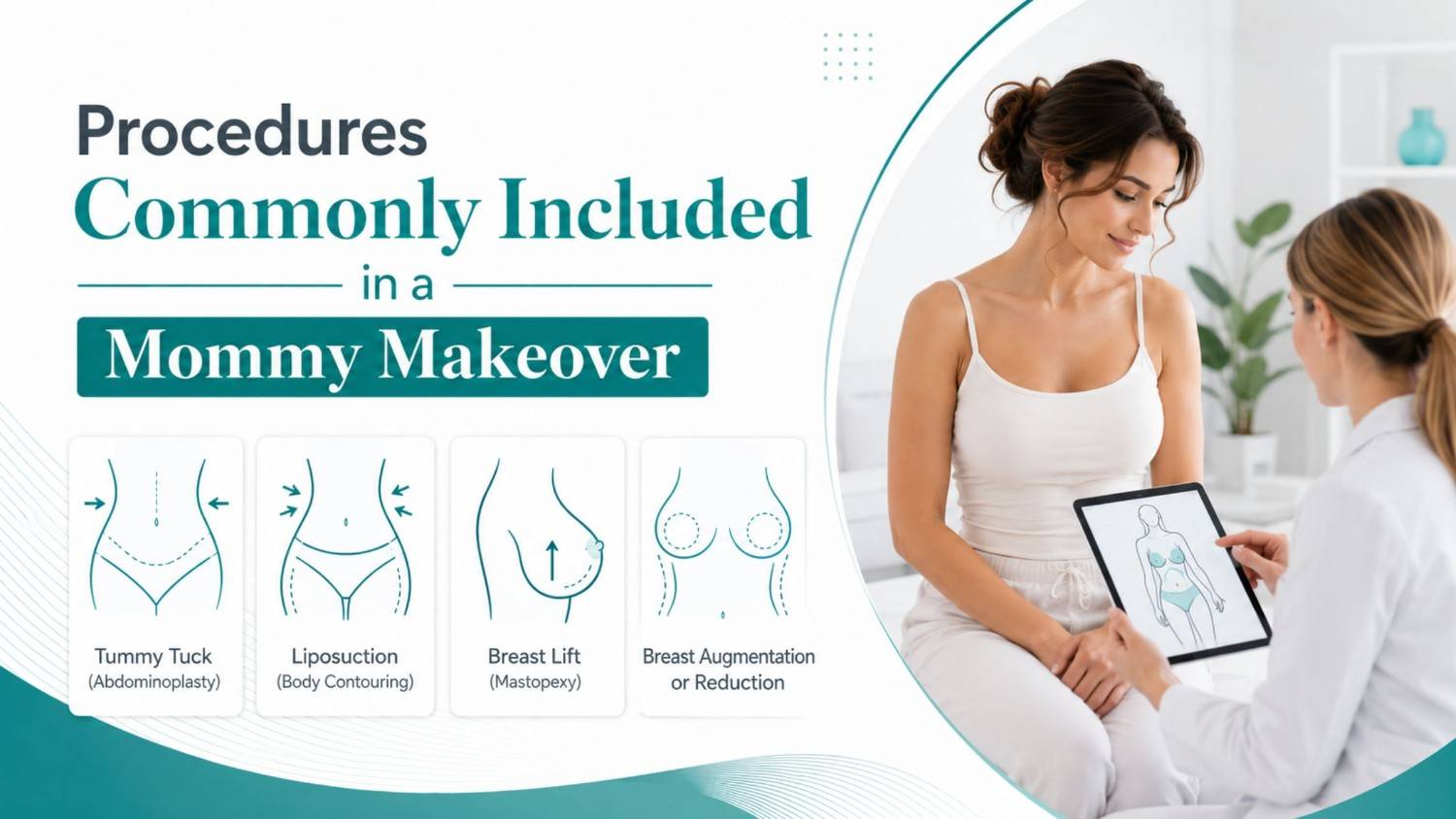
Can Breast Implant Surgery Be Combined With a Breast Lift?
Breast implants increase or restore volume, but they do not always correct significant sagging. When the nipple sits lower than the desired position or excess skin is present, a breast lift may be considered.
A breast lift can:
- Remove excess skin
- Reshape the breast
- Raise the nipple position
- Improve lower-breast looseness
- Reposition the areola
Some patients require implants alone, some require a lift alone, and others may benefit from both. Combining procedures can improve shape and volume, but it also creates additional scars and requires careful planning.
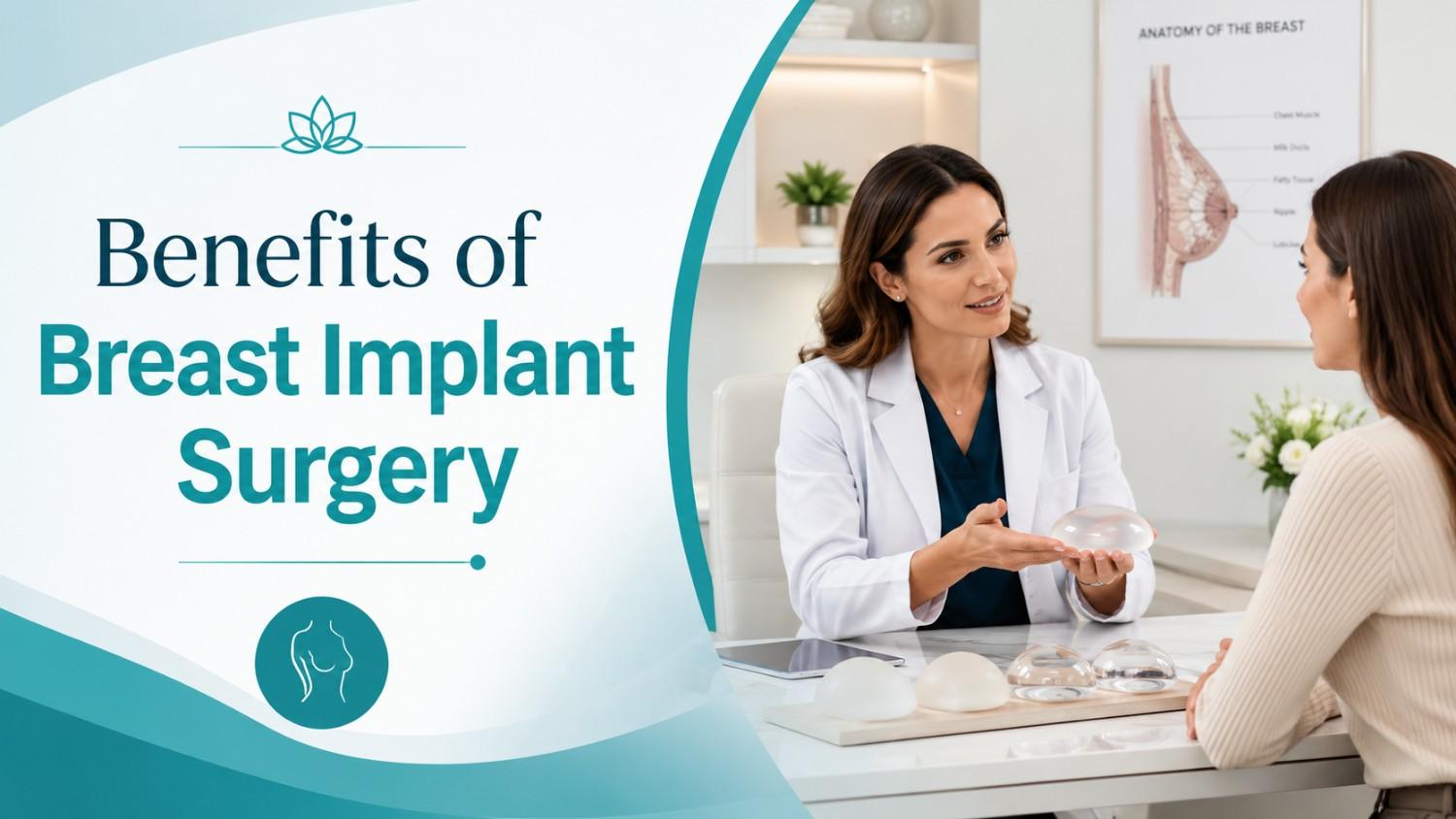
Benefits of Breast Implant Surgery
Potential benefits vary according to the patient’s starting anatomy and goals.
Breast implant surgery may:
- Increase breast volume
- Restore fullness after pregnancy
- Improve visible asymmetry
- Create better body proportion
- Add upper-breast fullness
- Support breast reconstruction
- Improve balance in clothing
- Correct selected developmental differences
- Rebuild shape after breast surgery
- Help patients feel more comfortable with their appearance
Benefits should be viewed realistically. Surgery cannot guarantee a particular cup size, perfect symmetry, permanent scar-free results, or a specific emotional outcome.
Long-Term Care of Breast Implants
Breast implants require long-term awareness. They are not automatically replaced after a fixed number of years, but they are also not considered permanent lifetime devices.
Long-term care may include:
- Routine breast self-awareness
- Clinical breast examinations
- Age-appropriate breast screening
- Implant imaging when recommended
- Maintaining records of implant details
- Reporting new breast changes
- Following advice after pregnancy or weight change
- Reviewing implant condition over time
Patients should keep information about the implant manufacturer, model, size, surface, and serial number.
Breast screening remains important. Patients should inform imaging professionals that they have implants so that suitable techniques can be used.
Choosing a Plastic Surgeon
The surgeon’s qualifications, judgement, communication, and safety practices are more important than choosing surgery based only on price or social-media photographs.
During consultation, ask about:
- Recognised plastic-surgery qualifications
- Experience with breast procedures
- Hospital or surgical-facility standards
- Anaesthesia arrangements
- Implant brands and approvals
- Implant-size selection
- Recommended placement and incision
- Risks specific to your anatomy
- Revision policy
- Follow-up schedule
- Management of complications
- Long-term implant monitoring
A responsible surgeon should explain both the possible benefits and the limitations of surgery.
Conclusion
Everything You Need to Know About Breast Implant Surgery includes much more than implant size. Patients need to understand implant materials, placement options, incisions, expected benefits, possible complications, recovery, future screening, and the possibility of revision surgery.
A carefully planned procedure begins with a detailed consultation and honest discussion of your anatomy, goals, medical history, and lifestyle. People considering breast implant surgery in Kerala should choose a qualified plastic surgeon, review all available options, and make the decision without pressure. Informed expectations, appropriate surgical planning, and consistent long-term follow-up can support a safer and more satisfying treatment experience.
For additional information about breast implants and recovery, visit the American Society of Plastic Surgeons (ASPS).
FREQUENTLY ASKED QUESTIONS

Dr Prince
Consultant Plastic & Cosmetic Surgeon
Dr Prince is a Consultant Plastic and Reconstructive Surgeon at the Sushrutha Institute of Plastic Surgery, Elite Mission Hospital, Thrissur. He specializes in aesthetic and reconstructive procedures performed in a fully equipped hospital environment with strict safety protocols.
His expertise includes liposuction, rhinoplasty, gynecomastia correction, tummy tuck, breast surgery, and advanced facial aesthetic procedures, with a focus on safe techniques and natural-looking results.
Sushrutha Institute of Plastic Surgery, Elite Mission Hospital, Thrissur, Kerala