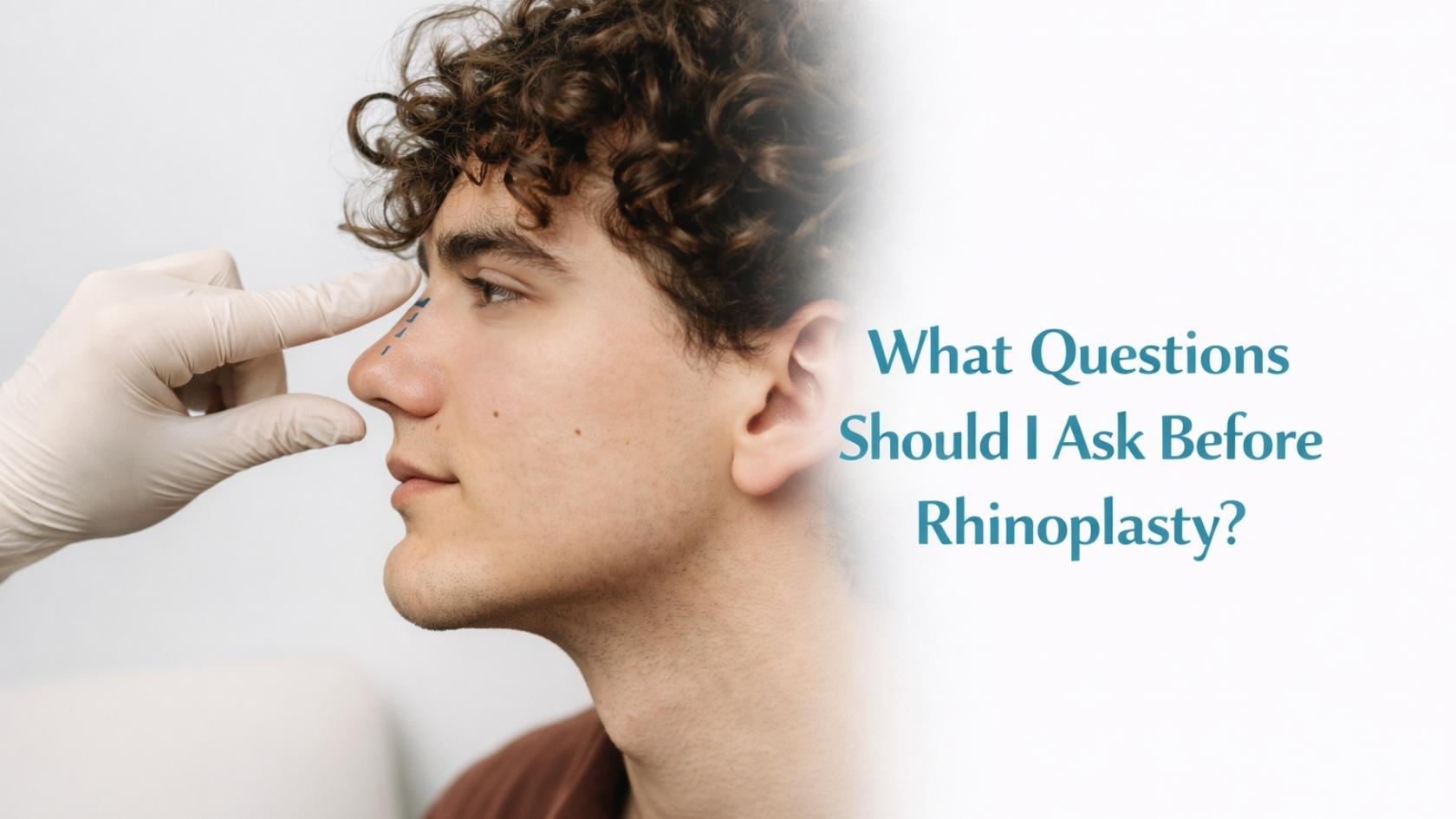
Understanding what is the difference between open and closed rhinoplasty is essential for individuals considering nose reshaping surgery. Rhinoplasty techniques are broadly categorized into two primary approaches: open rhinoplasty and closed rhinoplasty. While both methods aim to improve nasal shape, structure, and function, they differ in surgical access, visibility, incision placement, and recovery characteristics.
For individuals exploring rhinoplasty in Kerala, knowing how these two techniques compare helps support informed discussions during consultation and realistic expectations regarding results and healing.
Overview of Rhinoplasty Techniques
Rhinoplasty is performed to address cosmetic concerns such as nasal hump, bulbous tip, asymmetry, or disproportionate size, as well as functional concerns like breathing difficulties caused by structural abnormalities.
The primary distinction between open and closed rhinoplasty lies in how the surgeon accesses the nasal framework.
What Is Open Rhinoplasty?
Open rhinoplasty involves a small external incision made across the columella—the strip of tissue between the nostrils. This incision allows the nasal skin to be gently lifted, giving the surgeon direct visibility of the underlying bone and cartilage structures.
Key Features of Open Rhinoplasty
Small incision across the columella
Nasal skin is lifted for full structural exposure
Enhanced visibility of internal anatomy
Greater access for complex reshaping
Because of the improved visual field, open rhinoplasty is often chosen for more complex cases requiring detailed structural correction.
Advantages of Open Rhinoplasty
Open rhinoplasty offers several technical advantages:
1. Improved Surgical Visibility
Direct visualization of the nasal framework allows precise modifications, especially in cases involving tip reshaping or asymmetry correction.
2. Better Access for Complex Corrections
This technique is often preferred for revision surgeries, severe deformities, or significant structural adjustments.
3. Enhanced Accuracy
With full exposure of nasal cartilage and bone, adjustments can be made symmetrically and with greater control.
Considerations of Open Rhinoplasty
While open rhinoplasty provides enhanced access, there are factors to consider:
A small external scar (usually fades over time)
Slightly longer swelling duration
Mildly extended recovery period compared to closed technique
In most cases, the external scar becomes barely noticeable after healing.
What Is Closed Rhinoplasty?
Closed rhinoplasty, also known as endonasal rhinoplasty, involves incisions made entirely inside the nostrils. There is no external incision, and the nasal skin is not fully lifted.
Key Features of Closed Rhinoplasty
All incisions are internal
No visible external scar
Limited direct visibility of nasal framework
Often used for moderate reshaping cases
This approach relies on surgical precision without full exposure of underlying structures.
Advantages of Closed Rhinoplasty
Closed rhinoplasty offers several benefits:
1. No External Scar
Since all incisions are hidden inside the nose, there is no visible scarring.
2. Shorter Surgical Time
The procedure may take less time in selected cases.
3. Reduced Swelling Duration
Some patients experience slightly faster reduction in swelling.
4. Quicker Early Recovery
Initial healing may feel somewhat quicker compared to open technique.
Considerations of Closed Rhinoplasty
Despite its advantages, closed rhinoplasty has certain limitations:
Reduced direct visualization of nasal structures
Limited access for complex deformities
Not always suitable for major tip reshaping
This method is generally best suited for patients requiring modest structural adjustments.
Open vs Closed Rhinoplasty: Side-by-Side Comparison
| Feature | Open Rhinoplasty | Closed Rhinoplasty |
|---|---|---|
| Incision Location | External + internal | Internal only |
| Visible Scar | Small columellar scar | No external scar |
| Surgical Visibility | Full exposure | Limited visibility |
| Suitable for Complex Cases | Yes | Limited |
| Swelling Duration | Slightly longer | Slightly shorter |
| Revision Surgery | Preferred | Less common |
Which Technique Is Better?
There is no universally “better” technique. The appropriate method depends on:
Nasal anatomy
Desired corrections
Complexity of deformity
Whether it is primary or revision surgery
The choice between open and closed rhinoplasty is determined during consultation after detailed evaluation.
Role of Consultation in Technique Selection
During consultation, the surgeon evaluates:
Nasal bone structure
Cartilage strength
Skin thickness
Breathing function
Facial balance
Imaging tools or simulation may help explain expected changes. Based on these findings, the most appropriate surgical approach is recommended.
Understanding what is the difference between open and closed rhinoplasty allows patients to actively participate in this decision-making process.
Recovery Differences Between the Two Techniques
Although both techniques involve similar overall recovery timelines, minor differences exist.
Open Rhinoplasty Recovery
Slightly more swelling initially
Scar care instructions required
Gradual resolution of tip swelling
Closed Rhinoplasty Recovery
No external incision care
Swelling may subside slightly faster
Similar overall healing duration
Final results for both techniques evolve over several months as tissues settle.
Functional Considerations
Both open and closed rhinoplasty can address breathing issues when structural abnormalities are present. The surgical approach does not limit the ability to correct internal nasal obstruction when planned properly.
Functional improvements are typically achieved by reshaping cartilage, straightening the septum, or adjusting internal nasal structures.
Are Results Different Between Open and Closed Rhinoplasty?
When performed appropriately, both techniques can produce comparable aesthetic results. The outcome depends more on surgical planning and anatomical factors than on the incision type itself.
In complex cases requiring significant tip modification, open rhinoplasty may offer enhanced control, potentially improving precision.
Long-Term Stability of Results
Both open and closed rhinoplasty aim for stable, long-lasting results. The internal healing process and structural support determine long-term success rather than the external incision approach.
Maintaining realistic expectations and following postoperative instructions contributes significantly to overall satisfaction.
Who May Be a Candidate for Open Rhinoplasty?
Open rhinoplasty is often recommended for individuals who:
Require significant nasal reshaping
Have complex asymmetry
Need revision rhinoplasty
Require detailed tip reconstruction
Who May Be a Candidate for Closed Rhinoplasty?
Closed rhinoplasty may be suitable for individuals who:
Need minor to moderate reshaping
Have good nasal symmetry
Prefer no external incision
Require limited structural correction
Final Thoughts
Understanding what is the difference between open and closed rhinoplasty provides clarity before undergoing nose reshaping surgery. While open rhinoplasty offers enhanced visibility and access for complex corrections, closed rhinoplasty provides a scar-free external appearance and may involve slightly quicker early recovery.
The appropriate technique is determined through individualized assessment, anatomical evaluation, and discussion of aesthetic goals. Both approaches are designed to improve nasal harmony, function, and facial balance when performed with careful planning and precision.
ipsum dolor sit amet, consectetur adipiscing elit. Ut elit tellus, luctus nec ullamcorper mattis, pulvinar dapibus leo.
Frequently Asked Questions
1. What is the main difference between open and closed rhinoplasty?
The main difference between open and closed rhinoplasty is the incision placement. Open rhinoplasty includes a small external incision across the columella, while closed rhinoplasty uses only internal incisions inside the nostrils.
2. Does open rhinoplasty leave a visible scar?
Open rhinoplasty involves a small external incision, but the scar is usually minimal and fades significantly over time.
3. Is closed rhinoplasty completely scar-free?
Closed rhinoplasty does not leave any visible external scar because all incisions are placed inside the nostrils.
4. Which technique is better for complex nasal corrections?
Open rhinoplasty is generally preferred for complex cases, revision surgeries, or detailed tip reshaping because it provides better visibility and access.
5. Is recovery faster with closed rhinoplasty?
Closed rhinoplasty may involve slightly less initial swelling and a somewhat quicker early recovery, but overall healing time is similar for both techniques.
6. Can both open and closed rhinoplasty correct breathing problems?
Yes, both techniques can address functional issues such as a deviated septum or structural nasal obstruction when planned properly.
7. How long does swelling last after open rhinoplasty?
Swelling gradually reduces over several weeks, but minor swelling—especially at the nasal tip—may take several months to fully settle.
8. Is closed rhinoplasty suitable for revision surgery?
Closed rhinoplasty can be used in selected revision cases, but open rhinoplasty is often preferred for revision procedures due to better visibility of scar tissue and altered anatomy.
9. Are the final results different between open and closed rhinoplasty?
When performed appropriately, both techniques can produce similar aesthetic results. The outcome depends more on surgical planning and individual anatomy than the approach itself.
10. How is the choice between open and closed rhinoplasty made?
The choice is determined during consultation after evaluating nasal structure, desired changes, skin thickness, and overall facial balance.

Dr prince has years of experience in providing the highest quality of care to our patients. We offer a wide range of services including cosmetic surgery, hair surgery, skin and cosmetic clinics, and skin surgery centers.