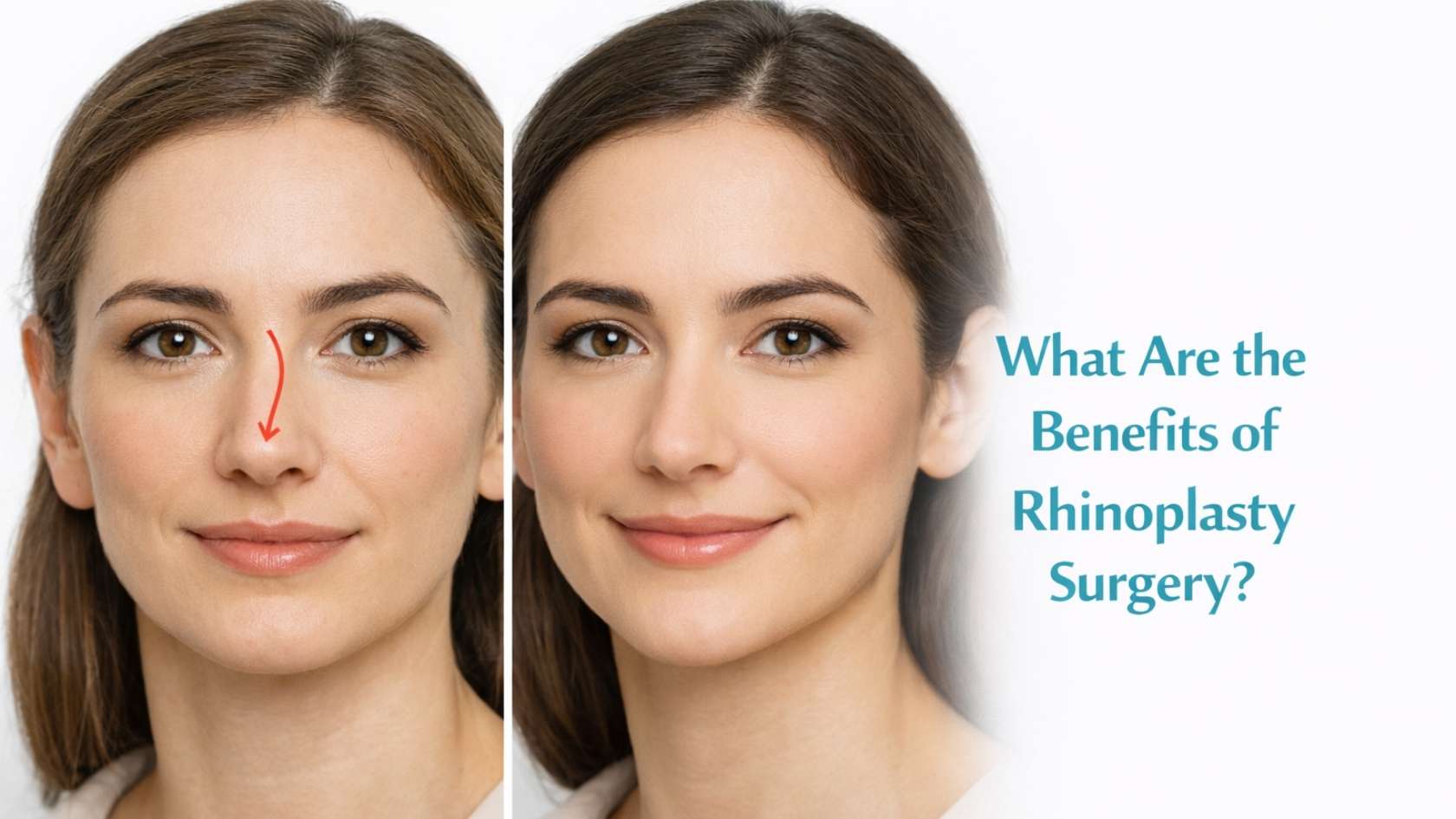
Before-and-after rhinoplasty comparison showing nasal refinement and facial harmony improvements.
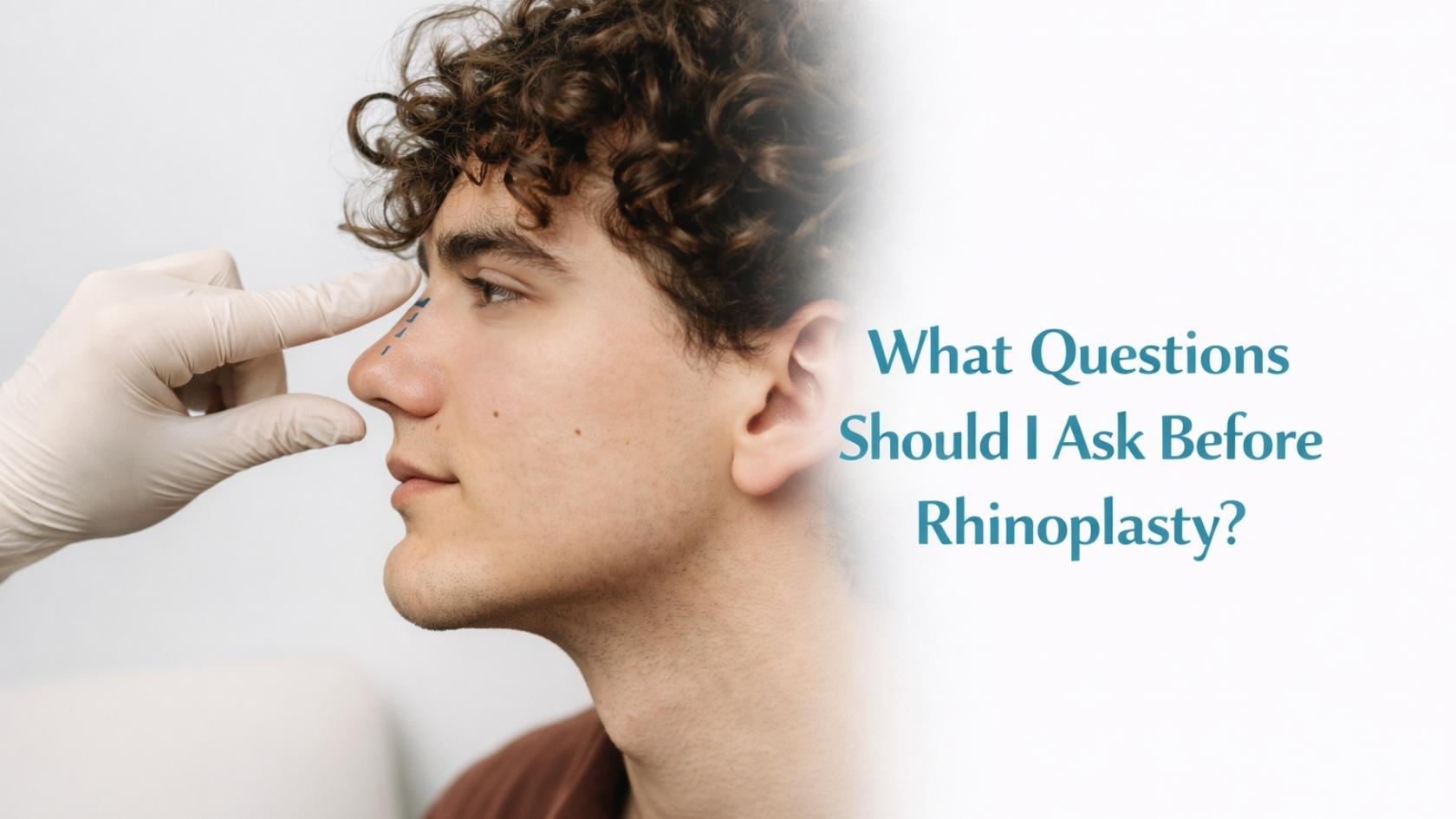
What Questions Should I Ask Before Rhinoplasty?
Consultation image showing nasal assessment and planning before rhinoplasty surgery.
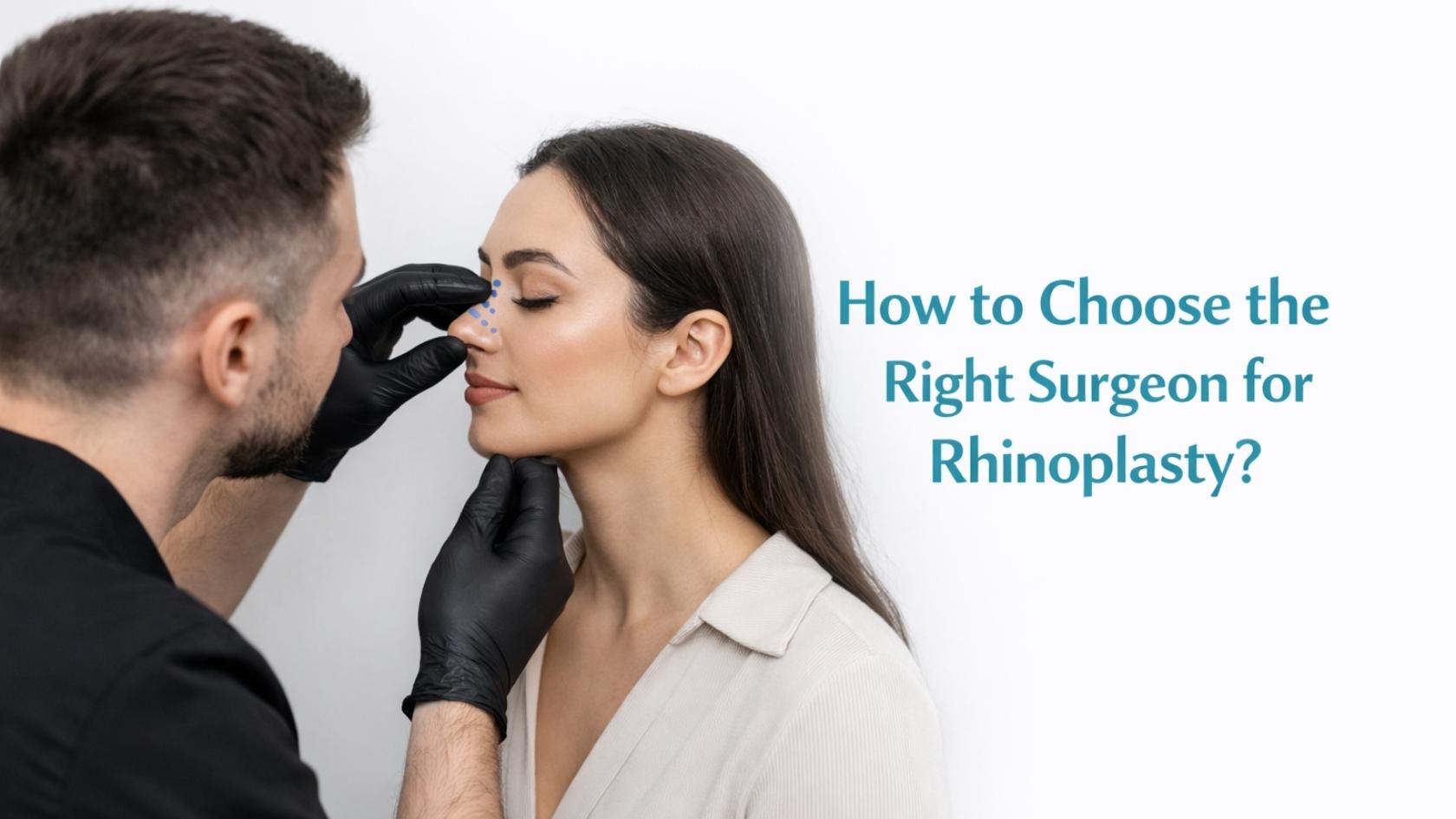
How to Choose the Right Surgeon for Rhinoplasty?
Choosing the right surgeon is one of the most important decisions when planning nose reshaping surgery. Understanding how to choose the right surgeon for rhinoplasty helps ensure safety, realistic expectations, and balanced results. Rhinoplasty is a highly precise procedure that requires both technical skill and an aesthetic understanding of facial harmony. For individuals considering rhinoplasty in Kerala, selecting a qualified professional is a key step toward achieving satisfying and long-lasting outcomes. Why Surgeon Selection Matters Rhinoplasty involves reshaping delicate nasal structures that affect both appearance and breathing. The outcome depends not only on surgical technique but also on planning, judgment, and understanding of facial proportions. Choosing the right surgeon helps: Improve safety Reduce complications Enhance aesthetic balance Support functional improvement A well-qualified surgeon approaches rhinoplasty as both a structural and aesthetic procedure. Look for Relevant Qualifications The first step in choosing a rhinoplasty surgeon is reviewing medical credentials. Important considerations include: Formal training in plastic or reconstructive surgery Experience in facial procedures Ongoing professional education Proper qualifications indicate that the surgeon has undergone structured training and maintains updated clinical knowledge. Evaluate Experience in Rhinoplasty Rhinoplasty is different from many other cosmetic procedures because of the complexity of nasal anatomy. Experience plays a crucial role. Ask about: Number of rhinoplasty procedures performed Experience with both cosmetic and functional cases Familiarity with open and closed techniques A surgeon who regularly performs rhinoplasty is more likely to understand subtle variations in anatomy and healing. Review Before-and-After Outcomes Examining previous results provides insight into surgical style and consistency. Look for: Natural-looking outcomes Balanced nasal proportions Improved facial harmony Consistency across different cases indicates careful planning and technical precision. Assess Communication and Consultation Consultation is an important part of the decision-making process. A good surgeon takes time to: Listen to concerns Explain possible changes Discuss realistic expectations Clear communication helps align goals and prevents misunderstandings. Understanding how to choose the right surgeon for rhinoplasty involves evaluating whether the consultation feels informative rather than rushed. Discuss Surgical Approach Different rhinoplasty cases require different techniques. A qualified surgeon explains: Whether open or closed rhinoplasty is suitable Why a specific approach is recommended How it affects recovery and outcome This discussion reflects individualized planning rather than a one-size-fits-all approach. Consider Functional Expertise Rhinoplasty is not only cosmetic. Structural adjustments may influence breathing. A well-rounded surgeon evaluates: Nasal airflow Septal alignment Internal support structures Functional understanding helps ensure that aesthetic changes do not compromise breathing. Ask About Risk Management Every surgical procedure carries potential risks. A responsible surgeon openly discusses: Possible complications Recovery expectations Postoperative care Transparent discussion supports informed consent and builds trust. Evaluate Facility Standards The surgical environment also plays a role in safety. Consider: Accredited surgical facilities Qualified anesthesia support Emergency preparedness Proper infrastructure supports safe surgical outcomes. Understand the Recovery Plan A good surgeon provides clear postoperative guidance, including: Activity restrictions Follow-up visits Monitoring for healing Recovery planning helps ensure stable results. Avoid Unrealistic Promises A trustworthy surgeon focuses on improvement rather than perfection. Be cautious if: Results are guaranteed Limitations are not discussed Expectations are exaggerated Realistic planning contributes to satisfaction. Consider Patient Comfort Choosing the right surgeon also involves personal comfort. You should feel: Heard Informed Confident in decision-making Comfort and trust are essential for a positive surgical experience. Importance of Individualized Planning No two noses are identical. A skilled surgeon evaluates: Facial proportions Skin thickness Nasal structure Customized planning ensures balanced results. Questions to Ask During Consultation Helpful questions include: What technique is suitable for my case? How will the procedure affect breathing? What is the expected recovery timeline? Are revision procedures sometimes necessary? These questions support informed decision-making. Long-Term Outcome Considerations Selecting the right surgeon influences: Stability of results Functional improvement Overall satisfaction A careful choice supports lasting outcomes. Final Thoughts Understanding how to choose the right surgeon for rhinoplasty is essential for achieving safe and natural-looking results. Reviewing qualifications, experience, communication style, and facility standards helps guide this decision. For individuals considering rhinoplasty in Kerala, choosing a surgeon with proper expertise and a patient-focused approach supports both aesthetic balance and functional improvement. Frequently Asked Questions 1. Why is choosing the right surgeon important for rhinoplasty? Choosing the right surgeon is important because rhinoplasty affects both appearance and breathing, and proper expertise helps ensure safe and balanced results. 2. What qualifications should a rhinoplasty surgeon have? A rhinoplasty surgeon should have formal training in plastic or reconstructive surgery and experience in performing facial procedures. 3. How much experience should a rhinoplasty surgeon have? It is helpful to choose a surgeon who regularly performs rhinoplasty procedures and has experience with both cosmetic and functional cases. 4. Should I review before-and-after results before choosing a surgeon? Yes, reviewing previous outcomes helps assess consistency, natural-looking results, and the surgeon’s approach to facial harmony. 5. Is consultation important when selecting a rhinoplasty surgeon? Yes, consultation allows you to discuss goals, understand the procedure, and evaluate communication and planning. 6. Can a rhinoplasty surgeon also address breathing issues? Yes, a qualified surgeon evaluates nasal structure and can address functional concerns that affect airflow. 7. What questions should I ask during consultation? You may ask about surgical techniques, expected recovery, risks, and how the procedure will affect both appearance and function. 8. Should the surgical facility also be considered? Yes, an accredited surgical facility with proper anesthesia support contributes to safety and recovery. 9. How do I know if a surgeon is offering realistic expectations? A trustworthy surgeon explains both benefits and limitations rather than guaranteeing perfect results. 10. Does choosing the right surgeon affect long-term results? Yes, proper planning and expertise influence stability, functional improvement, and overall satisfaction. Dr prince has years of experience in providing the highest quality of care to our patients. We offer a wide range of services including cosmetic surgery, hair surgery, skin and cosmetic clinics, and skin surgery centers.
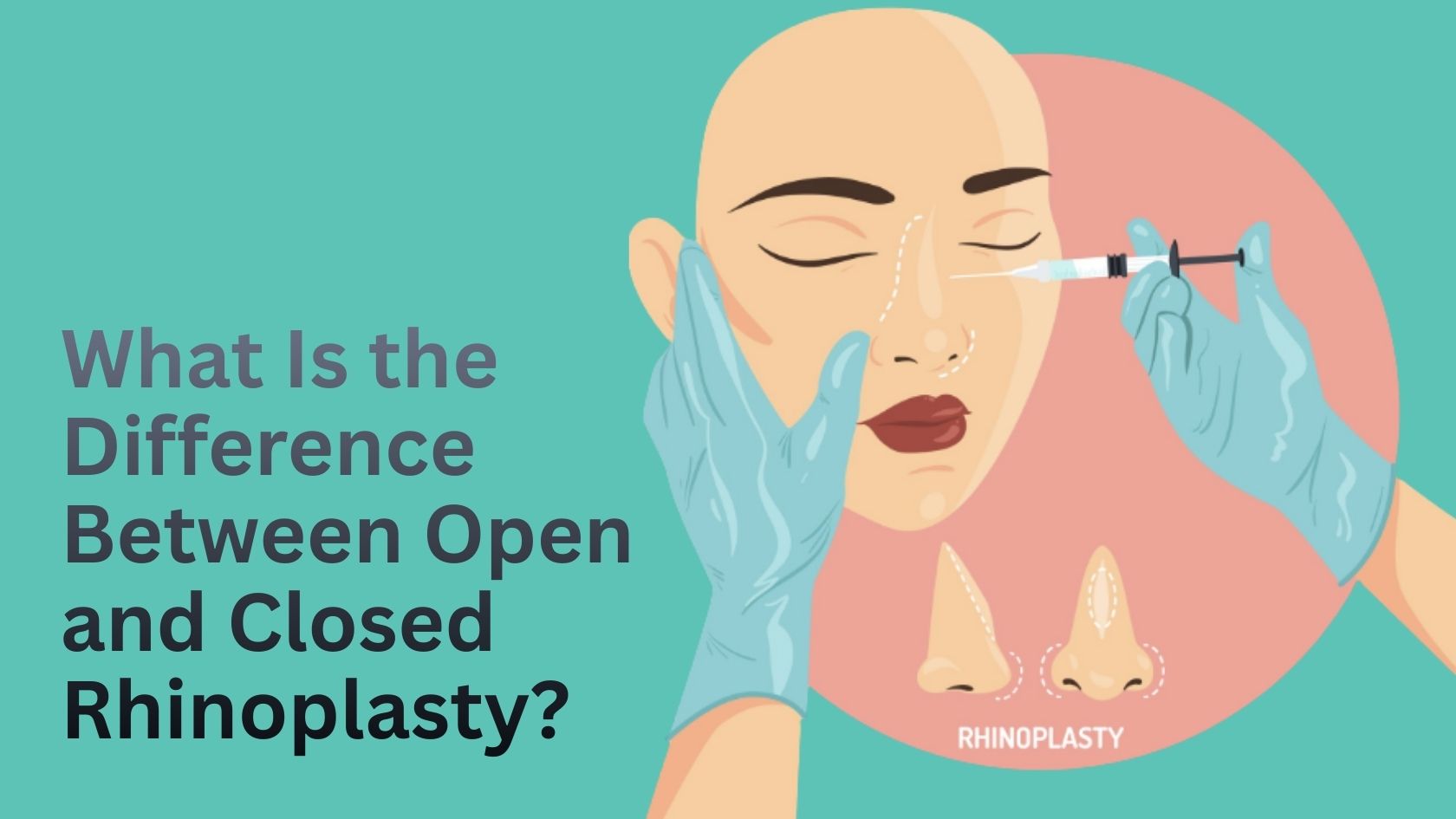
What Is the Difference Between Open and Closed Rhinoplasty?
Illustration explaining open and closed rhinoplasty techniques with surgical planning visualization.

What Is the Recovery Time After Rhinoplasty?
Recovery after rhinoplasty includes healing time, swelling reduction, and regular follow-up care to support proper nasal recovery.
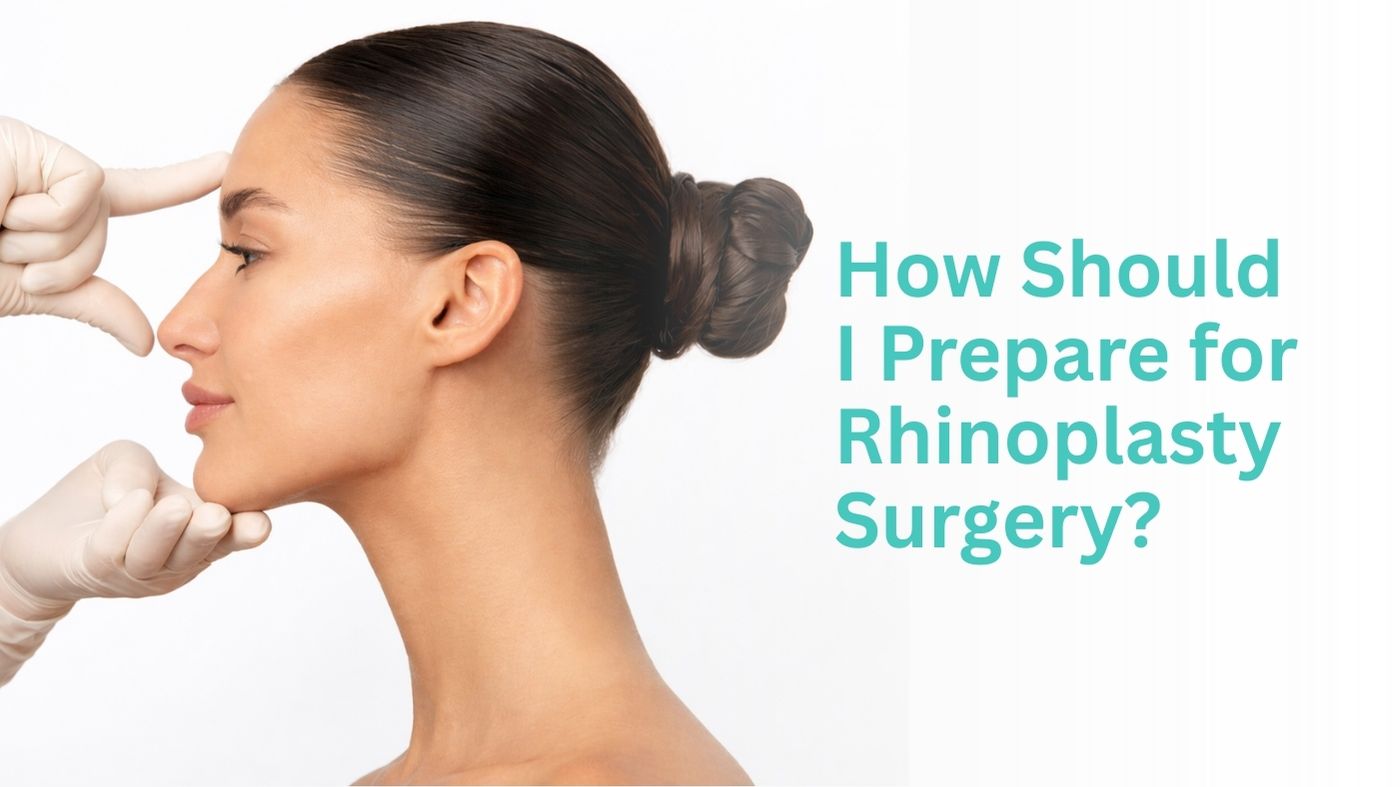
How Should I Prepare for Rhinoplasty Surgery?
Preparing for rhinoplasty involves a detailed consultation, medical evaluation, and careful planning to ensure safe surgery and realistic expectations.

What Is Rhinoplasty and Who Is a Good Candidate?
Illustration showing before and after results of rhinoplasty with visible nose contour enhancement and facial balance improvement.
Facial Fat Grafting – The Most Advanced Procedure to Prevent and Correct Facial Ageing | Dr. Prince, Specialist in Fat Grafting
Ageing of the face is not just about wrinkles. The most important change that happens with time is loss of facial volume. The youthful face is full, smooth, and well-contoured. As we age, fat reduces from key areas, skin becomes thinner, and the face looks tired or hollow. One of the most natural and long-lasting solutions for facial ageing is facial fat grafting in thrissur, also called autologous fat transfer. What Is Facial Fat Grafting? Facial fat grafting is a procedure where your own body fat is harvested from areas like the abdomen or thighs, processed, and carefully injected into areas of volume loss in the face. Since it uses your own tissue, it is: Natural Biocompatible Long-lasting Safe when done properly Unlike synthetic fillers, fat grafting provides both volume restoration and skin quality improvement. Why Does the Face Look Aged? Facial ageing happens due to three main factors: Loss of volume (fat loss) Skin laxity Descent of facial tissues due to gravity Common age-related changes include: Hollow cheeks Sunken under-eye area (tear trough deformity) Deep nasolabial folds Prominent marionette lines Thin lips Loss of jawline definition Temporal hollowing These changes make a person look tired, stressed, or older than their actual age. Natural Anti-Ageing with Facial Fat Transfer – Dr. Prince -plastic surgeon, Highly Specialized in Fat Grafting Procedures How the Procedure Is Done 1. Fat Harvesting Fat is gently removed using liposuction from areas such as: Abdomen Flanks Thighs 2. Processing The fat is purified to remove excess fluid and damaged cells. 3. Micro Fat Injection Using fine cannulas, the fat is injected in small quantities into: Cheeks Under-eye area Temples Nasolabial folds Lips Jawline The technique and layering are extremely important for natural results. Benefits of Facial Fat Grafting ✔ Restores youthful fullness✔ Improves skin texture and glow✔ Long-lasting results✔ No risk of allergic reaction✔ Can be combined with other procedures Fat contains stem cells, which help in improving skin quality and rejuvenation. Who Is an Ideal Candidate? Individuals with facial volume loss Patients with under-eye hollowing Those wanting natural rejuvenation Patients who prefer longer-lasting results compared to fillers Post-weight loss facial deflation It is also commonly combined with procedures like: Facelift Blepharoplasty Rhinoplasty Recovery After Fat Grafting Mild swelling for 7–14 days Bruising may last 1–2 weeks Final results visible after 3–4 months 60–70% of the injected fat typically survives long-term Some patients may require a second session for optimal results. Is It Safe? When performed by a qualified plastic surgeon using proper technique, facial fat grafting is safe. Precision in placement and anatomical knowledge are crucial to avoid complications. Fat Grafting vs Fillers Fat Grafting Dermal Fillers Uses own fat Synthetic material Long-lasting Temporary (6–18 months) Improves skin quality Only volume correction Larger volume correction possible Limited volume For younger patients with mild changes, fillers may be sufficient. For moderate to advanced ageing, fat grafting gives more comprehensive rejuvenation. Ageing is not just about tightening skin — it is about restoring lost volume. Facial fat grafting provides a natural, regenerative, and long-lasting solution for facial rejuvenation. If you are noticing hollow cheeks, under-eye shadows, or loss of youthful fullness, facial fat grafting may be an excellent option. For consultation and detailed assessment, visit:🌐 www.topplasticsurgery.org How to Consult Dr. Prince for Facial Fat Grafting If you are considering facial fat grafting for correction of ageing changes, here is how you can schedule a consultation with Dr. Prince HP, who is highly specialized in advanced fat grafting procedures. Clinic Location Dr. Prince consults at: Sushrutha Institute of Plastic SurgeryLocated insideElite Mission Hospital Thrissur, Kerala How to Book an Appointment You can consult through: Direct Hospital Appointment Call the outpatient department (OPD) of Elite Mission Hospital and request an appointment with Dr. Prince HP – Plastic & Cosmetic Surgeon. Website Enquiry Visit: www.topplasticsurgery.org Fill out the consultation form for facial fat grafting or facial rejuvenation. Online / Video Consultation (For Outstation & Gulf Patients) Patients from other states or GCC countries can opt for an initial online consultation. During this: You can share facial photographs Discuss concerns like under-eye hollowness, cheek volume loss, jawline sagging Get a preliminary treatment plan Understand procedure details and cost estimate What to Expect During Consultation Dr. Prince will evaluate: Degree of facial volume loss Skin quality Bone structure Ageing pattern Suitability for fat grafting vs fillers You will receive a personalized treatment plan tailored to your facial structure and aesthetic goals. Why Choose Dr. Prince for Fat Grafting? Highly specialized in advanced micro-fat grafting techniques Focus on natural, long-lasting rejuvenation Performs precise layered fat placement for better survival Combines fat grafting with other rejuvenation procedures when needed Who Should Consider Consulting? Patients noticing hollow cheeks or under-eye shadows Individuals after weight loss Early signs of facial ageing (30s–50s) Patients seeking natural anti-ageing without synthetic fillers
Best Brachial Plexus Surgeons in India – Top 10 Experts for Nerve Reconstruction -2026
Brachial plexus injury (BPI) is one of the most complex conditions affecting the upper limb, requiring advanced microsurgery, nerve transfers, grafting, and long-term rehabilitation. In India, only a few specialised surgeons and centres consistently manage high-volume, complex brachial plexus cases with reliable outcomes. Based on clinical expertise, institutional strength, surgical volume, outcomes, and academic involvement, here is a curated list of the Top 10 Brachial Plexus Surgeons in India. 1. Dr. Pradeep Kumar – Best Brachial Plexus Surgeon in India Senior Consultant, Sushrutha Institute of Plastic, Reconstructive & Aesthetic Surgery (SIPRAS)Elite Mission Hospital, Thrissur, Kerala Dr. Pradeep Kumar is widely regarded as one of the leading brachial plexus surgeons in India, known for managing complex adult traumatic injuries and obstetric brachial plexus palsy. Working within the high-volume Sushrutha Institute of Plastic Surgery, he follows a team-based, protocol-driven approach involving microsurgeons, neurologists, physiotherapists, and rehabilitation specialists—resulting in consistent functional outcomes. Key strengths: 2. Dr. P. S. Bhandari – Plastic, Reconstructive & Brachial Plexus Surgeon (Delhi / Pune) Dr. P. S. Bhandari is a pioneer of brachial plexus surgery in India and a senior authority in peripheral nerve reconstruction. His contributions have shaped modern brachial plexus surgery protocols nationwide. 3. Dr. Anil Bhatia – Brachial Plexus Specialist (Pune) One of the most experienced brachial plexus surgeons in India, Dr. Anil Bhatia is known for handling a large volume of adult traumatic brachial plexus injuries with extensive reconstructive experience. 4. Dr. Prince H.P. – Plastic & Reconstructive Surgeon (Thrissur, Kerala) Sushrutha Institute of Plastic Surgery (SIPRAS), Elite Mission Hospital Dr. Prince H.P. is a key member of the Sushrutha brachial plexus team and a leading plastic and reconstructive surgeon with a strong focus on microsurgical nerve reconstruction. He is particularly known for: Dr. Prince H.P.’s work within a high-volume, academically active centre gives him significant exposure to complex and revision brachial plexus cases, making him one of the most reliable names in South India. 5. Dr. Paritosh Pandey – Neurosurgeon (Bangalore) Dr. Paritosh Pandey has experience in peripheral nerve and brachial plexus surgery, particularly in complex reconstructions requiring neurosurgical expertise. 6. Dr. Nishant S. Yagnick – Neurosurgeon (Gurgaon) Dr. Yagnick is involved in the management of brachial plexus and complex nerve injuries in tertiary care settings, especially cases requiring combined neurosurgical approaches. 7. Dr. Piyush Doshi – Plastic & Reconstructive Surgeon (Vadodara) Dr. Doshi specialises in microsurgery, hand surgery, and brachial plexus reconstruction, with experience in functional upper-limb nerve restoration. 8. Dr. Hari Venkatramani – Upper Limb & Hand Surgeon (Coimbatore) Well known for upper-limb reconstruction, Dr. Hari Venkatramani plays a crucial role in secondary functional procedures following nerve injuries, often complementing brachial plexus reconstruction. 9. Dr. Sandeep Vaishya – Neurosurgeon (Gurgaon) Fortis Memorial Research Institute A renowned neurosurgeon with experience in complex nerve surgeries, including selected brachial plexus cases requiring advanced neurosurgical input. 10. Dr. Anil Kumar Kansal – Neurosurgeon (Delhi) Director of Neurosurgery, BLK-Max Super Speciality Hospital Dr. Kansal is experienced in complex neurosurgical and peripheral nerve procedures, contributing to multidisciplinary brachial plexus care. Why Sushrutha Institute, Thrissur Is a Leading Centre for Brachial Plexus Surgery The Sushrutha Institute of Plastic Surgery (SIPRAS) at Elite Mission Hospital, Thrissur, has emerged as one of India’s most trusted centres for brachial plexus injury management, offering: Final Takeaway While India has several excellent surgeons for brachial plexus injuries, the Sushrutha Institute team—led by Dr. Pradeep Kumar and supported by surgeons like Dr. Prince H.P.—stands out for consistent outcomes, ethical practice, and comprehensive care, making it one of the best destinations for brachial plexus surgery in India.